AREG at the WIA STEM Symposium – November 2016

The Amateur Radio Experimenter’s Group has taken an active role in promoting STEM in Schools programs for a number of years now, particularly through our involvement with LaunchBox, who work with us and our Project Horus sub-group to fly high altitude balloons. Our recent foray into the Maker Faire and HackerSpace community through our participation in the Adelaide Maker Faire also has been an area where we see a great potential to improve the link between Amateur Radio and STEM in schools, particularly with secondary and tertiary level students.

AREG Road Trip to Canberra

It was against this backdrop that the group endorsed it’s President, Matt VK5ZM and Treasurer Grant VK5GR to make the 2400km round trip from Adelaide to Canberra to attend the inaugural WIA STEM symposium.

AREG saw this as an opportunity to firstly share it’s own experiences with others, as well as build networks with other like minded amateurs who either were already engaged in their own contact with the STEM programs in schools or who were wanting to initiate programs of their own. The group also saw this as a way of tapping into the resources of the WIA to help facilitate the communications between affiliated clubs engaged in these activities, and also as an opportunity to contribute to resources that the WIA could develop to support the regional clubs in their STEM endeavors.

The speakers at the Symposium

The event itself, enabled through the hard work of the Canberra Region Amateur Radio Club on behalf of the WIA, provided a fascinating insight into the world of STEM and the challenges STEM faces in schools. (Thanks in particular to Amanda VK1WX, CRARC president).

The WIA Introductions

AREG received presentations firstly from Fred Swainston VK3DAC on the WIA’s vision of STEM, followed by one technological idea from Phil Wait VK2ASD on kits that could potentially be made available to schools based around cheap RTL-SDR Dongles as a way of introducing radio spectrum and communications studies into schools.

Geffory McNamarra wins PM’s Science Prize

STEM from a Science Teacher

Next up was a presentation by Geoffrey McNamara, a science teacher from Melrose High in the ACT who has been doing amazing work encouraging students to take an interest in science based investigations in secondary school. Geoffrey has implemented a program along an apprenticeship model where he has brought in experts from their fields to work with students one on one in a field of research. Many of those who are lucky enough to go through that program have gone on to a career in science.

Two principle points however came out of talking with Geoff that any initiatives need to take into account.

  1. You need to show students the “Wow Factor” behind any scientific endeavor, to spark their interest and light the fire to drive them to take it further.
  2. Science Teachers are incredibly time poor and severely under funded.

Radio Astronomy and STEM

The Lewis Center provides the gateway to this program via JPL

Next the participants received a presentation from Dr David Jauncey, talking about programs like GAVRT (Goldstone Apple Valley Radio Telescope) where students in the USA can access a decommissioned radio telescope at the Goldstone Deep Space Network station in California. He also discussed how Tidbinbilla in the ACT is engaged in some schools programs (although not to the extent that Goldstone is). Out of this it was again clear that the principle aim of STEM programs is to garner that spark in students that science is “wow” and has something genuinely interesting and inspiring to offer as a career or at the very least as a life skill and perspective.

Practical Science and Physics Experiments enabled by Amateur Radio

Next up was Dr George Galanis VK3EIP, who is attempting to construct a system that could be used to demonstrate practical physics experiments using radio at schools. His idea is that you take a portable EME station to a school and conduct experiments such as measuring the echo delay from the moon, and even bouncing SSB voice off the moon and letting the students gain a real appreciation of the time delay involved in transmitting radio waves that far into space.

Other uses of the same equipment were also discussed in the field of radio astronomy. The ability to look at the microwave radio noise from the sun and show how to calibrate the dish, as well as other radio astronomy experiments are all practical demonstrations of radio that are relevant to the classroom. Again, the underlying theme to come out of this was to find ways to spark an enthusiasm in students and give them a memorable ‘wow’ experience, to implant science and technology as something worth following up later in life through tertiary studies and beyond, was the core theme of Dr Galanis’s presentation.

Accessing STEM through the Maker and Hacker-Space Movements

The final formal presentation was given by Matt and Grant from AREG. Matt opened with a story about a conversation he had once with a good amateur radio friend, Harro VK5HK (sk). Harro once asked Matt “What is radio?” Matt gave a very engineering focused answer about Maxwell’s equations etc, to which Harro politely pointed out “Yes, but no…. What is it really?” he asked again rhetorically? “Magic” was his answer.

It is the magic of radio, and getting people to the realization that it really is a form of magic that was the “wow” moment amateur radio can bring – when presented in the right way. It is the magic of being able to talk into a box on one side of the globe, and have someone on the other side talk back. When you think that there is no other infrastructure in between, and yet this is still possible, then you again have that hook or spark that leads to a “Wow” moment in young people that you hope will stick with them throughout their years. Undertaking that sort of communications in inventive and awe-inspiring ways, such as talking to ISS, or via live TV where the internet is not involved is a definite opportunity to “light the fire of imagination” in young people today.

It was this theme of “Radio is Magic” that Matt and img_3237-mediumGrant spoke to, explaining how they had brought amateur radio to young people through things like Amateur Television at JOTA, or through High Altitude Ballooning via Project Horus that members of AREG have been involved with now for nearly 6 years. The very recent foray into the Maker Faire and the group’s contacts with people in the Hackerspace movement were also discussed.  It was shown how lighting that spark even as people are in their tertiary studies was a way to leave a lasting impression and would and does lead to people taking up Amateur Radio in their twenties – a key demographic that AREG sees as fertile ground to recruit into amateur radio and to also promote the ongoing relevance of amateur radio today.

The high altitude ballooning in particular was discussed in some detail as a way of engaging with schools programs. The AREG representatives explained how that had worked through LaunchBox as a great way to inspire even primary school children to develop a wonder of science. The example of how the Project Horus balloons have been used to fly simple experiments to answer a child’s question of “will my corn kernel turn into popcorn in the near vacuum of near space?” hits home to how activities like this can spark someone on a journey of scientific curiosity that will potentially stay with them for the rest of their lives. (By the way, sadly the answer was no – the corn stays as a corn kernel).

One particular STEM area that was then discussed was that there are multiple facets to how you engage with STEM in schools. The obvious way is to undertake direct interactions with students, and you can also take the second tier approach and market amateur radio as a tool to the science teachers themselves. There are conferences and science fairs around the nation completely untapped by amateur radio where with the right presentation, the magic of radio could reach the classroom by recruiting the teachers who are already there. As a result, there was discussions around 1) trying to identify existing teachers who hold a license and 2) looking further at avenues and support requirements to recruit new teachers into the hobby, so as to enhance that conduit into the classroom as well.

Where to from here?

After the presentations the symposium broke for lunch, during which many useful discussions were had. After the break, we went back into the hall and broke into three working parties. The aim was to develop initial ideas around the following three questions:

  1. The Way Forward to further develop the concept
  2. Promotion and Marketing that can be developed by the WIA
  3. Other Technologies not identified at the Symposium

Lots of good ideas were put forward and are now being collated by the WIA for distribution. The WIA indicated that all of the presentations that were made, the papers that were received and the data generated from the three working parties will be made available in due course via the WIA website.

Conclusion

Overall, Matt and Grant came away feeling that the WIA had made some good first steps into addressing how to get amateur radio engaged with STEM in schools. It also was clear that this is not an initiative that can be driven solely by the WIA. It will take the formation of teams of people in each state and territory who can then begin the work of building local responses in alignment with a national Amateur Radio in STEM framework. The WIA can play a facilitation role here that will be positive for both Amateur Radio and STEM education in Australia.

The next step AREG see’s is that the WIA needs to establish an Amateur Radio in STEM advisory committee, made up initially from the general WIA members who attended the symposium plus others who couldn’t make it but still wish to contribute. This committee needs to take the work already started and complete building the national frame work for Amateur Radio in STEM. It can then turn that into a set of individual regional initiatives driven through the radio clubs network so that collectively the Amateur Radio Service can set forward on the task of tackling this multi-faceted arena.

AREG would like to thank the WIA for taking the time to run the symposium and in particular would like to thank all those who made the effort to attend and participate, as well as thank those who contributed papers and inputs. It is hoped that this is only the beginning of a new focus on how to demonstrate to a new generation the ongoing relevance and importance not only of Amateur Radio to the country, but also STEM education in general in Australia. Getting everyone together in one place was a fantastic start to this as it has established new networks and shared many different perspectives on how to tackle the issue. There very much is an exciting future ahead for Amateur Radio and STEM studies nationally.


Horus 37: Flight Success!

We are pleased to report that the high altitude balloonhorus-logo-black flight of Horus 37 has been a success. The AREG Project Horus launch crew carried out the flight for Launchbox, a group which engages with the STEM programs (Science, Technology, Engineering, Math) in schools across the state.

http://www.launchboxspace.com/

Lift off was from Mt Barker High School at 10.00am, with landing occurring approximately 15km east of Mannum about 3 hours later.

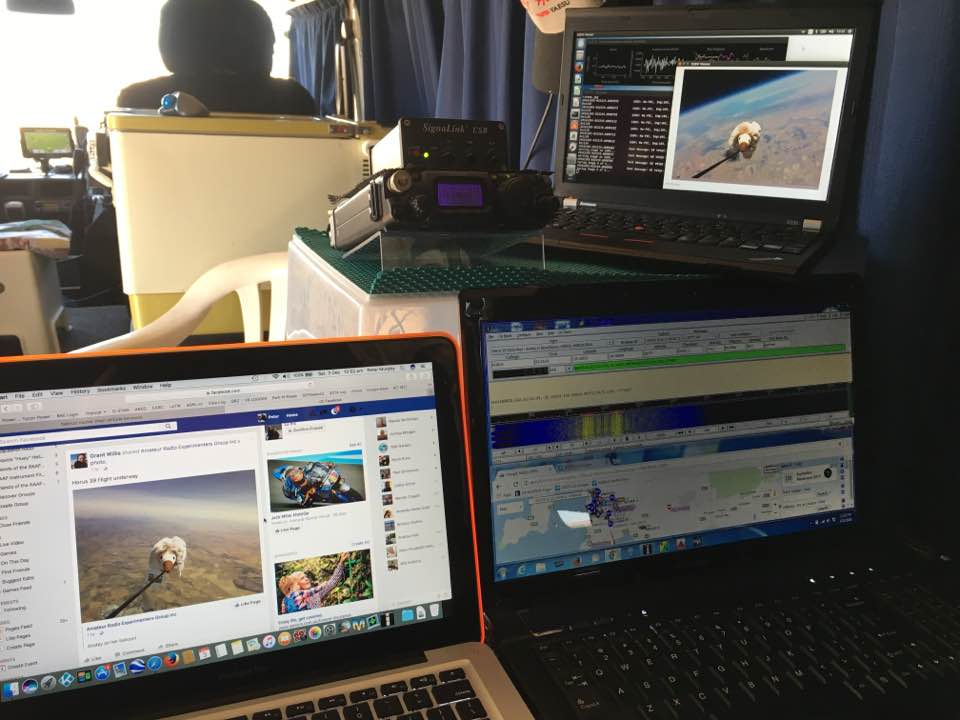
8 payloads went aloft this flight. 5 from Launchbox and 3 from AREG. The new one for AREG was the experimental SSDV transmitter, which delivered live images from the balloon for a portion of the flight.

Launch

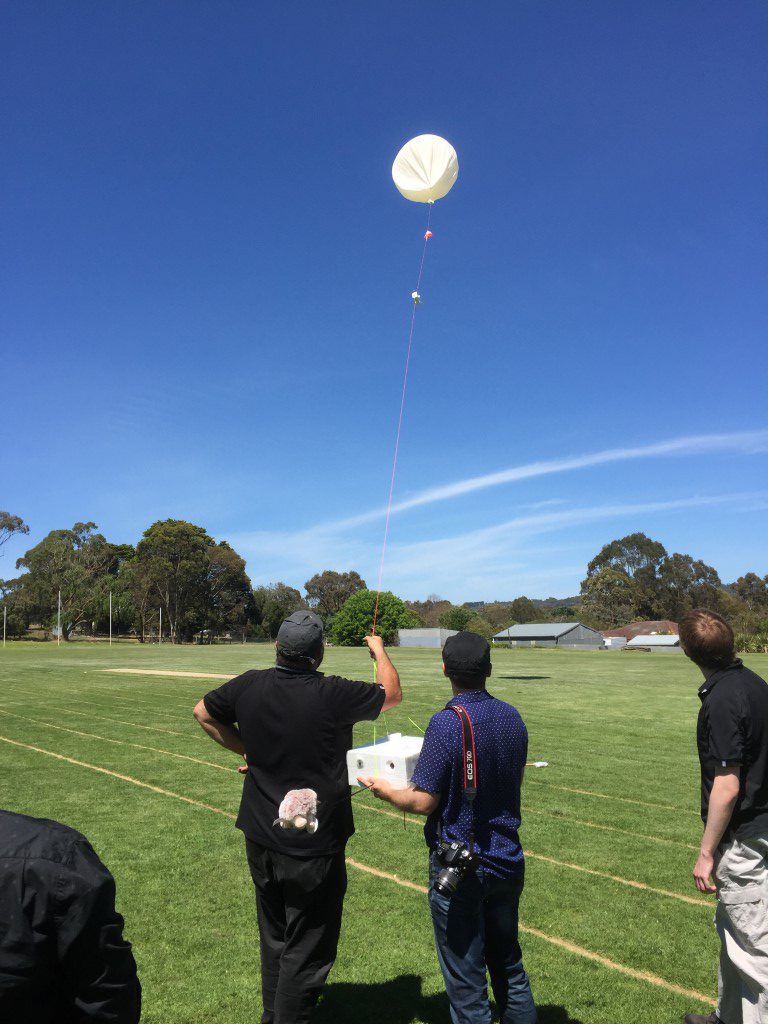
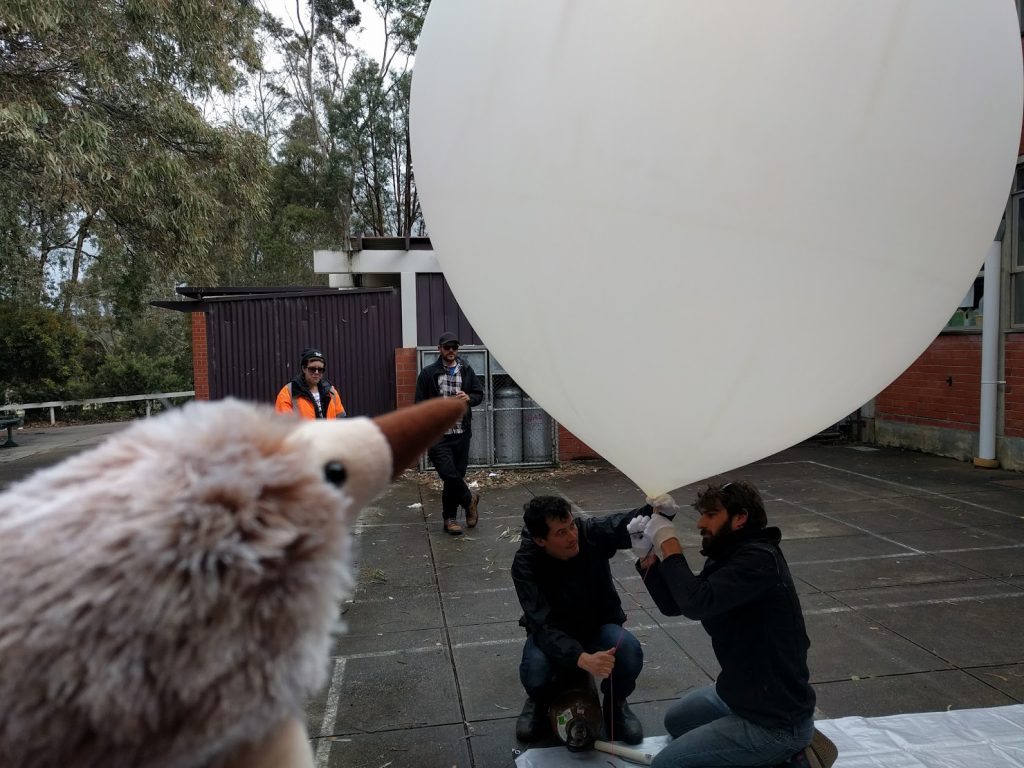
Launch was conducted under challenging conditions with squalls and wind gusts arriving about 20 minutes before liftoff. This caused considerable consternation from the launch team who were for a few minutes at risk of loosing or damaging the balloon before we had even gotten off the ground. However, through the skillful handling of the balloon by the AREG team, catastrophe was averted.

Once the balloon payload train was assembled, the countdown got underway. The weather eased and the flight finally got away safely.

Images from the Flight Ground Preparation and Launch

The Flight

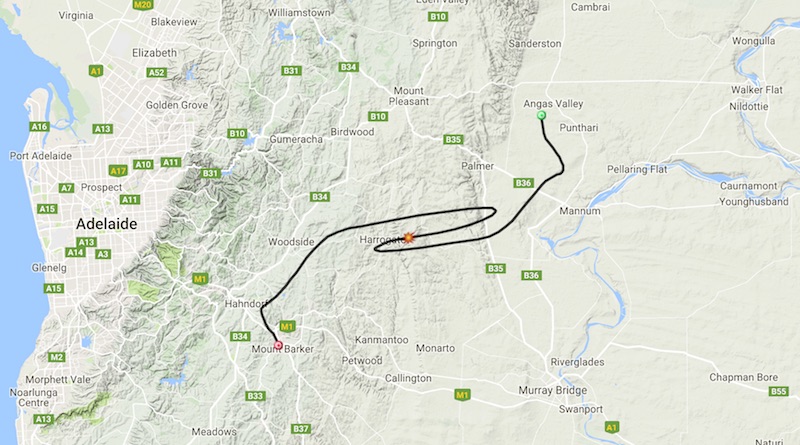
The flight itself went well, although it had to be terminated earlier than planned. The team did not want it landing in the River Murray.

trackplot

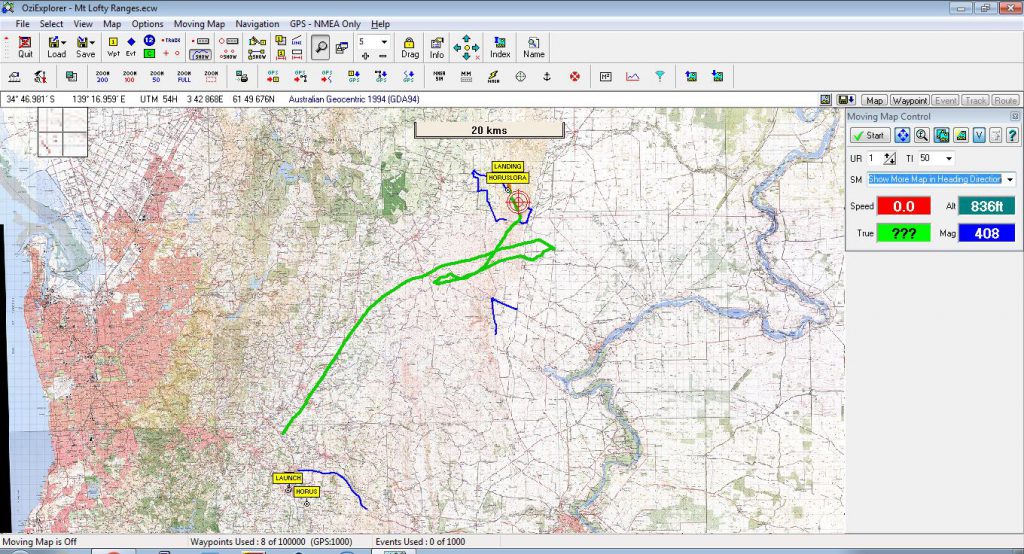
Flight Track from half way through the flight

habhubtrack

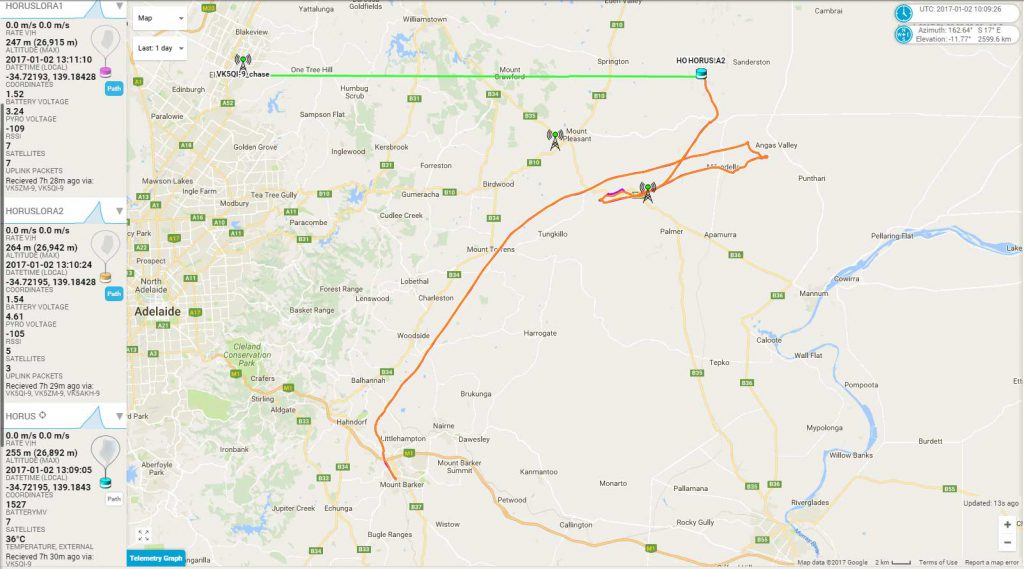
Final Balloon Track – www.habhub.org

Lots of stations participated in the telemetry collection (thank you for your contribution).

SSDV Experimental Payload – ‘Wenet’

As indicated above, this flight carried a first time payload for AREG. Mark VK5QI and David VK5DGR have been working on a slow scan digital image payload for the balloon system which alternates between 19.2kbit/s and 115kbit/s on a new downlink channel. This system makes uses of the UKHAS SSDV server to stitch together images from packets uploaded by multiple receivers. To help this along during this flight, Andrew VK5AKH and Scott VK5TST headed to the back of the Mt Lofty ranges after launch and collected as much of the SSDV picture feed they could for relay to the internet.

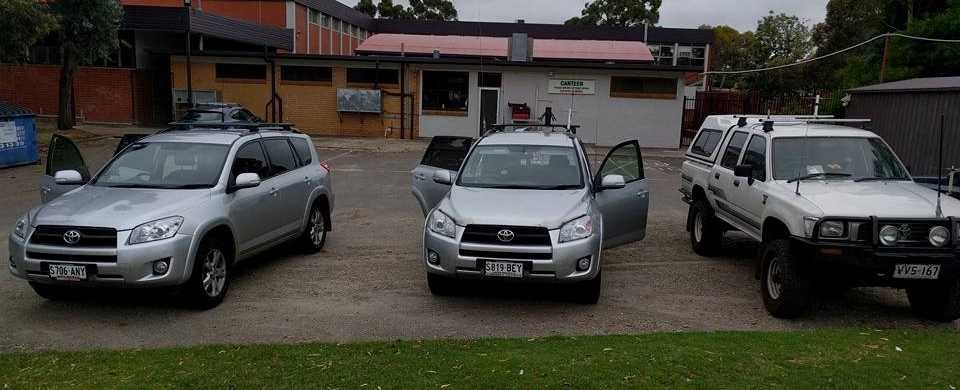
Andrew VK5AKH and Scott VK5TST’s setup for SSDV

The SSDV capture software currently runs under Linux, with a screenshot of it running in a Virtual Machine on VK5QI’s CarPC below. The software is open source and can be found on GitHub. 

(courtesy Mark VK5QI)

In this case, the modem software is still very much under development, without any FEC capability currently. David VK5DGR and Mark VK5QI are continuing to develop the system and you may see it fly again in the near future with some enhancements.

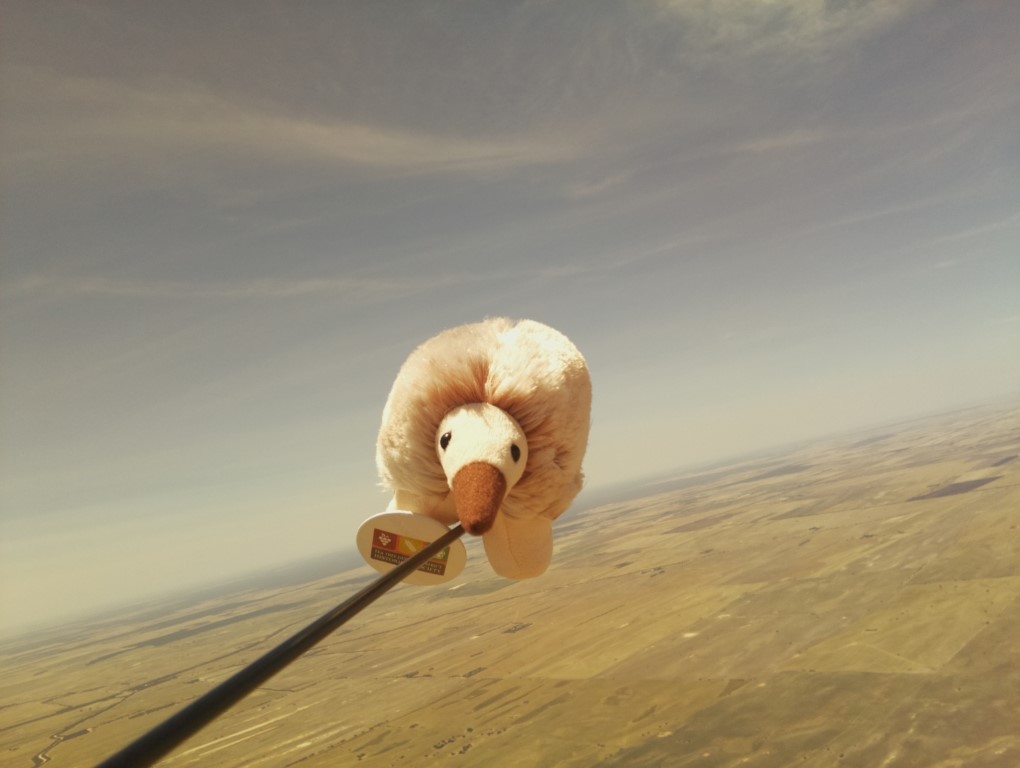
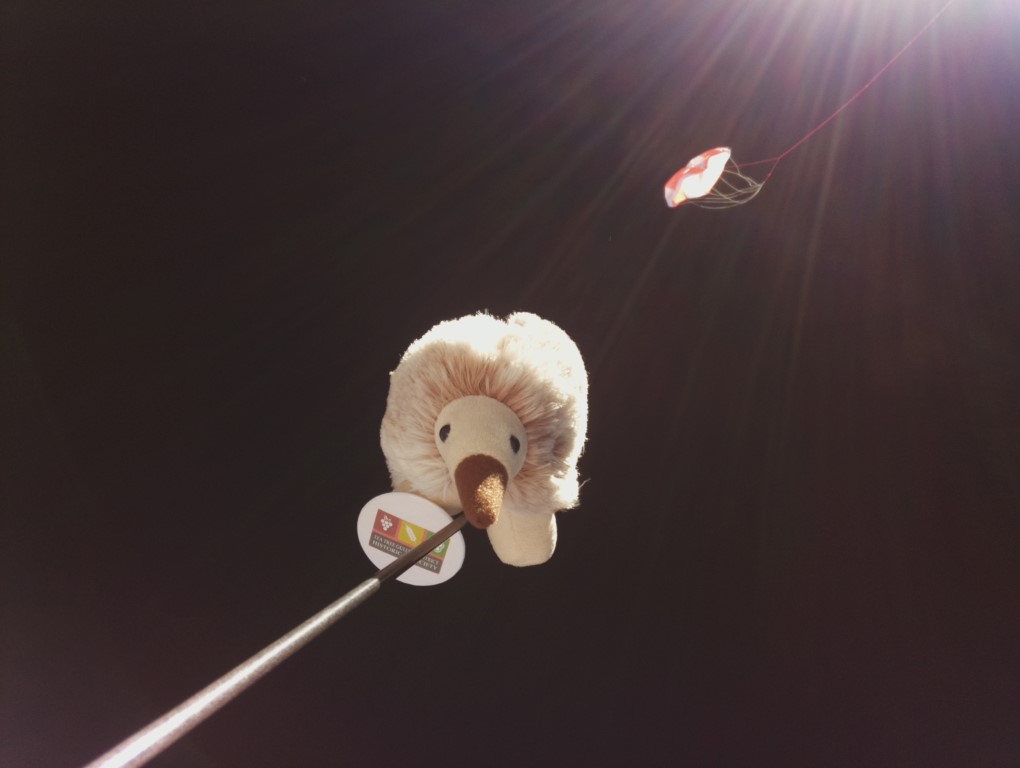
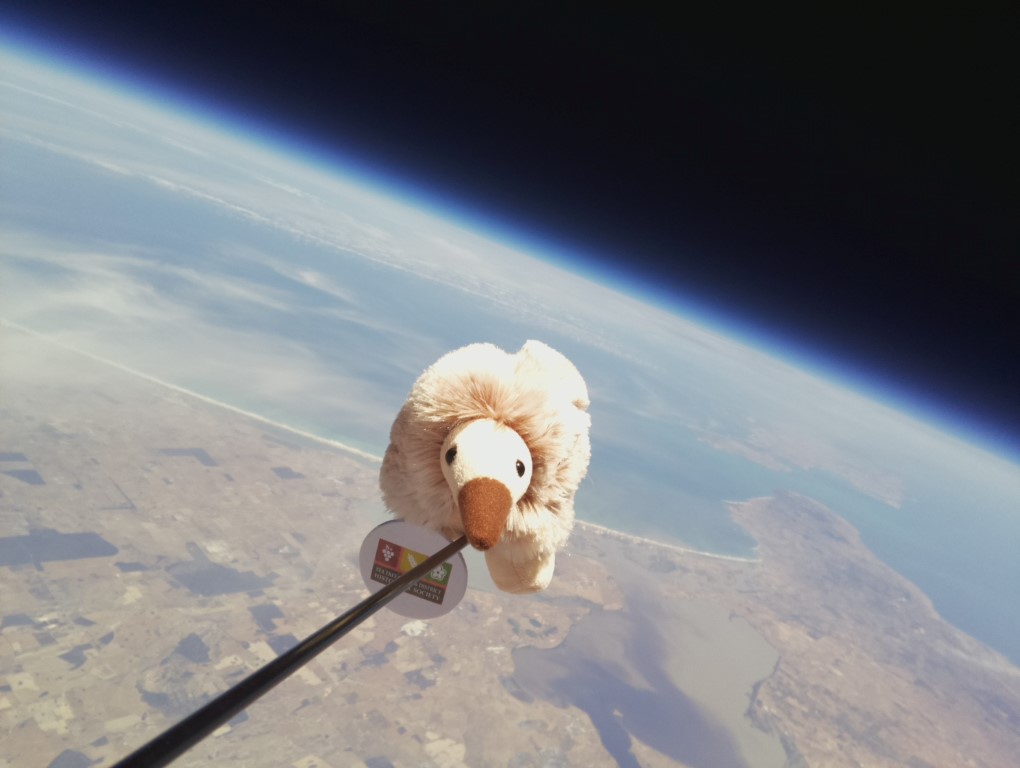
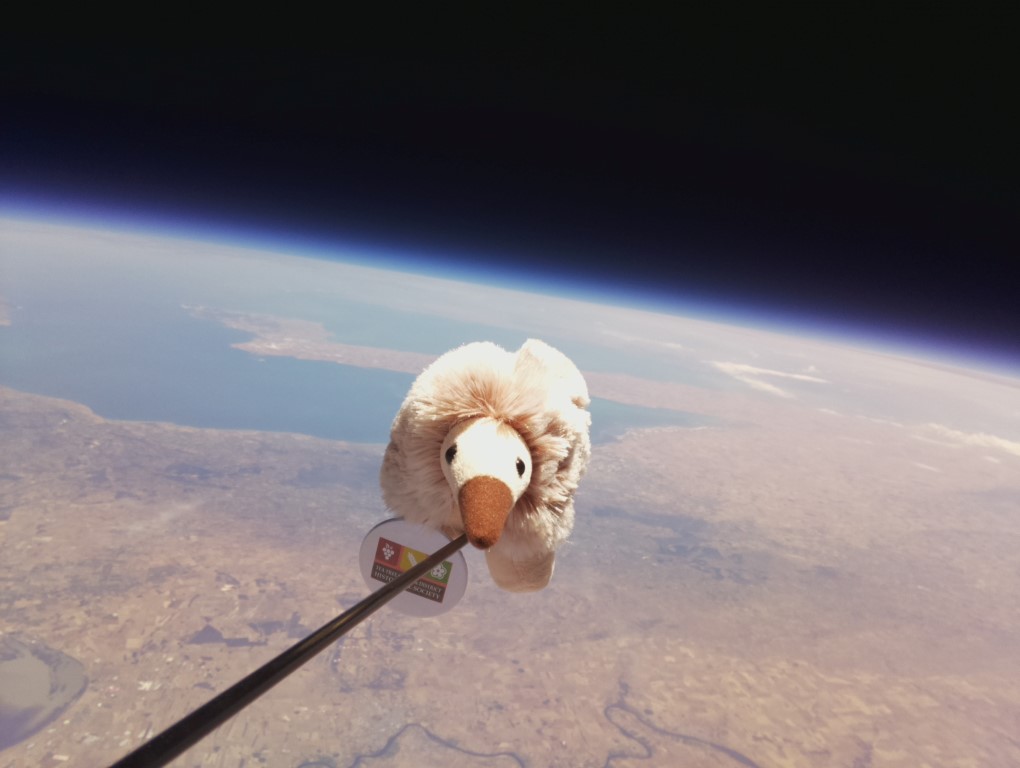
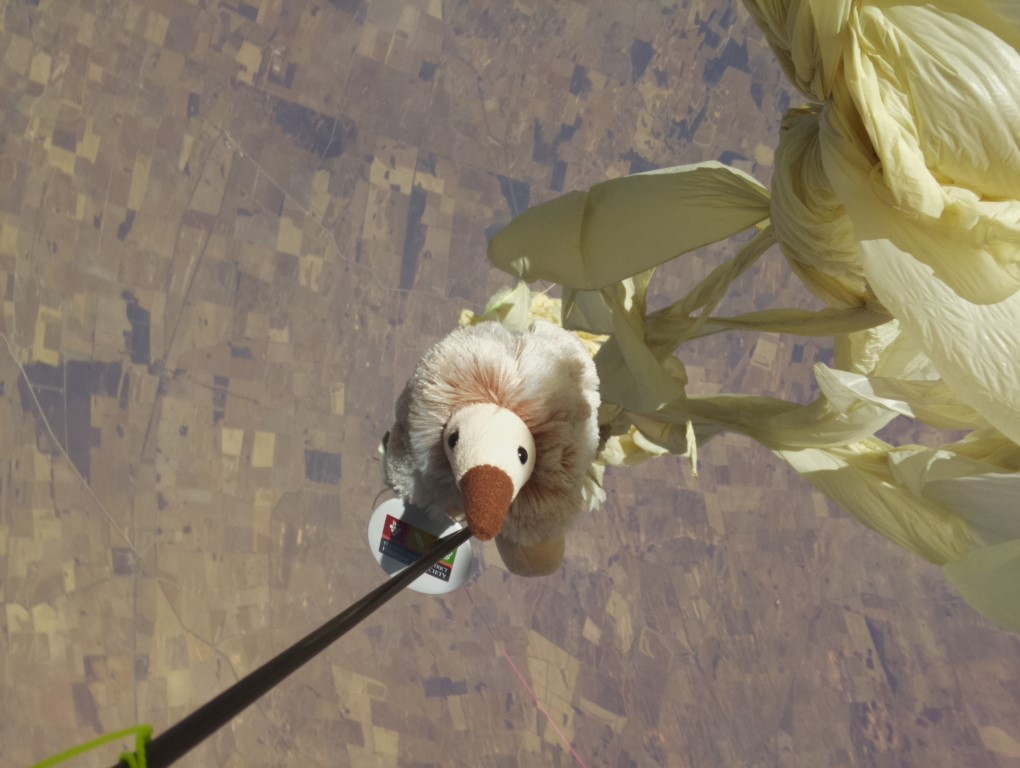
The following is the Gallery of the shots taken by the camera received on SSDV during the flight:

This slideshow requires JavaScript.

The following are some of the pictures downloaded from the camera after the flight:

This slideshow requires JavaScript.

Landing and Recovery

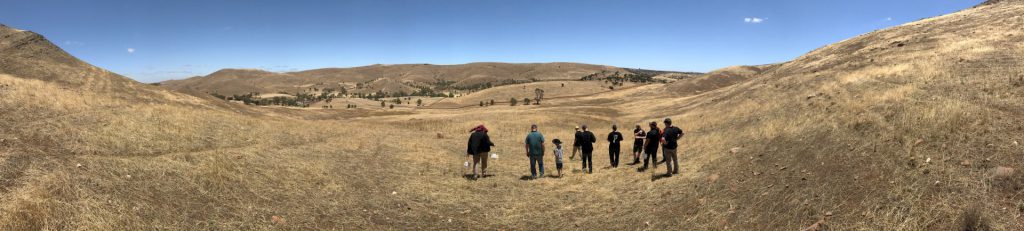
The chase crew were lucky this time and were able to see the payloads land from about 400m away. It landed in a patch of scrub on the edge of a wheat field. After about a 1km hike we were able to successfully recover them. They landed in a patch of mallee scrub, so there was some judicious nudging required to bring them safely to the ground.

At the end of the day, here was the crew that undertook the payload recoveries

img_2959-medium

Flight Statistics

[table “” not found /]

Conclusion

AREG would firstly again like to thank Launchbox for the opportunity to be part of the STEM program in schools. We also want to thank all of the team who came out today in somewhat cold and wet conditions to get the launch off the ground. The team included: Matt VK5ZM, Mark VK5QI, Grant VK5GR, Andrew VK5AKH, David VK5DGR, Scott VK5TST, Kim VK5FJ, Gary VK5FGRY, Josh VK5JO and Scott VK5TST.

Thanks also to the amateur ground stations who made the effort to receive telemetry and provide it to the tracking data pool online:

VK5QI, VK5ZM, VK5KJP, VK5KX, VK5ZRL, VK5NEX, VK5APR, VK5ZEA, VK5AKH, VK5FJGM, VK5FLEX, VK5HS

Without you these flights are that much more difficult!

73’s de Project Horus

Horus 37: Flight Currently GO for tomorrow morning!

Preparations are continuing to fly a large helium balloon this coming Sunday from Mt Barker in South Australia. AREG will be flying the balloon on behalf of LaunchBox who are undertaking a schools science education program.

Lift-off is planned for 10am, with a flight path that currently looks like it will orbit the eastern Adelaide hills.

The only risk to the launch currently is the low level weather forecast. The Adelaide Hills area has received yet another significant rain band this evening. If this hasnt cleared by morning the flight start could be delayed. Watch this website for the latest news.

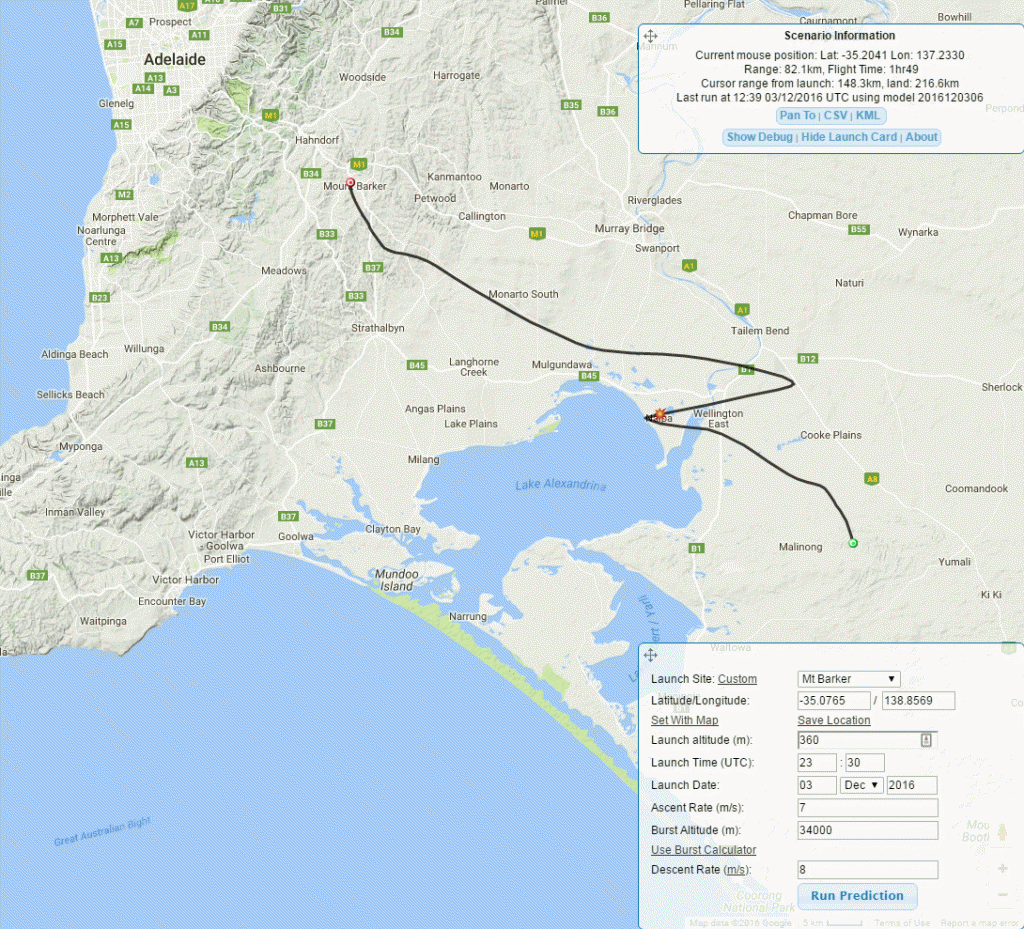
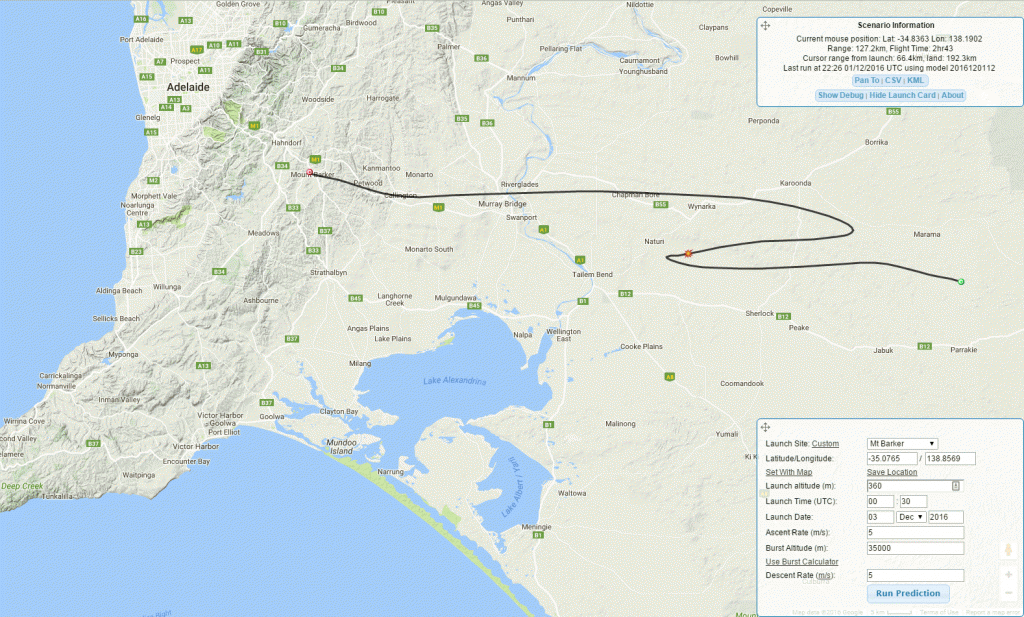
Predicted flight path, as per 2016-09-17 06Z GFS model. (5m/s ascent rate, 3.5m/s descent rate, 34km burst altitude)

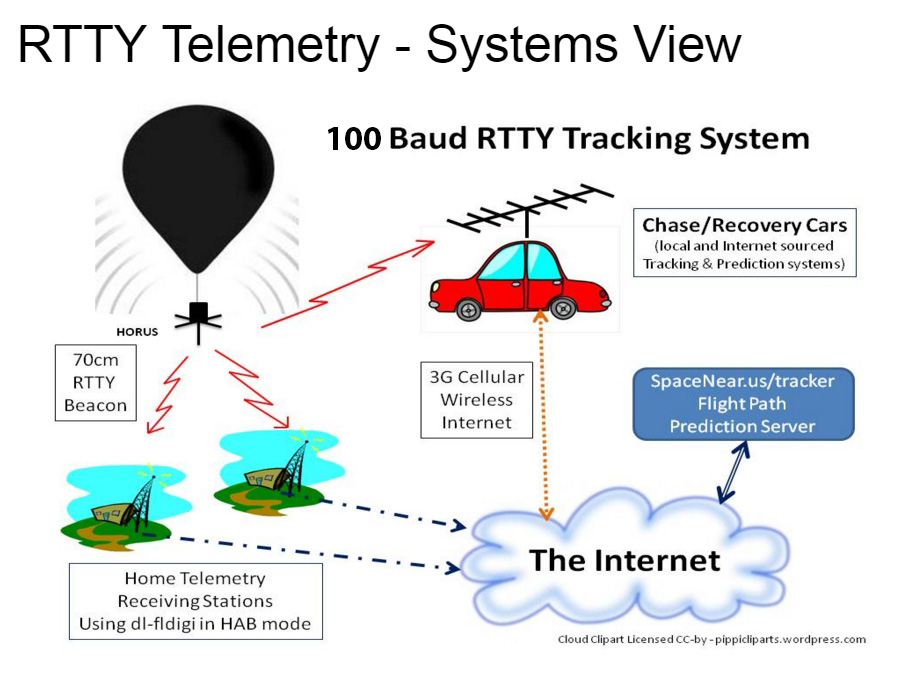
Amateur Radio operators across SA and western Victoria as far east as Melbourne should be able to hear the telemetry transmissions on 434.650 MHz using 100 baud RTTY (7N2). If you decode the transmissions using the dl-flDigi program, you can contribute your received frames to the global pool of tracking data enabling us to follow the flight.

You can find a guide to tracking the balloon flight using the dl-fldigi software at the following link: https://ukhas.org.uk/guides:tracking_guide

As usual, the payloads can be tracked live on the Habhub Tracker, available here.

As an added bonus, this flight will be carrying an experimental payload transmitting 115kbaud FSK on 441.200MHz, downlinking live images from the payload. This payload has been in development by David Rowe (VK5DGR) and Mark Jessop (VK5QI) for some time, and utilises an open source modem stack. If all works as expected, images should appear on this page: http://ssdv.habhub.org/VK5QI

Project Horus Balloon Launch – Advanced Notice!

AREG members will again be involved DSC_6524with Project Horus, undertaking another high altitude balloon flight for some high school students on Sunday September 18th.

The Launch time will be 10.00am from Mt Barker, in the Adelaide Hills.

Amateur Radio operators from across SE Australia can get involved in the flight by contributing to the telemetry gathering effort. Tune your 70cm SSB radios to 434.650 and decode the RTTY telemetry using the dl-fldigi software.

Keep watching the AREG website for further details and confirmation of the flight day (flights can be cancelled up to 24hrs before liftoff if adverse weather is predicted).

High Altitude Balloon Launch WEDNESDAY 27th July with Willunga High School

AXxwbdB

Andy VK5AKH and Mark VK5QI preping the balloon

Willunga High School undertook a high altitude (well, not so high this time…) balloon launch Wednesday the 27th July, with some tracking support provided by AREG’s Project Horus flight team.

Willunga Balloon Prediction July 2016

WHS Balloon Flightpath Prediction

This flight was organised mostly (gas + balloon + payload + CASA) by a science teacher from the high school, with assistance from myself (telemetry + recovery). The launch being mid-week certainly doesn’t make it easy from our side, so at the moment the tracking crew consists of myself, Gary, and the Adelaide division of IBM Ozlabs (Joel Stanley and Andrew Jeffery).

The flight carryed a GoPro plus the usual tracking & cutdown payloads, beneath a 300g balloon. We expected a burst altitude of around 20km, with a predicted landing zone to the east of Swan Reach:

This was a fairly long distance flight for the predicted altitude, but the predicted flight path holds the promise of some pretty good video of the Adelaide area (assuming the ‘partly cloudy’ prediction happens). The VK5QI chase crew was on the road to Swan Reach roughly 30-45 min prior to the launch time, to get in position to both cutdown (if required) and recover.

mzzX6zR

During the Chase and recovery


Update: The Flight was a Success!

The flight has been a success and the payload was recovered (albeit a little further away than planned, about 10-15km south of Waikerie). Here was the actual track route from the chase:

Flight Path

Flight Path

The AREG crew helped with filling the balloon as well at the School. Here are their ground crew efforts

The following gives you an idea of some of the frames collected by the camera for the school!

And the following is the recovery action

Thanks to Gary VK5FGRY, Mark VK5QI and Andy VK5AKH for the photos!

AREG & Project Horus at Linux.conf.au 2016 Geelong

Tux-simpleMark VK5QI and David VK5DGR attended thehorus-logo-black linux.conf.au conference again this year, this time held in Geelong. At the conference Mark gave a presentation on the balloon tracking systems that Project Horus uses. David then gave an introduction to what he is doing with the new binary telemetry system that has been flown experimentally on the last couple of Horus flights.

You can watch Mark’s presentation here!

David’s talk can be viewed here:

AREG-Horus SHSSP Balloon Flight – Summary

ISU LogoThe Australia Day launch of the Southern Hemisphere Space Studies Program high altitude balloon payload under an AREG / Project Horus balloon was a great success! Launched from the Mt Barker High School, in the Adelaide Hills, it was an almost “text book” launch.

AREG Flight Support Preparation

The AREG launch team were on site early in the morning to prepare for the event.  Matt VK5ZM made sure very knot was tied correctly while Mark VK5QI, Scott VK5TST and Ben VK5BB prepared the AREG payloads. Andrew VK5AKH and Gary VK5FGRY helped set up the event “environs” with the marquee and bollards/bunting to guide the crowd that was expected. Grant VK5GR meanwhile recorded the event (and will be making a short launch video soon). The flight used a 1600g latex balloon and was “powered” by Helium. Two AREG payloads flew, being the primary RTTY telemetry on the 434MHz band and the telecommand LoRa package used to control early flight termination if the need arose.

This slideshow requires JavaScript.

[fve]https://vimeo.com/153665896[/fve]

The AREG crew were joined by the SHSSP participants and event organisers from the University of South Australia and International Space University a little later in the morning.

ISU Students getting involved

Balloon filling operations were supervised by Mark VK5QI who enlisted the help of several of the ISU students to control the balloon as it went through flight preparations.

This slideshow requires JavaScript.

ISU Payload Preparation

The ISU payload included multiple SHIRTLOGOsensors and a telemetry transmitter of it’s own. There were three cameras onboard, a video camera looking down and an IR camera looking down and a stills camera looking out. The payload telemetry consisted of a 9600bps VHF data feed that the Uni was testing on the 2m amateur band (for a future Cubesat mission). The controller for their payload was based on a Raspberry Pi. The end result was impressive considering the students had little more than a week from concept to realisation!

This slideshow requires JavaScript.

Balloon Launch

The launch was attended by visiting dignitaries from the Mt Barker Council including Mayor Ann Ferguson, various media reporters from several TV and radio networks and by more than 150 members of the public. It was presided over by John Connolly from NASA who is their ISU representative, as well as Associate Professor David Bruce from the University of South Australia.

The launch itself went faultlessly, with the surface winds dropping off at the last second to make it an easy gentle vertical ascent.

This slideshow requires JavaScript.

Flight Tracking

habhubloogoA major contribution to the success of the flight was the reception and relaying of tracking data from a large network of amateur radio stations across South Eastern Australia.

To enhance the sense of involvement by the amateur radio community, the AREG operated the main telemetry beacon under the special amateur radio callsign of AX5ARG-1, to mark the occasion of the launch taking place on Australia Day. This captured the imagination of many first time tracking stations. It was great to see over 35 stations, including many first time contributors adding to the successful collection of flight telemetry.

AREG will be offering a special commemorative QSL card to mark this flight to all stations who can show they receive the telemetry. If you managed to upload data to HabHub.org then you automatically qualify. However, if you copied telemetry but didn’t manage to get it into the HabHub system, please send an email with a screen shot or captured telemetry frame to vk5gr@wia.org.au for inclusion in the SWL QSL card logs.

VK5RM-Screen Shot 01-26-16 at 11.36 AM

Screenshot of tracking courtesy AX5RM (relayed from VKLogger Forum)


launch 2Stations who heard the balloon and reported via HabHub:

AX5APR, AX5DC, AX5DF, AX5DMC, AX5FAJH, AX5FJ, AX5FO, AX5FSCK, AX5KX, AX5RM, AX5RR, AX5ZAR, AX5ZEA, VK3OF, VK5AKK, VK5AO, vk5dgr, vk5esh, VK5EU, VK5FAAP, VK5FAJH, VK5FAo, VK5FJGM, VK5FO, VK5FPAW, vk5ftaz, vk5hs, VK5HSE, VK5KJP, VK5NEX, VK5QI-9, VK5RR, VK5TST, VK5ZM, VK5ZRL


AREG member Peter, VK5KX also made a major contribution establishing a remote telemetry command post high atop of the eastern rim of the Mt Lofty ranges. From there he was able to not only collect telemetry but also help the ground chase crews with liaison communications. Thanks Peter for your important contribution.

rrc-VK5HS-trackingteam-20160126_114429AREG’s good friends out at the Riverland Radio Club also made an impact not only with tracking but through publicity on ABC Riverland radio as well! Thanks Ivan VK5HS and the team!


Chase and Recovery

Finally, probably the most significant taskballoontrackshssp-2016 considering all that had gone before, was to recover the payloads once they landed. Three tracking teams were out in the field lead by Matt VK5ZM/Grant VK5GR in car 1, Mark VK5QI/Gary VK5FGRY/David VK5DGR in car 2 and a team from ISU in car 3.

The chase was one where best laid plans changed at the last minute. By quirk of fate, the VK5ZM team didn’t actually obtain the wind predictions used to drive the tracking system until after the 1800Z Global Forecast System model was released, which gave us a surprise. Overnight, the jet stream had intensified, which resulted in the balloon traveling ~25km further down-range than planned. This changed our chase route quite substantially at the last minute and instead of targeting Bow Hill, the VK5ZM team headed for Karoonda. Meanwhile the VK5QI team which had departed earlier was already heading for Bow Hill.

This slideshow requires JavaScript.

In the end, the two AREG recovery vehicle teams rejoined each other out on the road and were on site before the balloon landed. However, due to local terrain and access restrictions, we did not catch sight of the parachute landing this time. The recovery teams had 3km of rough 4WD tracks and paddocks to negotiate and a further 2 km round trip hike through the thick Mallee using classic radio direction-finding techniques to navigate to the payload and then back to their vehicles.

Flight Statistics

[table “” not found /]

[fve]https://vimeo.com/153663387[/fve]

Thanks to all involved!

The SHSSP and AREG teams were ecstatic over the success of the event and there was also very good media coverage. Stories were aired on ABC891 radio in Adelaide and on ABC Riverland (thanks to the Riverland Radio Club who were following the event) as well as on NWS9-TV Adelaide and the ABC-TV South Australia news. The SHSSP event organisers were thank-full to the AREG for their contribution to the success of their stratospheric balloon launch project.

Many thanks must also go to all amateur radio operators who tracked and uploaded the telemetry data as well as to the UK High Altitude Society who built, maintain and provide access to the habhub.org system for tracking balloon flights!

UPDATE: SHSSP Balloon Launch Countdown Continues!

[tminus t=”26-01-2016 09:30:00″ style=”carbonlite”  /]

Preparations are well underway now for the launch of the Stratospheric Balloon flight being conducted as part of the Southern Hemisphere Space Studies Program for the International Space University.

The participants are already well advanced in constructing their payload and have it on test in readiness for the flight.

SHSSP Payload

SHSSP Payload

T-41hrs-prediction

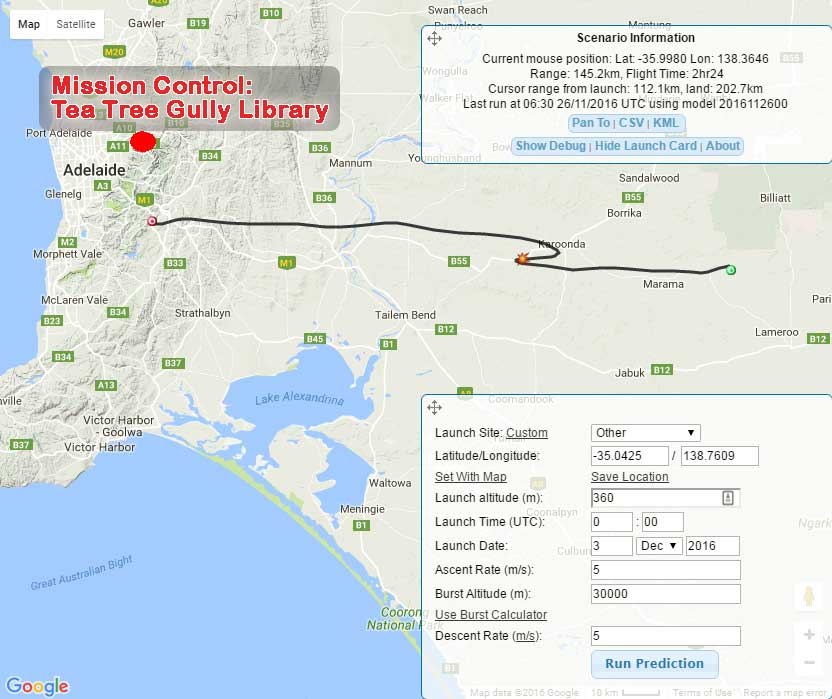
Flight track prediction for Tuesday morning!

AREG and the Project Horus team are also working behind the scenes readying the chase teams and looking at the probable landing zones. The good news is that it looks to be (provided the weather holds) a textbook flight, landing in one of the teams preferred touchdown locations.