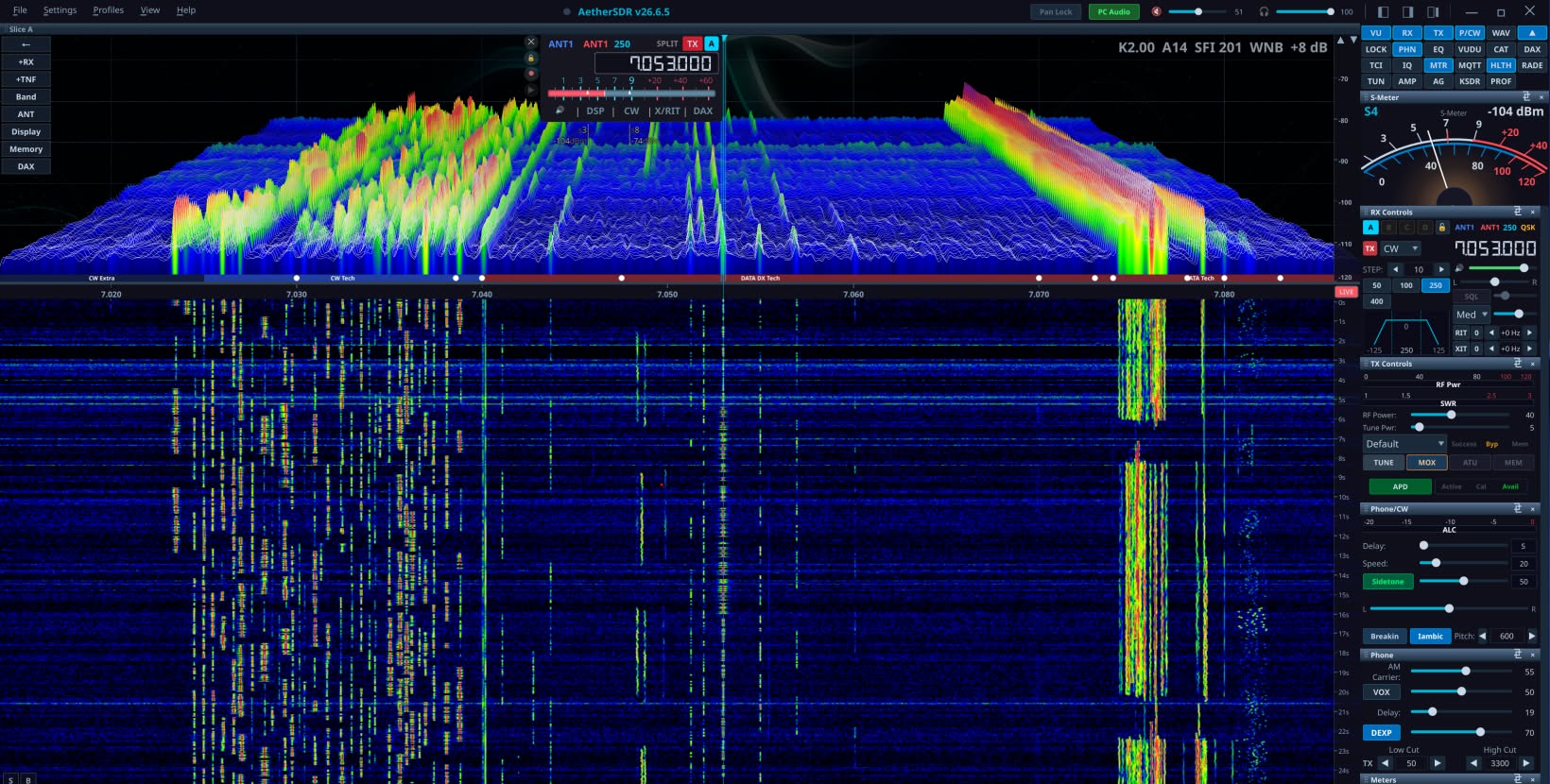
With the rise of new coding environments and increasingly powerful SDR based HF transceivers, the world of HF Radio has never been more fascinating to explore. New software with quite amazing capabilities is appearing evryday that can leverage Sofctware Defined Radio assets in new and exciting ways,
This month, AREG is pleased to present an introduction to a new HF radio software system that will revolutionise your SDR radios, from the Hermes Lite to your high end Flex radios. Steve VK5SFA will take us through the capabilities of the new AetherSDR SDR software and provide us some demonstrations of the never before seen capabilities it brings to the table for HF Amateur Radio.
How can you take part? AREG meets at the Fulham Community Centre, Phelps Court, Fulham on the 3rd Friday of the month. Doors open at 7.00pm for a 7.30pm start. Visitors are always welcome to come along and meet the members as well. See you there!
Now for our next general meeting, members are firstly reminded that this meeting is our Annual General Meeting. We are looking for some new committee members to join the team as we say thank you to our president, Gerard VK5ZQV who is stepping down from the role after 3 years. If you feel you would like to become involved in steering AREG into the future, please consider nominating for the committee.
Introducing the Kestrel Project
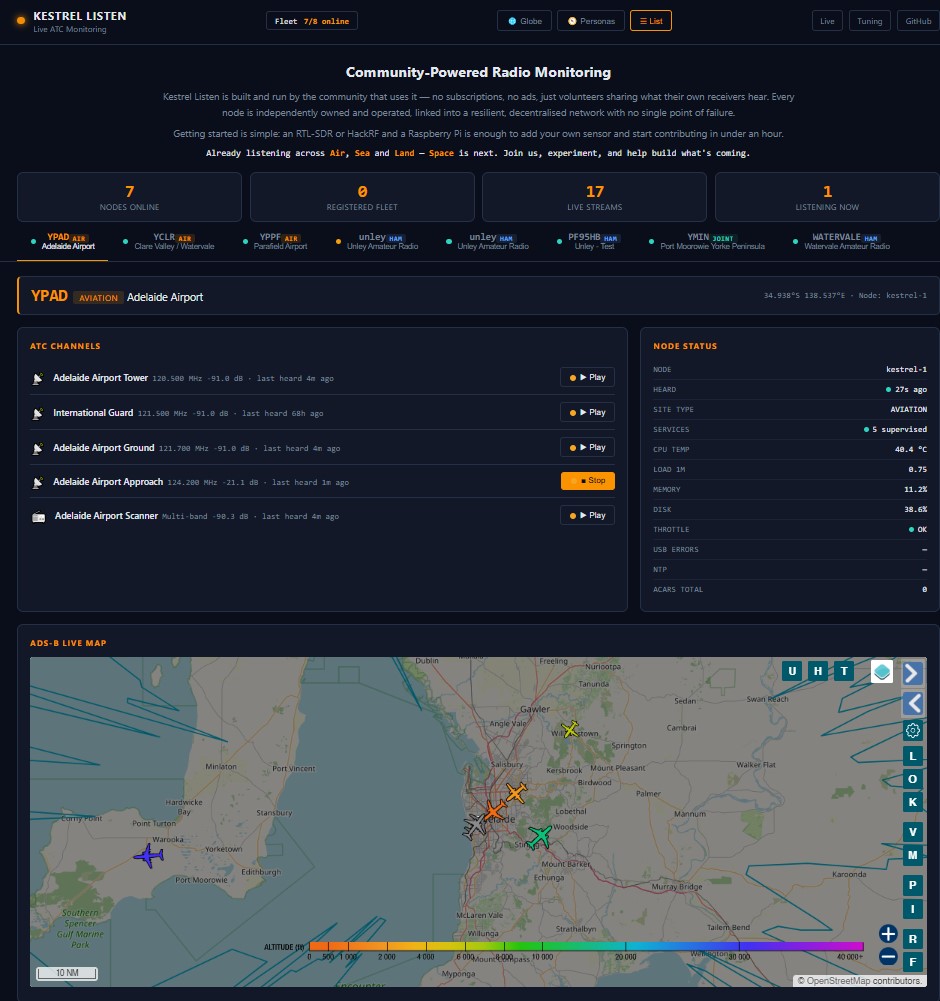
At our AGM we will also have a special presentation from Derek VK5TCP. He has been developing a community-provided distributed Receiver network for aviation, maritime and amateur radio traffic, built from an operator’s perspective, opened up so anyone with an SDR and an antenna can join it. Nicknamed Kestrel, it allows monitoring of all sorts of radio services. Derek is currently integrating ADSB, AIS, AM/FM/SSB, Meshtastic, Meshcore, scanners, remote switching, and more.
An example below is his integration of ATC Air traffic control receivers with ADSB aircraft tracking.
More advanced features and strategies will be discussed as part of the presentation. . He continues to develop and expand the platform and is looking for others to use it and contribute if you can. This will be a fascinating look at what can be done with SDR technology today and is one not to be missed.
AREG AGM Details
The AGM will be held on Friday August 21st at the Fulham Community Centre, Phelps Court, Fulham. Doors will open at 7.00.pm with the AGM being held at 7.30pm. The technical talk will be held on conclusion of the AGM, with tea and coffee served afterwards.
The next meeting of AREG will be held on Friday June 19th and will feature an introduction to the world of Meshtastic and Meshcore LoraWAN networking.
We will take you through what the networks are made of, what you can do with them and how to get involved.
This will occur down at our Clubrooms, at the Fulham Community Centre, off Phelps Court in Fulham. The meeting will start at 7.30pm with the doors open at 7.00pm.
Visitors are most welcome! We would love to meet you.
Are you one of the hundreds of people who have decided now is the time to start your journey into the world of Amateur Radio? We have many newcomers gaining their qualifications every month. Many of those, once they have their licence, take a step back and then ask themselves the question – now where to start gettng my own station on air?
At our May general meeting, we will have a panel of presenters take you through the process of working out where to begin, what to consider and how to get on the air from your own station.
We will introduce you to the various components you need to consider when getting on air on either the HF or VHF/UHF bands as well as highlight some activities where you can come along and find out more before taking the financial plunge yourself!
The meeting will be held at the Fulham Community Centre, on Phelps Court, Fulham, on Friday May 15th. Doors open at 7.00pm with the presentation starting at 7.30pm.
Modern amateur radio is changing rapidly, and Software Defined Radio (SDR) is at the centre of that change. Many amateurs already own an SDR — or use one indirectly — but few have had the chance to understand how it actually works or why it feels so different from traditional radios.
This upcoming lecture will provide a plain‑language introduction to SDR, aimed specifically at amateur radio operators, not engineers or programmers.
Rather than focusing on mathematics or theory, the talk will explain SDR concepts using familiar radio ideas: receivers, mixers, filters, IF stages, and transmitters — and show how these functions are now being done in software instead of hardware.
Topics will include:
What “software defined” really means in a radio
Why SDRs can see so much spectrum at once
The role of analogue‑to‑digital converters and why bit‑depth matters
Why some SDRs are better at weak‑signal work than others
How modern SDRs replace IF strips with digital processing
What limits SDR transmit power and why filtering still matters
How SDRs are used by amateurs, researchers, and modern networks
The lecture will also touch on GNU Radio, the most widely used SDR software framework, explaining what it does and why it has become so important — without requiring any programming knowledge.
Whether you are:
Curious about SDR but unsure where to start
Using an SDR “black box” and want to understand what’s inside
Interested in digital modes, weak‑signal work, or experimentation
Wondering how modern radios differ from classic superhets
…this session is designed to demystify SDR and connect it back to the radio principles amateurs already know.
No prior SDR experience is required — just an interest in radio.
So when are where is this event? AREG meets at the Fulham Community Centre, off Phelps Court, in Fulham, Adelaide. Doors open at 7.00pm, Friday 17th April.
This month the meeting will begin with a short Special General Meeting to address a minor change to the group’s constitution, followed by the presentation which will likely start around 7.45pm.
For our regional members, the meeting will, as usual, also be interactively streamed via Zoom. If you are a regional amateur and are interested in finding out a little more about AREG, guest passes are available to our Zoom meetings on request. Please contact our secretary – via vk5arg@areg.org.au
On the 20th of February 2026, AREG was introduced to the world of Amateur Radio microwave experimentation on the 241 GHz band by David VK5KK and Iain VK5ZD. Here is their story!
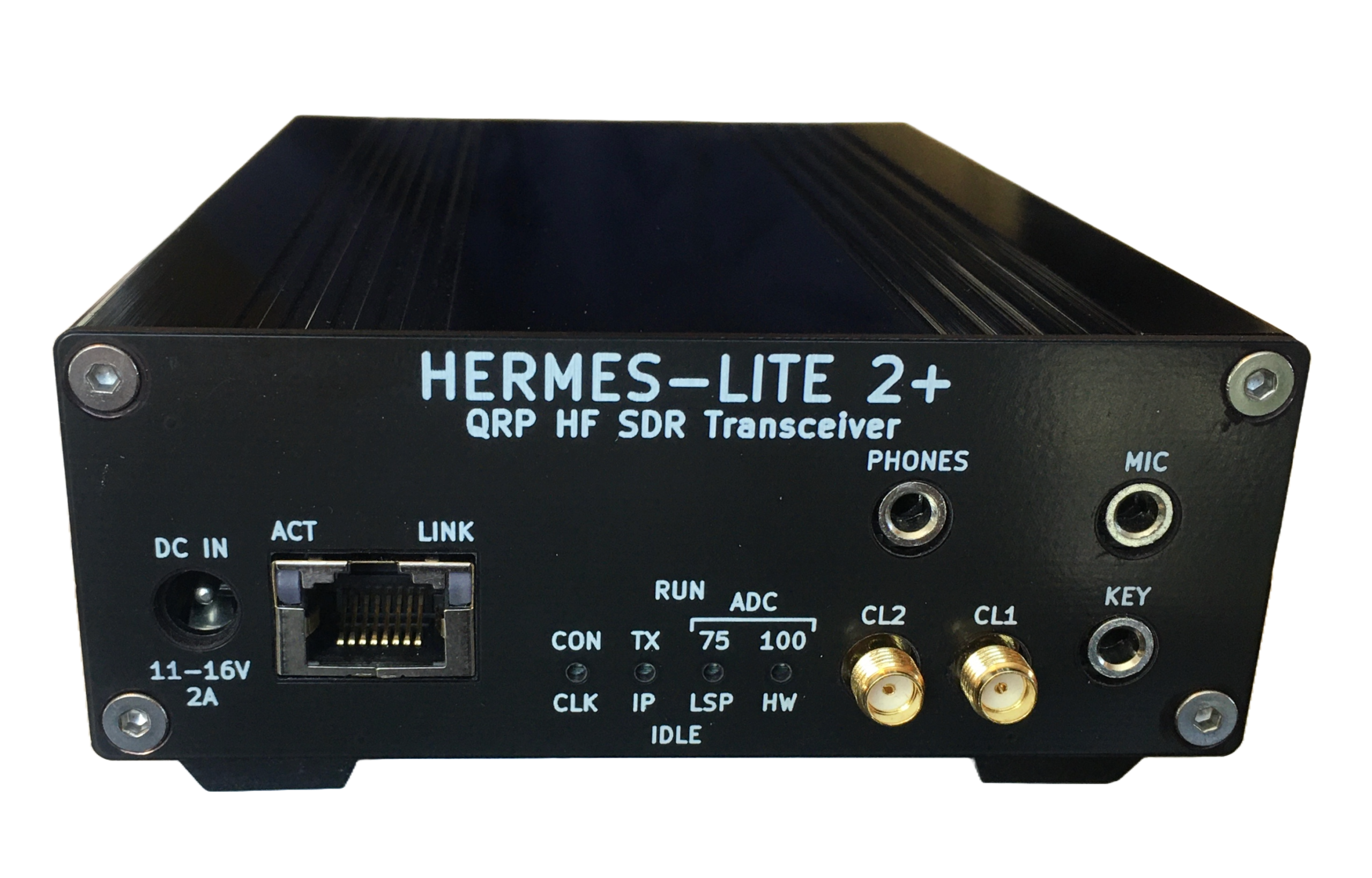 This month, AREG is pleased to present an introduction to a new HF radio software system that will revolutionise your SDR radios, from the Hermes Lite to your high end Flex radios. Steve VK5SFA will take us through the capabilities of the new AetherSDR SDR software and provide us some demonstrations of the never before seen capabilities it brings to the table for HF Amateur Radio.