AREG wishes to thank Kevin VK4UH for his inspiring presentation on Meteor Scatter at the April 2021 general meeting. A copy of the presentation is available via YouTube and Hayden VK7HH’s HamRadioDX channel.
AREG wishes to thank Kevin VK4UH for his inspiring presentation on Meteor Scatter at the April 2021 general meeting. A copy of the presentation is available via YouTube and Hayden VK7HH’s HamRadioDX channel.
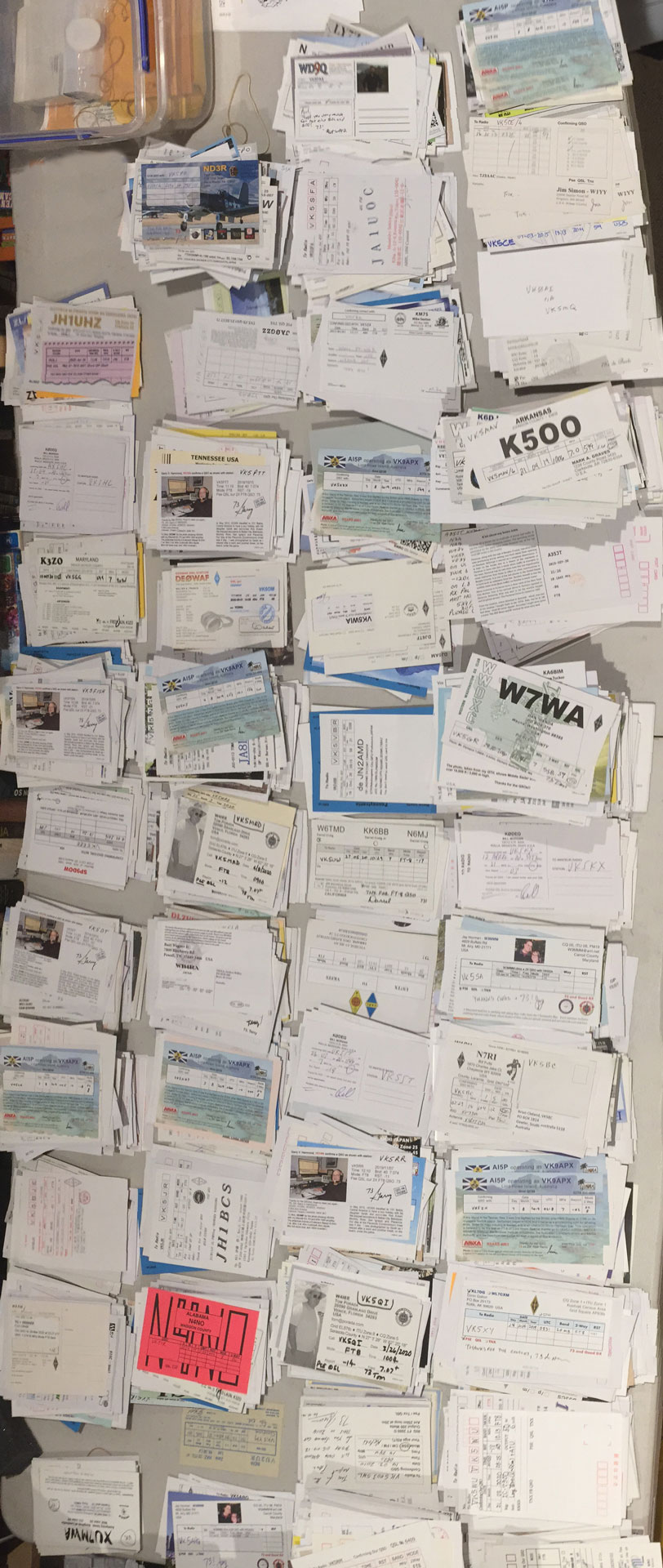
6+ kg of cards sorted waiting distribution
AREG is pleased to announce that the next load of cards has arrived from the WIA National Inwards QSL bureau and is in the process of being sorted. Over 6 kg of cards are waiting sorting in the bureau at this time.
Over the next 2-3 months opportunities to collect cards will be made available at the North East Radio Club Buy’N’Sell in Adelaide on Saturday April 17th, as well as at the AREG General Meeting Friday June 18th.

WIA members will have their cards posted to them by the end of June as their yearly card mail-out. Should you want your cards sooner, please email: vk5qslbureau@areg.org.au and we can see what arrangements can be made.
Members of affiliated clubs will start to receive their cards in early July through their local radio club. Non members will need to contact Grant VK5GR at the VK5 inwards QSL Bureau and make arrangements to send a self addressed and stamped envelope or mail bag (check beforehand as some people have LOTS of cards waiting).
Cards will be stored for 12 months before being disposed of so if you are not a member of the WIA or an affiliated club, you need to make arrangements to either collect in person or send a mailbag for return postage.
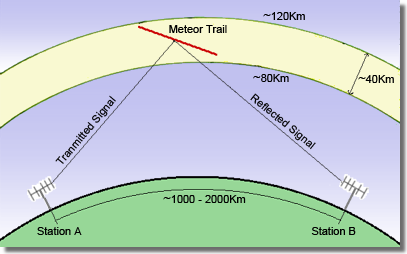
Image thanks to qrz.now
The Amateur Radio Experimenters Group is pleased to announce that we have a special guest speaker this month. (Dr) Kevin Johnston VK4UH will be talking to AREG about Meteor Scatter propagation and how to get started in the mode. Kevin will join AREG members assembled in our club-rooms in Adelaide via video-link from QLD.
Kevin will give us an overview of the astronomy and physics of meteors and their use for making long distance VHF contacts when no other mode of propagation is available. The presentation is aimed towards those with no prior experience of this fascinating mode of communication.
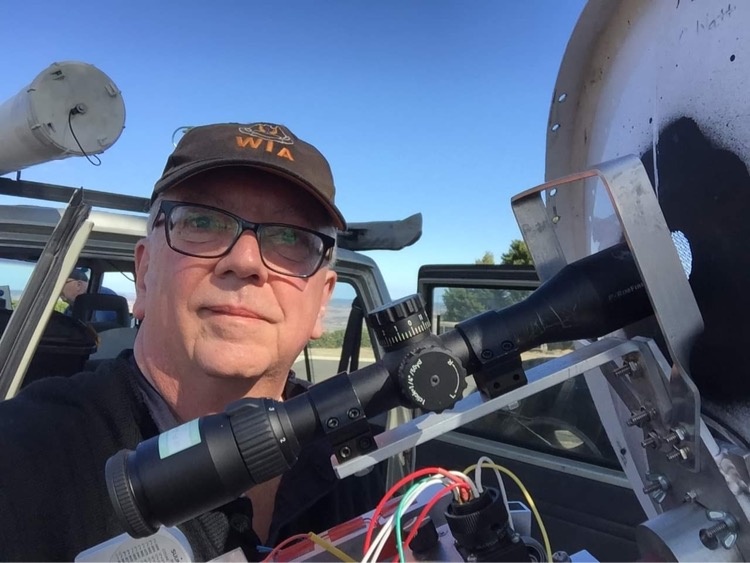
(Dr) Kevin Johnston VK4UH
(Dr) Kevin Johnston VK4UH is a medical doctor and has been licences for 50 years. He has had a try at almost all aspects of amateur radio through those years and is now focusing on long distance microwave operation, EME and Meteor Scatter
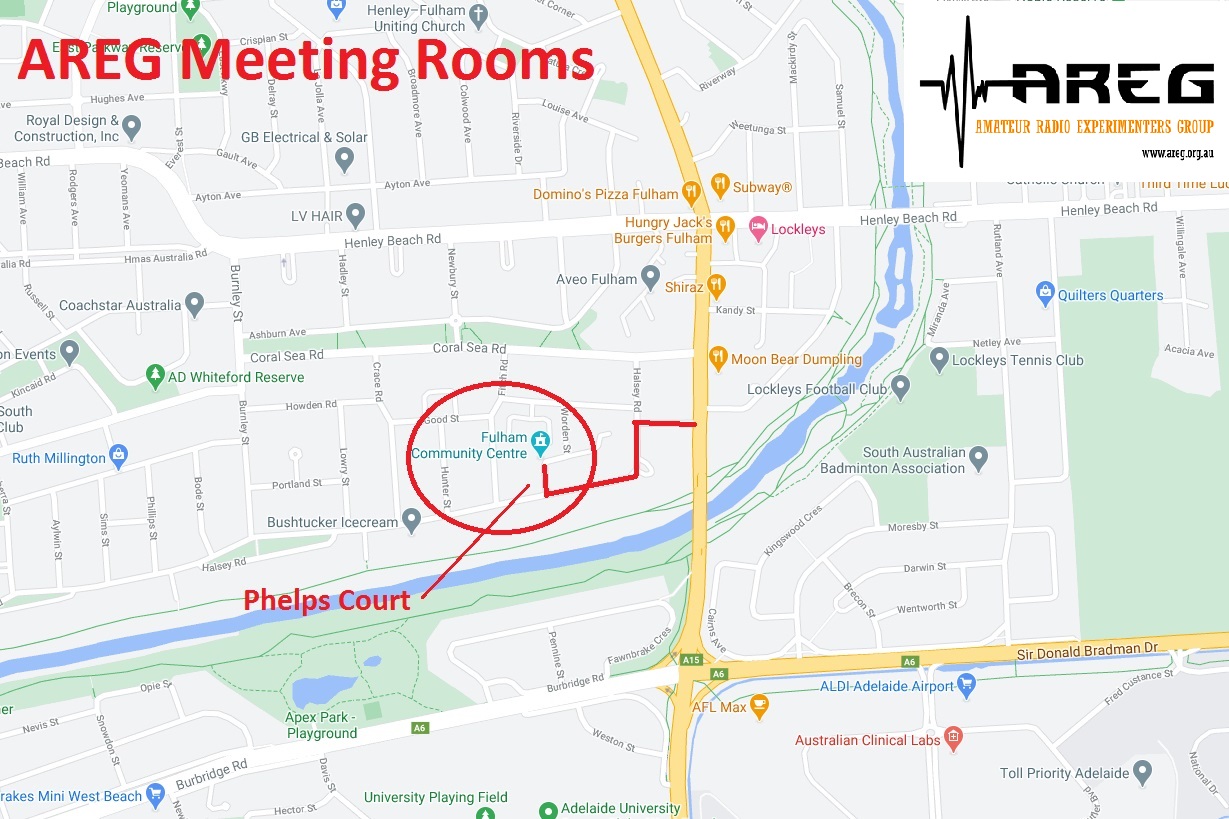
The presentation is scheduled to start as close as possible to 7:45pm ACST (1015z or 8:15pm AEST). The venue is the Fulham Community Centre, Phelps Court, Fulham. Doors open from 7:30pm.
 For the AREG members outside of Adelaide, the session will be also streamed on Zoom.

 Virtual visitors will be able to tune in via the “HamRadioDX” YouTube channel thanks to Hayden VK7HH.
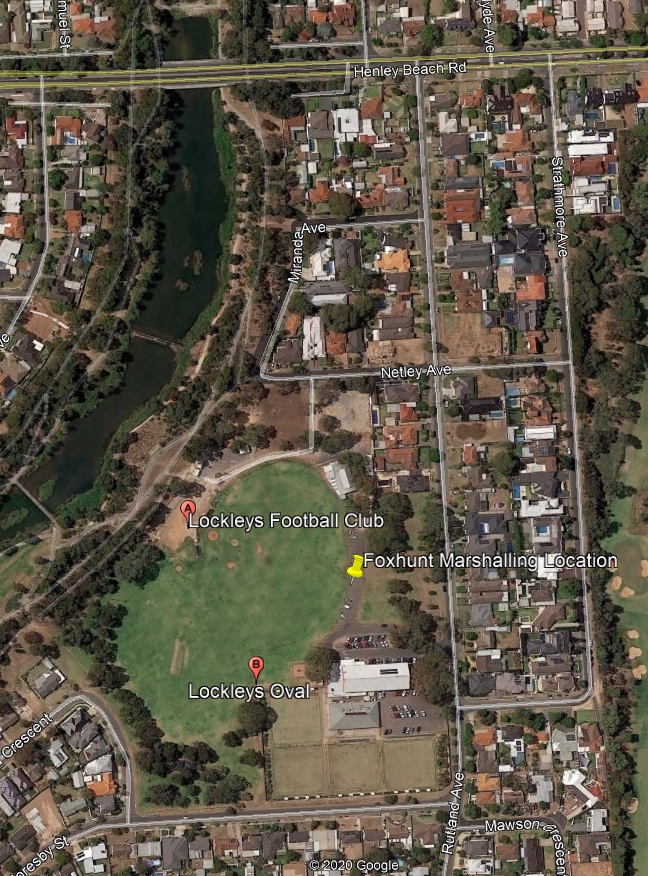
The next foxhunt run by AREG will be held this Friday, March 12th. The hunt will again start from Lockleys Oval. Hounds are asked to gather from 6.15pm and will be released at 6.30pm. Three foxes will operate on the 144MHz and 439MHz bands from somewhere in the Adelaide metropolitan area.
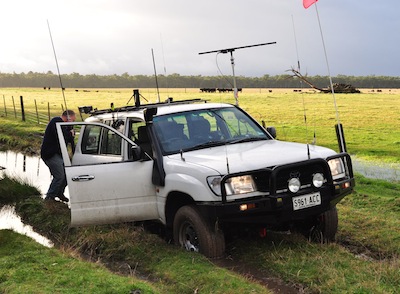
Team ZSN at the Mt Gambier Foxhunting Championships
The frequency of the fox(es) will be broadcast on AREG’s VK5RSB Summertown 70cm repeater on 439.900 MHz (-5MHz) a few minutes before 6:30pm with all invited to liaise and discuss their progress on the repeater throughout the night. (Remember VK5RSB requires a 91.5Hz CTCSS tone on its input).
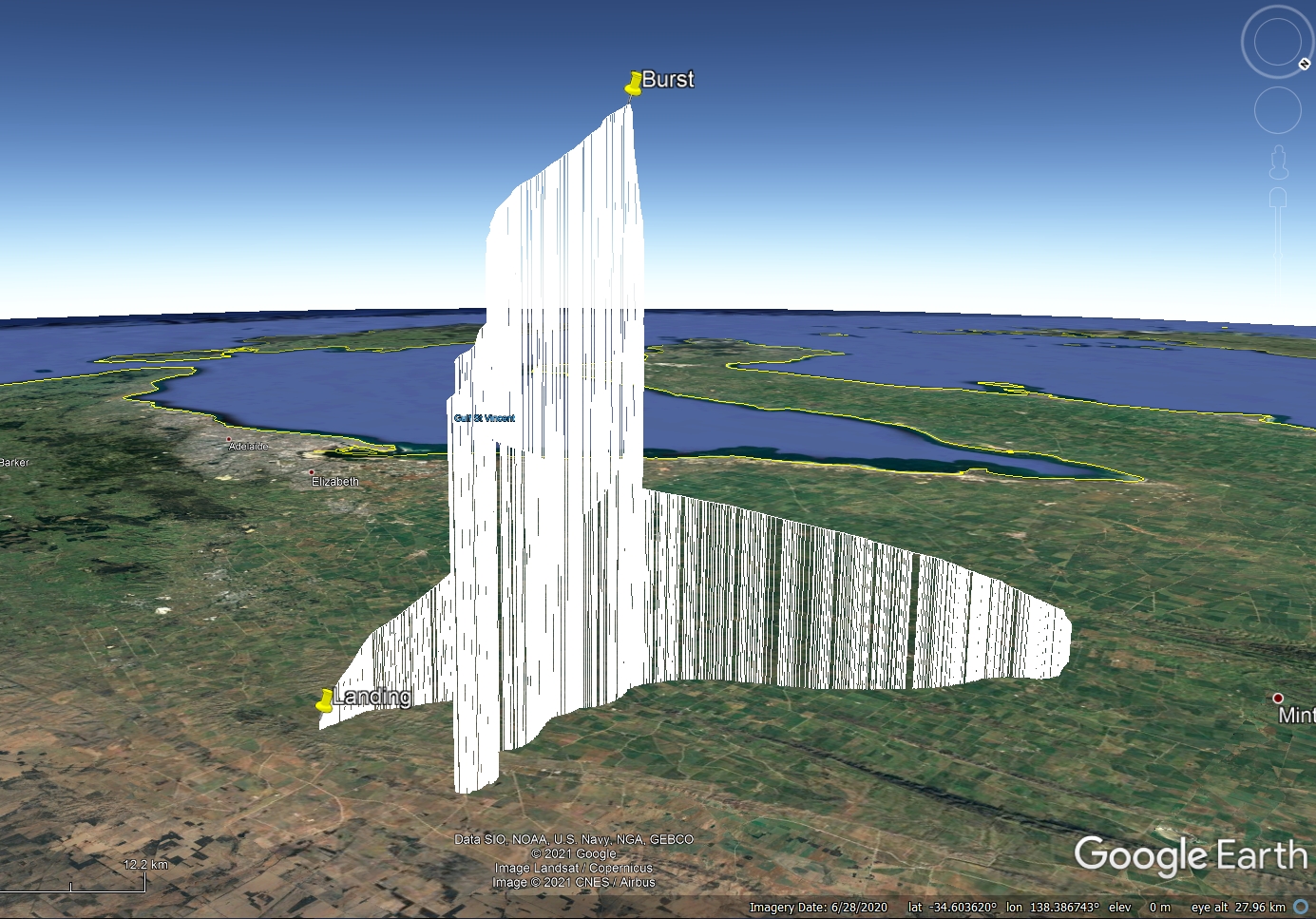 It is late and we are still processing telemetry and video streams but we thought we would post a quick note to say that Horus 55 was an absolute success. Stories are coming in from across the region from people who successfully watched the Amateur TV signal live over 80-90km away.
Reports also of the primary 434MHz 4FSK telemetry beacon being received 700km away in Melbourne plus the LoraWAN Things Network gateways over 560km away reporting packets from the experimental LoraWAN payload on 923MHz ISM.
We will post a long form story in the next day, but here is one of the amazing frame grabs from the TV transmitter just after burst. As the TV payload started to tumble it sent back this frame showing all of the telemetry transmitters and the parachute in one shot!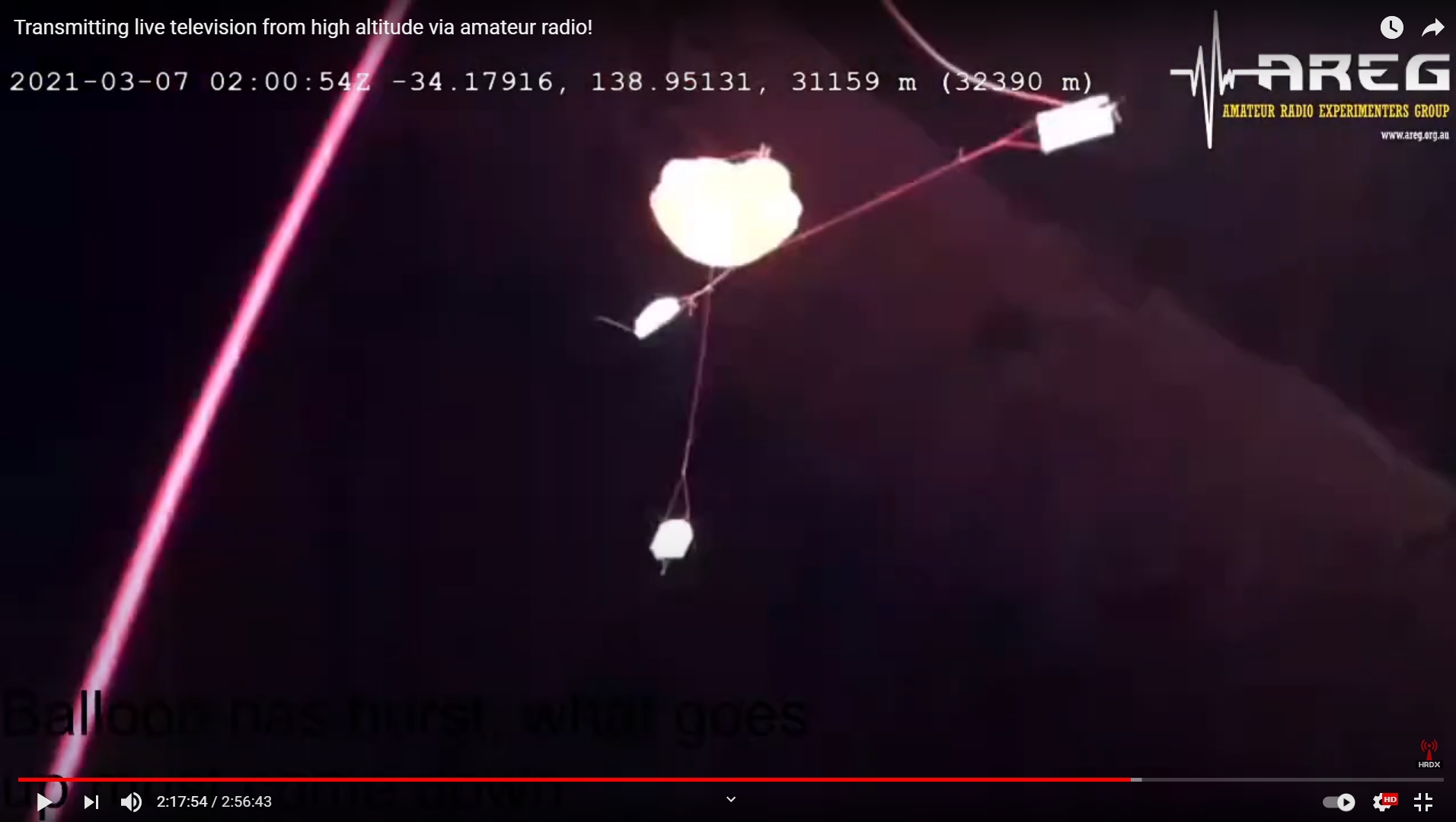
Finally here was the moment the chase and recovery crew picked up the payload.
 UPDATE: The launch has been set for Sunday 10AM ACDST, from the Auburn Oval.
The flight crew are starting to get flight-path predictions for this coming weekend, though the models are quite inaccurate this far ahead of the prediction time. Currently a launch on Sunday looks promising from Auburn. This would put the balloon within 80-90km of Adelaide for much of it’s flight, which should allow many stations to be within direct decoding range of the Digital-ATV transmission on 445MHz.
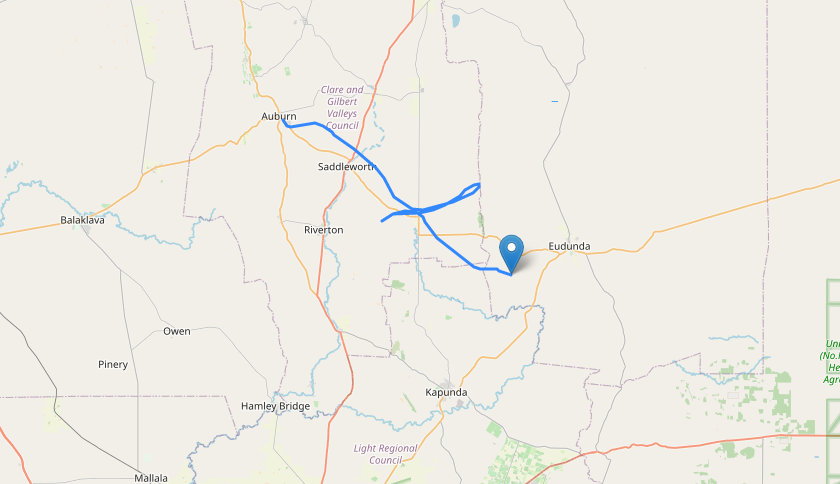
These predictions *will* change over the next few days so this is just a preliminary plan at this stage. We expect to be able to make a commitment on the launch date and time most likely Thursday or Friday this week.
As a reminder, the following launch dates/times are planned:
For those without D-ATV receiving equipment, AREG is going to attempt to stream the received ATV pictures via Hayden VK7HH’s HamRadioDX YouTube channel at the same time. You will find the link to the YouTube broadcast here:
If you want to get involved through receiving the D-ATV signal direct from the balloon on 445MHz take a look at the How-To Guide being maintained by Mark VK5QI:
The setup guide is available here: docs.google.com/D-ATV_Setup_Guide
Amateurs in the Adelaide and Central SA region are also encouraged to get involved with the flight through receiving and uploading flight telemetry from our 70cm band tracking beacons. Every piece of telemetry data is valuable to the flight tracking and recovery teams so if you can help join the distributed receiver network to collect that data you will be making an important contribution to the project!
The telemetry beacon will operate on 434.200MHz
If you want to have a go receiving the telemetry from this flight, you’ll need a SSB-capable 70cm receiver (or a SDR), and the horus-GUI telemetry decoder software ( github.com/projecthorus/horus-gui ).
A brief guide on setting this up is available here: github.com/projecthorus/horusdemodlib/wiki/1.1-Horus-Rx
The D-ATV test flight of Project Horus is getting closer. This weekend Mark VK5QI will be up on the hills face overlooking Adelaide and will run the balloon transmitter from the ground to give stations a chance to configure their receiving equipment before the main event on Sunday March 7th.
UPDATE: This event has now concluded. Eight stations were able to get setup to receive the DVB-S signals. We are still on track to launch this coming weekend, with the planned launch date still being Sunday the 7th of March at 10AM. If weather conditions do not permit a launch on this date, Monday the 8th of March (a public holiday in VK5) is the first backup date, with a launch the following weekend being the second backup. The launch site is still TBD (either Auburn, Two Wells, or Mt Barker).
Mark will be available live on the air for people to test their receiving systems at the following times and places this coming weekend:
– SATURDAY 27th Feb
– SUNDAY 28th Feb
The setup guide is available here: docs.google.com/D-ATV_Setup_Guide
NOTE: There may be an update to SDRangel before the launch. The new version will display signal MER (Modulation Error Rate) information, but has not been released yet.
If you missed the AREG presentation on what was required to to receive the balloon, the video is available via the HamRadio DX Youtube channel (Thanks Hayden!)