WIA Sunday Broadcast – VK5ARG FreeDV Relay on 7177kHz

wia-logo-image_1_hiresThe AREG (VK5ARG) is conducting an experimental re-transmissions of the National and VK5 WIA News Service in the FreeDV-1600 mode.

The aim is to encourage amateur radio operators to come and try FreeDV HF Digital voice.

[table “” not found /]

If you have FreeDV set up with your HF station why not tune in and see how you go? You can use one of the many open source software packages or perhaps using an SM1000 FreeDV modem to receive (and transmit FreeDV. You can visit the AREG HF Digital Voice project page for more information as well!

Callbacks are conducted after the broadcast tiki-download_fileproviding an ideal opportunity for you to experiment further with FreeDV!

You can also log your FreeDV WIA Broadcast reception report here:

For more information about FreeDV please visit the www.freedv.org website or log onto Internet Relay Chat (IRC) on irc.freenode.net. (http://webchat.freenode.net/?channels=freedv) and connect to the #freedv channel.


Update: 17th January 2016 Activity

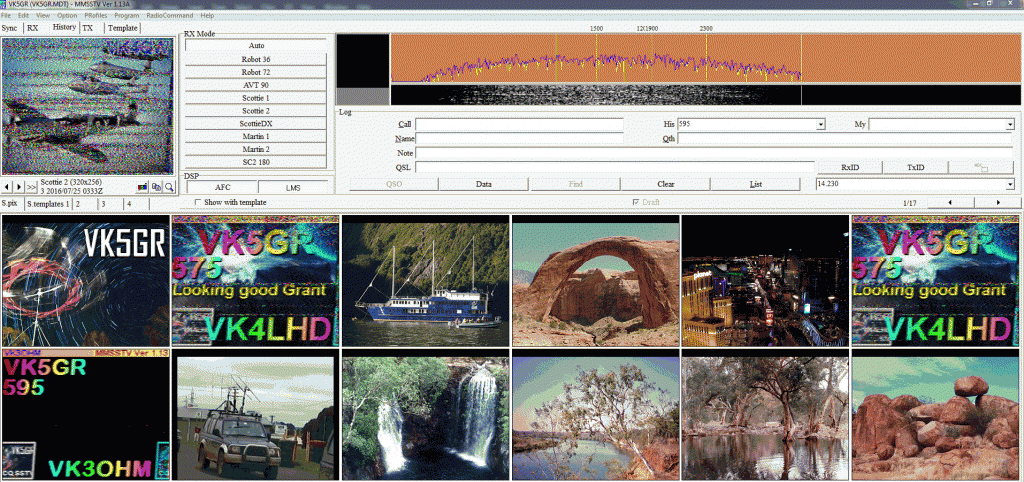
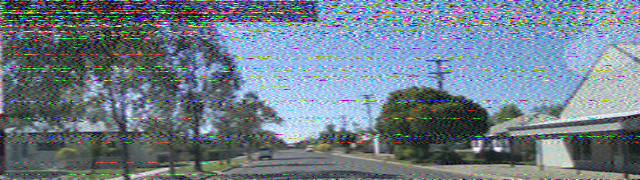
Following on from the broadcast reports were coming in from around the country. Some could decode it successfully, some couldnt. As this is an experiment, we are interested in all results. The following are some of the feedback received:

Michael VK5ZEA in Port Lincoln (~230km away) posted these samples:

Andrew Scott VK3BA in Melbourne (~700km away) posted this sample:

Thanks to Andrew and Michael for posting samples of what they received online!

VK5ARG at the Summer VHF/UHF Field Day 2016

The WIA Summer VHF/UHF field day is about encouraging amateur radio operators to get out in the field to make contact with as many stations as possible over the greatest distance possible on all amateur frequencies above 50MHz. This makes it a very diverse and interesting contest as you have a variety of stations participating, including:

  • home stations operating any or all VHF / UHF and Microwave bands
  • portable stations running stations on bands between 50-1296MHz
  • portable stations specializing in microwave (usually bands between 1296-10368MHz) usually operating distant mountain tops.
  • roving stations which change location constantly throughout the contest

Distances are calculated using the Maidenhead grid locator system and contest contacts consist of exchanging signal strength, a contact sequence number and which grid square you are operating from.

This year, the AREG decided to mount a portable station using the Club call-sign, VK5ARG, which operated in the 8 hour division.

DSC_6422-web Bob, VK5FO and Ray, VK5RR arrived onsite just after 10am and after meeting Paul from the Salvation Army commenced the set-up of the station.  Andy VK5AKH arrived and assisted with the station set-up.

OLYMPUS DIGITAL CAMERA

Ray VK5RR and Bob VK5FO setting up

The station was very similar to the Team DSC_6427-webVK5FI station that Bob and Ray set up for the Spring Field Day, with the addition of 23cm.

A few small changes were made to the station from the lessons learnt during the Spring FD – and that was ensuring that each band had a dedicated logging laptop and adding some headphones!

The addition of the club marquee was most welcome with temperatures in the mid 30’s – we were able to operate in relative comfort!

The station was set-up and ready to go a few minutes to go before the start time of the contest.

During the course of the day we had a few visitors drop in to take a look at the station, and Ben VK5BB, popped in for an hour or so and operated the 6m station for part of his time.

Everyone present had a great time, and the highlight of the day was Bob VK5FO making a few DX contacts on 6m – working 3x ZL stations an a VK4 station.

At the end of the 8 hours, the station was pulled down and packed up in about 45 minutes.

We would like to extend a special thank you to the Salvation Army Wynn Vale for allowing AREG access to their land behind the Hall.  The site proved to be quite good for this type of station with excellent take-off in all directions for VHF and UHF.

Photo Gallery from the Day!

AREG Members Roving during the Contest too!

While the club members were having fun manning the station in Adelaide, Matt VK5ZM and Grant VK5GR took a different slant on the contest and entered the Roving section operating as VK5GR.

MaidenheadMapVK5GR2016SummerFieldDay

Q8pxqsl

VK5GR operating from Port Giles next to the silos

They started out the day by driving to Port Giles  on Yorke Peninsula. This was significant as it allowed them to activate major grid square PF84. 6m was the surprise here working VK7DD on 52.525 FM. Good contacts were also had with many Adelaide stations on 144 and 432MHz.

After about an hour they packed up and hit the road, contesting along the way. At each new 6 letter grid they came to they stopped for 5-10 minutes and made a set of contacts on both 2m and 70cm using just the mobile antennas on the car. The tropospheric ducting was strong across the gulf as all of the signals were S9++ – not bad for an average 70-100km path!

After Port Vincent it was decided that things needed to be sped up a little or the objective of at least 4 major grid squares in 8 hours wasnt going to be met. So they started contesting while mobile on the highway (at 100kph). This proved challenging as they now were working a new grid square about every 3-4 minutes! Usually there was time for 2-3 contacts per square on one or two bands before they had to stop, update their locator in the logging software and go again. They kept this routine up for about 8 squares before reaching the slag heap lookout at Ardrossan.

At Ardrossan they came across Tim M8Qe6el-smallVK5ZT who was participating in the microwave section of the contest. It was great to see the microwave guys in full swing! Matt and Grant then also broke out the 6m antenna and  gave some calls on both 50.2 SSB and 52.525 FM so that they could claim 6m for grid square PF85.

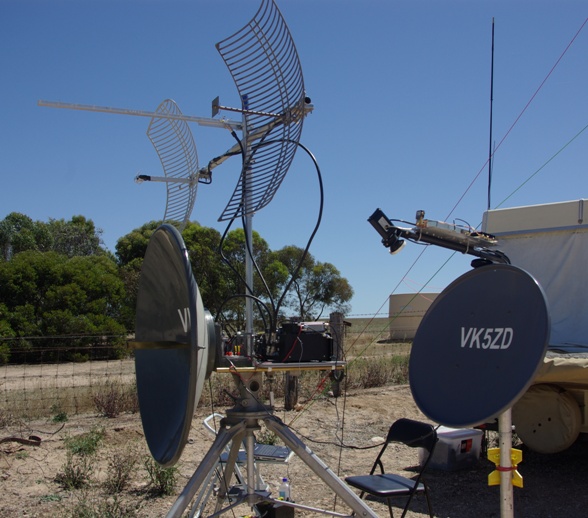
As time was then running short, they then decided to drop an attempt to work from PF86 (which was going to be a very difficult path to Adelaide) and instead focus on distance contacts from the northern edge of PF95 and southern edge of PF96. To do this they headed for Kulpara, where they also found Iain VK5ZD operating also in the microwave section. Some more 2m and 70cm contacts were had just from the mobile whips on the car (but with the advantage of ~200m elevation on top of the Hummocks range) before then packing up and heading for their last site of the day on Middle Range Hill near Nantawarra. This allowed them to activate grid square PF96ca.

Here they broke out the big guns and put up the 2m beam. A couple of contacts were made on SSB including to Port Pirie and the Riverland, plus multiple contacts back down into Adelaide. 6m and 70cm were also activated, with every contact on average exceeding 120-140km. Finally they dropped back into PF95cx for a 20 minute closing flurry before the 8 hours was up.

Conclusion

Everyone in the club who participated had a great day, be it on the road, operating from home or portable in Wynn Vale. It has certainly stirred up some enthusiasm so look out for VK5ARG operating in the Winter Field day in 2016! To hear more about the activities over the weekend come along to the club on Friday the 15th of January!

January General Meeting

Happy New Year to everyone from the Amateur Radio Experimenters Group, we hope that your projects and DX activities are fruitful for the new year.VK5GR portable VHF Field Day Jan 2016_4

AREG has started the New Year with the club station VK5ARG actively participating in the Summer VHF Field day contest this week, as well as Matt VK5ZM and Grant VK5GR going roving in the contest (VK5GR mobile 6m, 2m & 70cm, multiple grids on York Peninsula).

15th January General Meeting

AREG’s first general meeting for the new year is this coming Friday 15th January 2016 at the Reedbeds Hall, Fulham, doors open at 7:30 pm.

This meeting will be a business meeting followed by open general discussions, where you can enlighten the group on your latest ham radio related endeavour or project.

The invitation is open to everyone interested in ham radio activities, so come along and meet the AREG members, put a face to those you may have had QSO’s with over the last year and enjoy the evening with an active outgoing group of technically minded people.

Coffee, tea and cake will be on for a light supper to round off the evening.


AREG’s General Meeting for December

Well it’s that time of the year again, when the active Ham starts to think about what he would like to find under the Christmas Tree?K3 under Xmas Tree

A K3, or KX3, maybe even the KPA500? Well one is allowed to dream is one not?

AREG’s next General Meeting is this coming Friday night, 18th December.

This will not be a business meeting but a get together of interested amateur radio operators in a social evening where they can recount and discuss experiences and events of the last 12 months.

Everyone is most welcome to come along and visit the AREG meeting, meeting members, many of whom you have probably spoken with over the last 12 months so now is the time to come along and meet those from the other end of those QSOs.

The meeting will be at the Reedbeds Hall, Fitch Road Fulham, doors opening at 7:45 pm.

Coffee, tea, cake and other nibbles will be on for a light supper.

This coming Friday the 18th December, 7:45 pm, so come along, everyone most welcome.

20th November Meeting: VHF/UHF Contesting

VHF/UHF Spring Field Day - VK5ZM 2015

VHF/UHF Spring Field Day – VK5ZM 2015

Have you thought about trying any of the VHF/UHF field days?  Do you still have fond memories of being a “Z-call” when the lowest frequency you could operate on was 29MHz FM?

Well a few of our members thought it would be fun to head out and participate in the Spring VHF/UHF Field Day on the 14th and 15th of November.  For some of our members it had been more than 17 years since they had done one of these events.  This was also a welcome break from the usual HF contesting our members have been doing lately.

So this month we’ve asked these enthusiastic members to put together a short series of 10 minute presentations about what they did, how it went and was it still fun to be a “Z-Call” again.

So if you’d like to hear more about what it takes to participate in a VHF/UHF field day then come along and I’m sure there will be something there for everyone.  It should be a good night out and if the enthusiasm of our members who participated this year is any indication, this could be infectious.

The meeting club rooms will be open at 7:45pm with the presentations starting at 8pm.   This will also be the last formal presentation/meeting for the AREG in 2015.

As well as the formal presentation there will be ample time to meet with AREG members and talk about any and all things Amateur Radio. Visitors are most welcome, so please come along all and say hello! If you need help finding the hall, call on the VK5RSB 439.900 repeater (91.5Hz CTCSS).

Coffee, tea, cake and 2m LFA designs will be supplied as a light supper.

73, Matthew VK5ZM

LaunchBox Horus Balloon Flight 18th October 2015

IMG_1767-1024

Grant VK5GR holding the balloon just before launch

This weekend was the first Project Horus activity for this year, when we teamed up again with LaunchBox to put a School payload aloft. The students designed a number of experiments and flew them in a payload chassis supplied/organised by LaunchBox. Project Horus then provided tracking telemetry payloads and recovery teams and vehicles plus flight engineering services to the LaunchBox team to enable them to get the student payloads aloft.

The large turnout of students on a Sunday morning showed that there is still plenty of curiosity and interest in science in schools which is great to see! This was especially so considering the types of questions the AREG team was fielding, which bodes well for science education.

Launch Operations

Filling and launching went without a hitch, and the changes to the regulator and filling system that allowed the balloon to be filled in under 5 minutes was a welcome improvement! Thanks Dennis VK5FDEN for helping out with this.

The flight was planned so that recovery would be relatively painless, with the target area being somewhere in the vicinity of Palmer in the Adelaide Hills. This level of control is only possible because of the flight tele-command capability that the team has devised, and plays a big part in the success of these flights for groups like LaunchBox.

Tracking Network

Another major piece of the puzzle was the tracking network. The primary telemetry this flight was based on a 100 Baud 7N2 RTTY signal on 434.450, with a backup trial system using LoRa modulation as an experiment. This telemetry, apart from being received in the tracking chase cars, is also collected by a large number of Amateur Radio ground stations across South Australia. These stations make a major contribution to the project through collecting and feeding the balloon telemetry into the Internet. This is then accessed from our chase vehicles over 3G/4G cellular links and adds to our own data. It is a great way of getting involved, even if you are not out in the field.

Michael VK5ZEA and Peter VK5KX posted the following pictures of their setups and what they saw at various stages throughout the flight.

This slideshow requires JavaScript.

Others contributing to the tracking included numerous stations in Adelaide; VK5ALX and VK5NEX in Whyalla, and VK3BQ, VK3SMC and VK3KCX in Melbourne.

Flight Statistics

To control the landing zone, the flight itself was terminated early using the Horus tele-command system. (Had we waited in this case for the balloon to burst, it is quite possible it may have landed much closer to heavily populated areas, something we do our utmost to avoid). The final flight statistics are therefore as follows:

[table “” not found /]

Recovery

Recovery went smoothly with both chase teams waiting patiently for landing approximately 1km from touch down. After locating the land-owners and obtaining permission to enter their farm, we were able to walk in about 600m and collect the payloads.

This slideshow requires JavaScript.

The main payload has several experiments including cameras, a weather station, and other interesting ideas contributed from students to answer questions like “what does happen to a marshmallow and popcorn when you place it in a freezing near vacuum?”

IMG_1785-1024

LaunchBox Schools Payload

Conclusion

The day ended with the LaunchBox and AREG Project Horus chase teams meeting at the Palmer Hotel to hand over the payloads. A job well done everyone, and a great example of using Amateur Radio to further science education in this country!

IMG_1784-1024

AREG/Project Horus and LaunchBox Crew at the end of the day’s Chase

Again we must say a big thank you also to the HabHub.org community and the UK High Altitude Society who provide balloon tracking and telemetry collection services for projects such as ours across the world.

Stay tuned in the new year as well as there are many more exciting things potentially happening with Project Horus being considered for 2016!