Horus 49 – Anstey in Space – NEW DATE CONFIRMED

UPDATE: Anstey was successfully launched to a height of 36374 metres, followed by a landing in the Murray Mallee and a recovery by AREG and Riverland Radio Club members. A full write-up of the launch will be posted in the next few days.

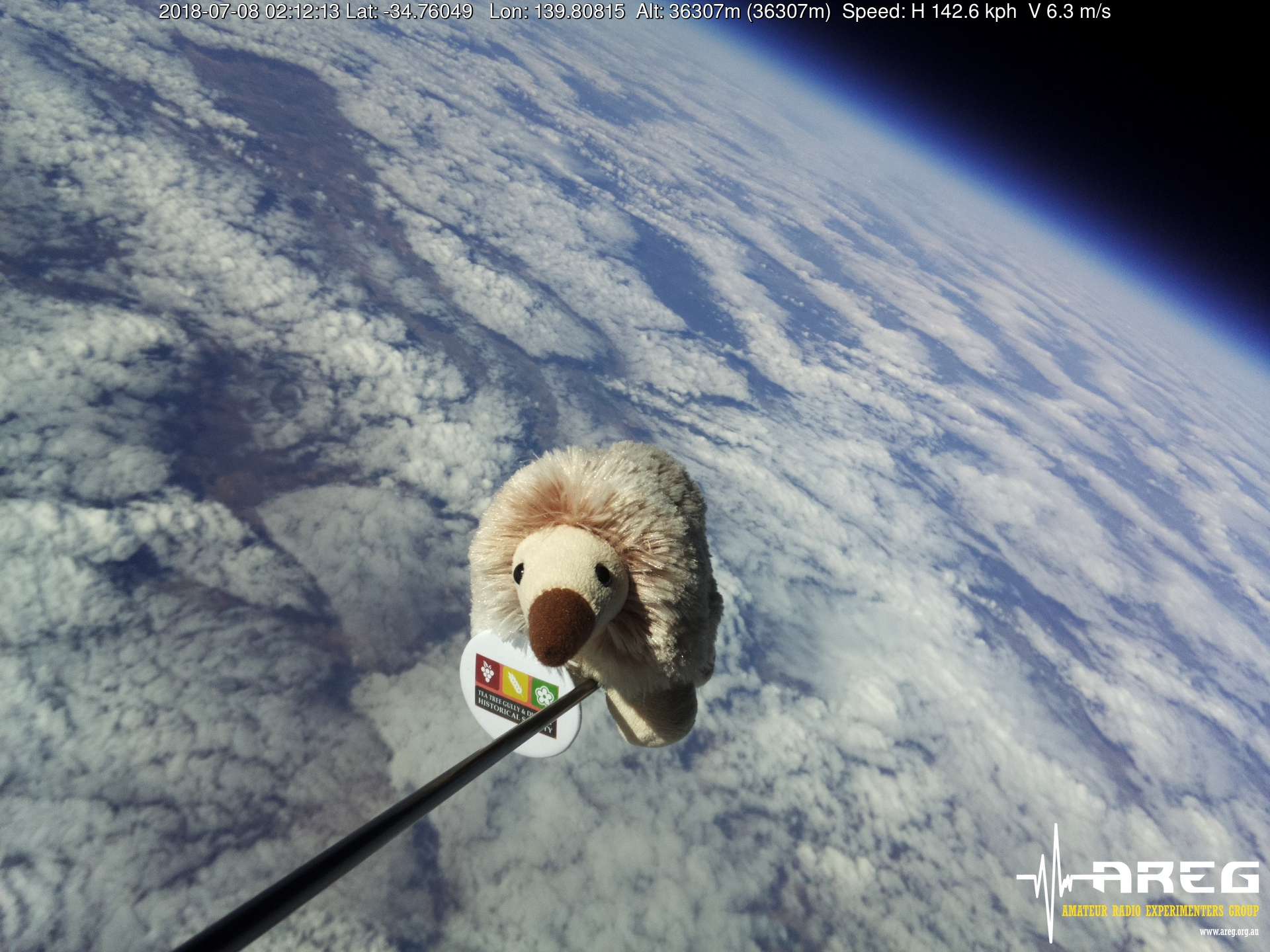
Anstey at 36km Altitude on Horus 49!

Back in 2016, AREG & Project Horus helped Anstey the Echidna, the Tea Tree Gully Library’s mascot, explore near-space. Anstey didn’t have enough fun on the previous launch, and so on the 8th of July 2018, we will be re-launching Anstey back into near-space on a high-altitude balloon launch!

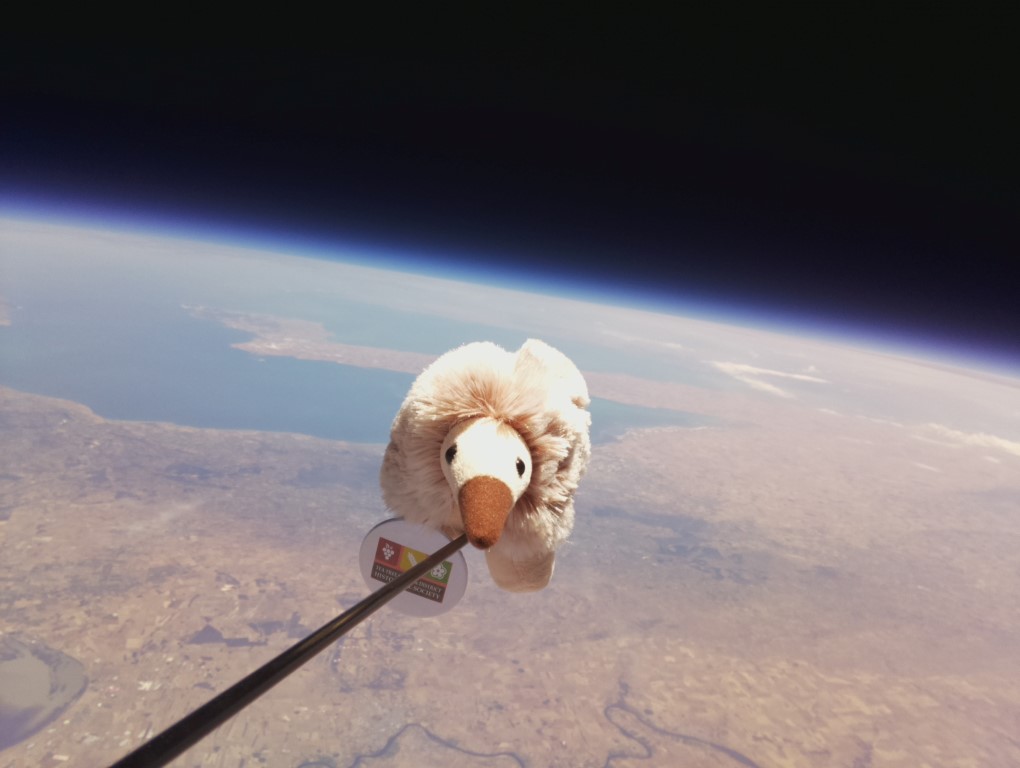
Anstey in near-space on Horus 39

The launch is currently scheduled for 10AM CST on Sunday the 8th July, however as usual, weather conditions may cause this to be re-scheduled. The launch will be from the Mt Barker High School Oval, and spectators are welcome. Launch crew should be on-site from approximately 9AM.

Tracking of the flight will be available via the HabHub tracker.

Telemetry Information

The telemetry frequencies for the flight are as follows:

  • RTTY Telemetry – ‘HORUS’ – 434.650 MHz  (100 baud, 425 Hz Shift, 7N2)
  • Wenet Imagery – 441.200 MHz (Wenet 115kbps FSK)
  • Experimental Horus Binary Payload – 434.640 MHz (100 baud 4FSK)

As usual, the RTTY telemetry can be decoded using dl-fldigi.


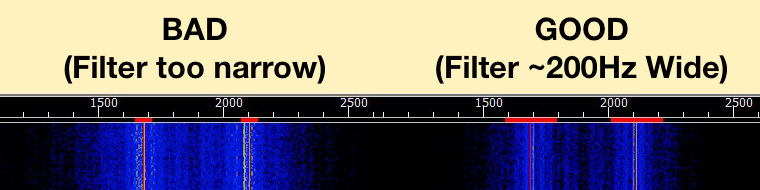
Note: Recent testing of dl-fldigi’s decode performance has found that the auto-configured RTTY receive bandwidth is too narrow, and can detrimentally impact decode performance (by up to 3dB!).

To fix this, open dl-fldigi, and in the Configure menu, select Modems, and then go to the ‘RTTY’ tab. Drag the ‘Receive filter bandwidth’ slider to 200, then click ‘Save’. Note that this setting will be reset whenever you hit the ‘Auto-Configure’ button!


Wenet Imagery

As with most Project Horus launches, this flight will feature live imagery via the Wenet high-speed imagery downlink. Images will be available throughout the flight at this link:

http://ssdv.habhub.org/HORUS

Reception of the Wenet signal requires a RTLSDR and a Linux PC/Laptop. Instructions on how to set up the required software are available here.

Experimental 4FSK Telemetry

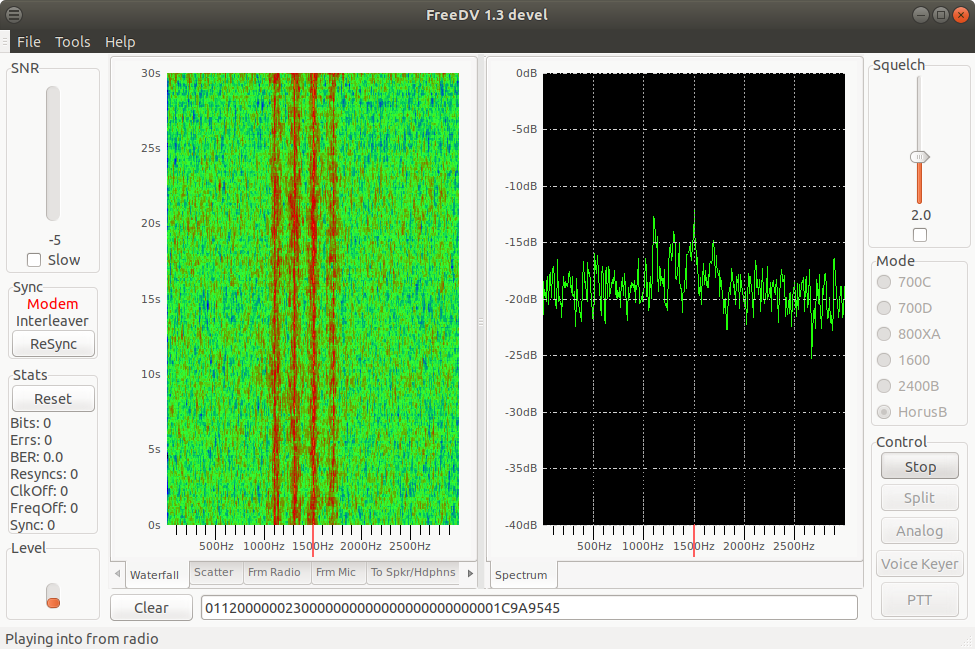
This launch will include the use of a re-purposed Vaisala RS41 radiosonde, programmed to transmit a new binary 4FSK telemetry mode, developed by David VK5DGR and Mark VK5QI. This new mode is intended to eventually (read: probably a year away) replace RTTY telemetry on Horus flights. It runs at 100 baud, is approximately 850 Hz in bandwidth, and has an almost 6dB performance improvement over the current RTTY telemetry! 

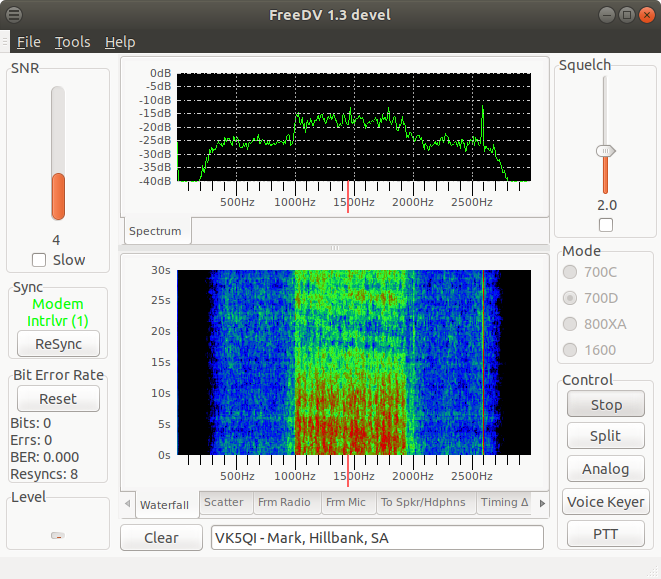
Decoding this telemetry requires installation of a new decoder application (an updated version of FreeDV), and some helper scripts to upload the data to the online tracker. A guide on how to install and operate this new decoder is available here.

Conclusion

More information will be available closer to the flight!

New FreeDV 700D HF Digital Voice Mode

Many amateurs are experimenting with various digital voice modes, such as Yaesu System Fusion C4FM, D-STAR and DMR etc, mostly on the VHF and UHF bands. Did you know, however that there is also a digital voice mode for HF radio operation that was specifically designed by amateur radio experimenters?

FreeDV, based on a fully open source codec known as Codec2, has been created by David Rowe VK5DGR in collaboration with a team spread across the globe.

FreeDV is enabling amateur radio enthusiasts to experiment with new open source digital based voice transmission techniques on the High Frequency (HF) bands.  While text based HF digital modes are common, FreeDV is the first new VOICE mode for HF since SSB was introduced in the 1950s and 60s.

New version of FreeDV – 700D announced

Over the past 18 months or more, David and his team have been busy working to improve the lower bit rate versions of FreeDV. The original system, released as FreeDV 1600, was based on a 1600bits/sec data stream, but was a few dB off being equal with SSB. Now, David is pleased to announce that the new FreeDV 700D mode is ready for wider trials.This new version uses a 700 bit/s speech voice codec, powerful forward error correction, and a new modem to send digital speech over HF radios.

What is really exciting however is that testing of FreeDV 700D has demonstrated that it is outperforming SSB on poor channels! Here is a demo of SSB, followed by FreeDV 700D, on a poor quality 3,200 km path between Adelaide and the Bay of Islands, in New Zealand.

Where can I get it?

You can run FreeDV using any PC set up for digital modes, using the FreeDV 1.3 GUI program, which you can download from freedv.org.

Where can I find FreeDV activity?

Australian FreeDV activity is typically on 7.177 and 14.236 MHz. You can also coordinate FreeDV QSOs using the FreeDV QSO finder at qso.freedv.org

So why not try the new FreeDV 700D mode, and join us in experimenting with it on the HF bands!

River Paddling Marathon 200: Practice Day This Saturday!

In preparation for the RPM200 there will be an opportunity to run through the practice for checkpoints at Murray Bridge this Saturday the 5th May.

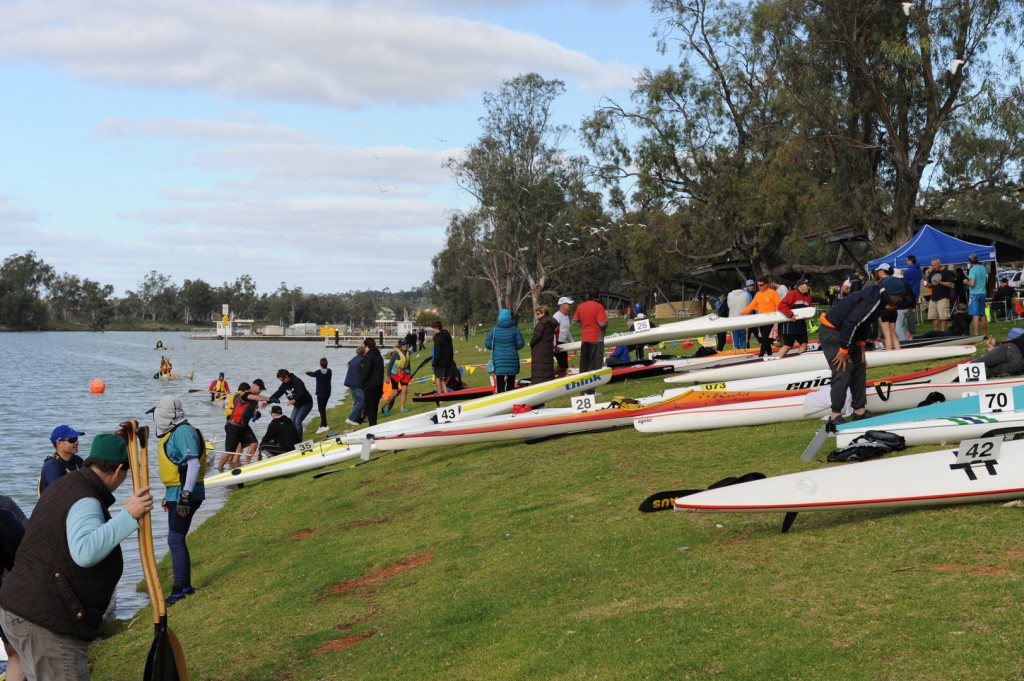
Why are we getting together? We are honing our skill at spotting paddlers on the river for their back to back event, which in turn is a practice for the RPM. Getting the opportunity to practice scribing the paddlers numbers while they are on the far side of the river will help prepare us for tracking at checkpoints. This event will also help us understand what equipment we will need for the RPM. An afternoon sitting  beside the river isn’t a bad thing either, with a sausage or two sizzling on the BBQ.

What time: Arrive at the reserve at 12:00pm for the BBQ, with the first paddlers arriving around 1:00pm, through until around 4pm.

What to bring;

  • Lunch, offerings to the BBQ, drinks etc.
  • Hat, sun screen, jumper
  • Table and Chair
  • Optical amplification, ie binoculars
  • Pen & paper
  • Hand held radio

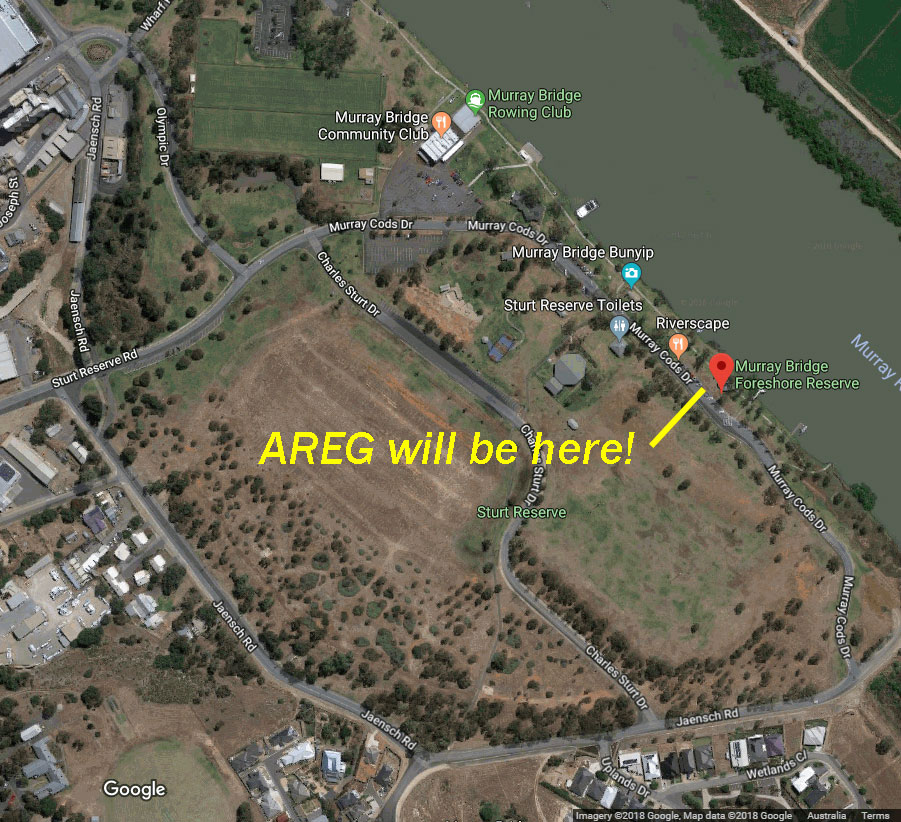
Where will you find us? Under the shelter at the Murray Bridge Foreshore Reserve;

Liaison on 439.025MHz FM Simplex.

If you are coming to participate, please let us know; kimhawtin@gmail.com

IRLP Node 6214 back on air!

The AREG IRLP node 6214 via VK5RSB 70cm is now back on air and available for general use.

The IRLP nodes “new” computer is now a Raspberry Pi 2, with modifications to the IRLP board to allow for operation on 3 volts as is used by the Raspberry Pi.

During both the morning and afternoon drive times, Monday to Friday, the node 6214 will be off line. It is available all the time Saturday and Sundays.

Weekday morning:

  • off at 07:00am
  • on at 09:30am

Weekday afternoon:

  • off at 3:00pm
  • on at 7:00pm

Access for IRLP operation still requires the current issued access code.

(details may be found at  https://www.areg.org.au/activities/irlp-node-6214)

DTMF “0” is the only “free” access to advise the status of the IRLP linking.

I will write up a blog report with photos for the AREG web pages in due course.

Feedback on the IRLP operations is most welcome, might need to make some level adjustments???

Ben VK5BB

AREG IRLP Node 6214 Administrator

REMINDER: Horus 48 Telemetry Test from Mt Lofty TOMORROW

THOR Receiver Tune & Test Day – Sunday 4th March ~10:30AM CDST

To help stations adapt to the new THOR16 signal, this coming Sunday there will be the opportunity for stations in the Adelaide metropolitan area to set up dl-fldigi as per the linked guide below and have a go receiving a higher-power version of the THOR16 signal. This will be broadcast from Mt Lofty Summit by Mark VK5QI. Mark will be on the VK5RSB 70cm repeater (439.900 -5MHz / 91.5Hz CTCSS) as ‘technical support’, to help assist setting up the software. The signal should be easily receivable from the Adelaide Metro area and some surrounds.

Look for the test signal on 434.640MHz

DL-FLDIgi Setup for THOR16

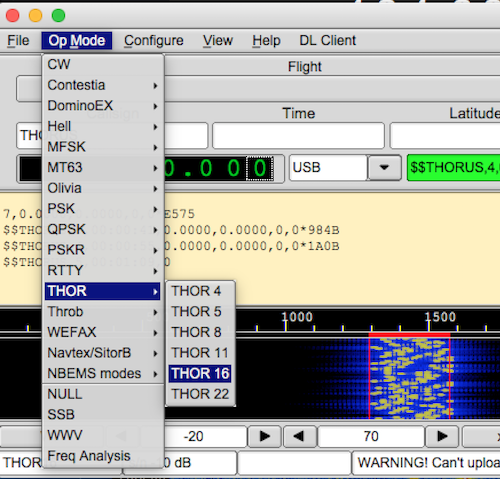
As usual, use dl-fldigi to decode telemetry, but in the case of the THOR16 payload, you will have to manually select the operating mode from the drop-down list as follows:


AREG IRLP Node 6214 Off Air

The following news comes from Ben VK5BB, the custodian of the 6214 IRLP node that is connected to the VK5RSB 70cm repeater


Due to a failure of IRLP node 6214’s computer hardware,
it is off line until further notice!

History:

I took on the management of the IRLP node 6214 sometime around 2012. Prior to this it was managed by Adrian VK5ZSN. Under his management it was all OK until the HDD died.

I volunteered to take on the project and rebuilt the computer using an IDE to SATA adapter and a solid state HDD. A bit of jiggling but it worked and to date has been very reliable with minimum of hands on support to keep it on air. 

Current Status:

I am not sure what is going on but it appears that the computer that manages the IRLP node 6214 is having severe problems. It seems that the computer is unstable and keeps shutting itself down and rebooting. The machine running the system is now over 10 years old, which is a contributing factor.


Right now, the ultimate fate of the IRLP node is undecided. The club members have been asked if they wish to see the service continued. That discussion is ongoing. If the service is to continue, it could be some time before it is restored as new hardware will likely need to be obtained.

If you would like to see it rebuilt and placed back on the air, why not consider becoming a member of AREG and showing your support for the project? Details of how to join are available on our membership page .

ADVANCE NOTICE – Horus 48 – Telemetry Test Flight & Test Transmission

On the weekend of the 10-12th of March (exact day TBD), Project Horus will be performing a small (not-so-)high-altitude balloon launch from Mt Barker. The flight will be a short one (~1.5 hrs), with a maximum expected altitude of only 13km. All the payloads have been custom-built to be very lightweight – the total payload mass for this launch is < 300 grams!

The aim of this flight is to evaluate the performance of a new telemetry payload, which uses ‘THOR16‘ modulation. While about half the speed of the current RTTY payload, the THOR modes utilise forward error correction and interleaving. This promises to reduce or remove issues with mobile flutter and multi-path fading that we encounter with RTTY. In short, while we may not be getting telemetry sentences quite as often, we will have a much higher chance of the telemetry that is received being useful to us!

THOR Receiver Tune & Test Day – Sunday 4th March ~10:30AM CDST

To help stations adapt to the new THOR16 signal, this coming Sunday (a week prior to the launch) there will be the opportunity for stations in the Adelaide metropolitan area to set up dl-fldigi as per the linked guide below and have a go receiving a higher-power version of the THOR16 signal. This will be broadcast from Mt Lofty Summit by Mark VK5QI. Mark will be on the VK5RSB 70cm repeater (439.900 -5MHz / 91.5Hz CTCSS) as ‘technical support’, to help assist setting up the software. The signal should be easily receivable from the Adelaide Metro area and some surrounds.

Look for the test signal on 434.640MHz

Horus 48 Launch Campaign – Tentative 10-12th March

For the actual launch the following weekend, the telemetry frequencies for the flight are as follows:

  • RTTY – ‘HORUS’ – 434.650 MHz
  • THOR16 – ‘THORUS’ – 434.640 MHz

Both payloads are running 10mW transmit power, and have essentially identical antennas.

DL-FLDIgi Setup for THOR16

As usual, use dl-fldigi to decode telemetry, but in the case of the THOR16 payload, you will have to manually select the operating mode from the drop-down list as follows:

If you have the capability of running two 70cm receivers, please consider running two instances of dl-fldigi to decode both payloads. This may require either multiple PCs, or multiple sound cards. If you can only run a single receiver, please try and alternate between the different telemetry payloads.

We would very much appreciate reports as to your experiences decoding the different telemetry payloads – please e-mail these through to vk5qi@rfhead.net

Tracking for the launch will be available on the HabHub online tracker. We hope to see you as part of the tracking nets!


73 de Mark VK5QI


Horus 47: SHSSP 2018 Science Flight Report

Following unfavourable weather conditions the previous weekend, the Amateur Radio Experimenters Group planned a second attempt to fly the science payloads for the Southern Hemisphere Space Studies Program 2018 on Sunday February 4th. Again, the weather was not cooperating, which forced a change of the launch site in order to get off the ground. This meant a very early start as the launch teams left Adelaide at 7.00am to trek 150km east of the city into the Murray Mallee.

This flight was carrying a number of science experiments for the SHSSP students. This year the focus was on space navigation, so one particular focus was using the GPS data coupled with an initertial measurment unit to be able to plot the angle and direction of the camera taking the photos. The other experiment was a spectrometer which was measuring the precise wavelengths of light.
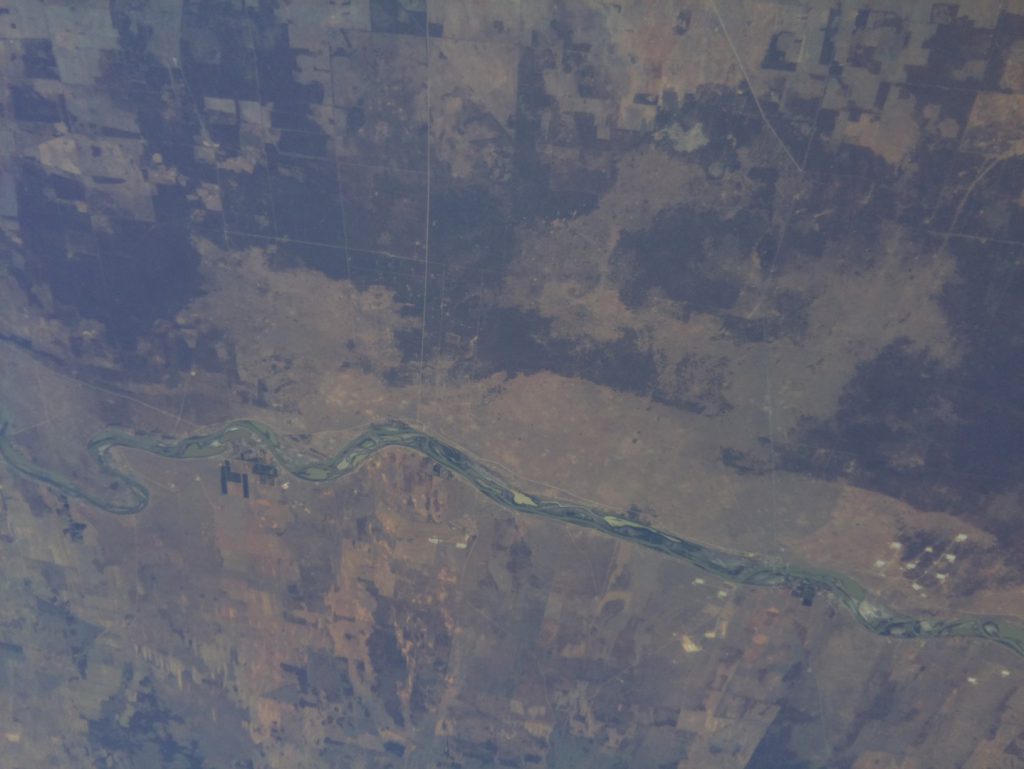
SHSSP18 Downward facing camera (courtesy UniSA and SHSSP)

Launch Preparation

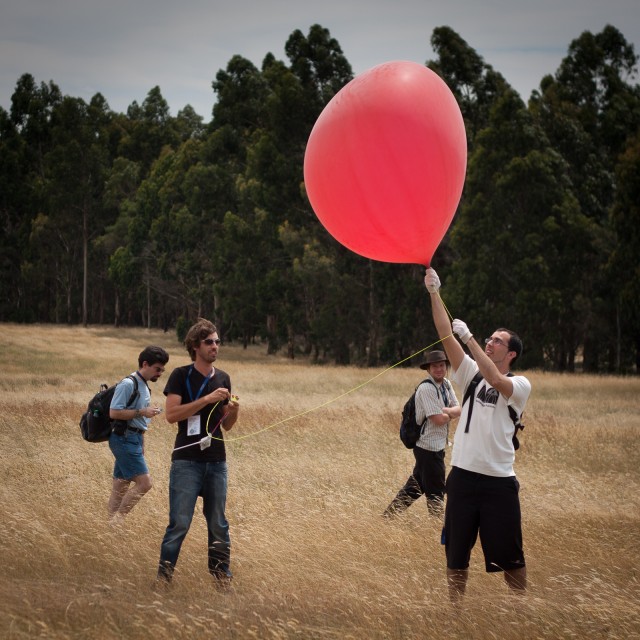
Launch preparations began about 9am after the crew had arrived at the launch site. Thanks must go to Chris VK5CP who arranged access with the farmer who’s paddock we borrowed for the morning. Along the way the obligotory bakery stop had been made in the township of Mannum (I can vouch for their blueberry scrolls). Today we had a couple of new faces on the flight team, with Marcus VK5WTF and Mark VK5QN stepping in to give us a hand. Also on site was Mark VK5QI (Payload), Grant VK5GR (Balloon) and Will VK5AHV (Balloon). The team laid everything out and commenced assembling both the balloon train and the filling apparatus.

At the same time, Grant VK5GR started up his frist time chase vehicle and coaxed all of the linked software systems to life. Thanks to some loaned antennas from Matthew VK5ZM and LoRa receivers from Mark VK5QI, Grant was able to establish a full telemetry and tracking suite in just a matter of days to help assist with the chase.

Marcus filmed the proceedings too and you can see a short timelapse here of inflating the balloon.

Meanwhile, Mark VK5QN and Mark VK5QI (yes that did get confusing) assembled the balloon train. Mark VK5QN with his climbing and scouting background did a professional job of tying the balloon train together. You are most welcome to come again Mark!

Lift-Off

Finally the time came for liftoff. Mark VK5QI checked in with ATC Melbourne and we were given our clearance to fly. The team raised the balloon train and was thankful that we had almost zero ground winds. Mark did a final check that all the payloads were transmitting using a new handheld flight status monitor he had been working on and gave the the green light to commence countdown.

Grant VK5GR then released the balloon and we witnessed a near text book launch. As it climbed, the balloon hit it’s ascent target speed of 5m/s and everything looked good for a successful flight. The ground teams then scrambled to pack everything away and get rolling. It was going to be a long chase, with the landing zone predicted to be up in the north eastern Barossa Valley, and a detour around the River Murray required past Bow Hill and up to Blanchtown so that delays on the river car ferrys could be avoided.

Tracking Control

Meanwhile 58km to the north west, the ground tracking crew of Peter VK5KX and Darin VK5IX were awaiting signal aquisition as the balloon cleared the horizon. They had lots of signals to track this flight, including the 100 Baud RTTY, the LoRa Telecommand system and two Wenet Imaging payloads. Peter again setup his automated tracking antenna (seen on the previous week’s flight) and with Darins help was able to collect and upload to the internet the image signals from both payloads.

Peter took the following video of the Wenet systems in action

The Chase

Meanwhile, back in the two chase cars, Marcus VK5WTF, Mark VK5QI and Will VK5AHV headed out first and made the dash up to the valley.

Mark VK5QN and Grant VK5GR had a slightly slower start, as they had to first drop the gas trailer at a staging point in Younghusband before they too could join the chase.

Wenet Images

This was the first time the balloon and been flown this far NE of Adelaide so it was great to see some different angles of the state. The weather was nearly perfect as well with hardly a cloud in the sky. These photos were taken by the AREG Wenet payload with an outward facing camera.

This slideshow requires JavaScript.

One of the last photos actually captured a shot of Mark VK5QI’s chase car as the team was fortunate to be in visual range of the landing.
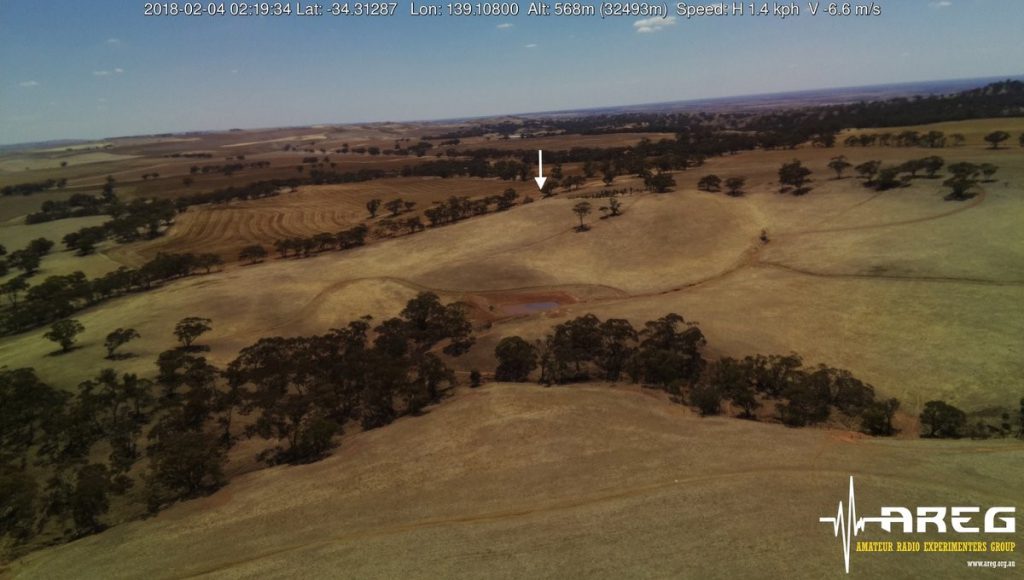
Grant’s team wasnt quite so lucky due to a software issue involving timezones and the prediction tools and he didnt make it to the landing zone until about 5 minutes after it landed.

Once the balloon landed, both teams met up with the local land owner before being given permission to drive in and pick up the payloads. We were very lucky that the balloon landed approximately 100m from the access track in an empty stubble field. Definitely one of the easier recoveries of recent times!

After we bid farewell to the land owner it was off back home – of course via another bakery (this time in the main street of Truro). Mark’s chase team had the luxury of being able to head straight back to Adelaide. Meanwhile Grant had to return to Younghusband to pick up the gas bottles and trailer. For the VK5GR team it was nearly a 600km 10.5hr round trip this time.

Flight Path & Statistics

Horus 47 flew an interesting course this time. This is a rather uncommon flight track for the AREG team.
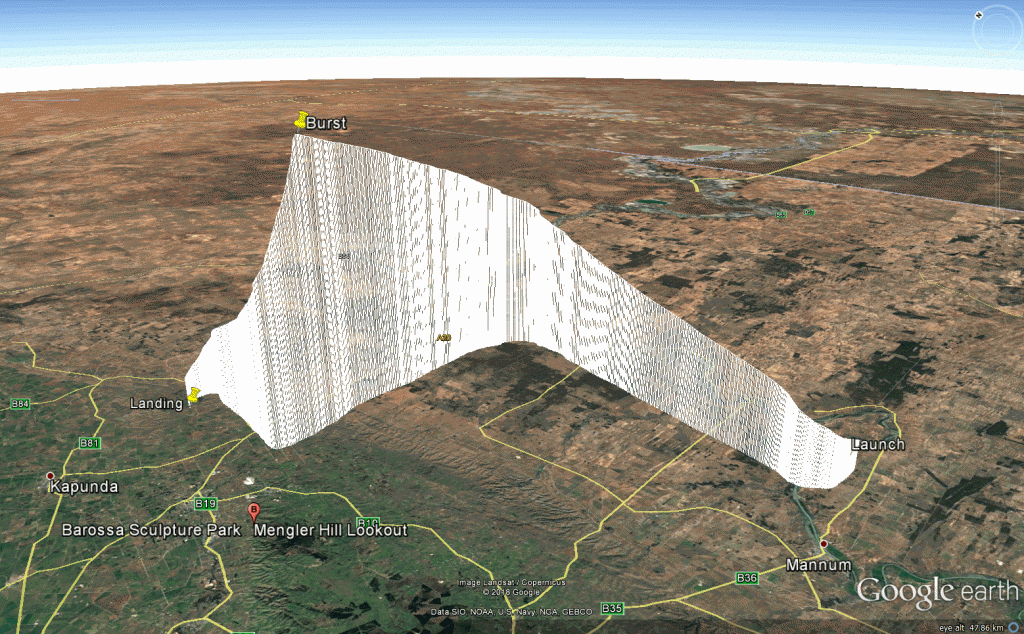
The flight statistics are below

MetricResult
Flight Designation:Horus 47 - SHSSP18 #2
Launch Date:04/2/2018 23:59:04 UTC
Landing Date:04/2/2018 02:19:52 UTC
Flight Duration:2 Hours 30 Minutes
Launch Site:-34.878614 139.492314
Landing Site:-34.313174 139.107985
Distance Traveled:72.7 km
Maximum Altitude:32,507 m

Again many amateurs from across the state got involved in telemetry collection. We wish to thank everyone who took part as you all help make the chase and recovery more successful.

The following is the chart of who contributed to the telemetry gathering effort:
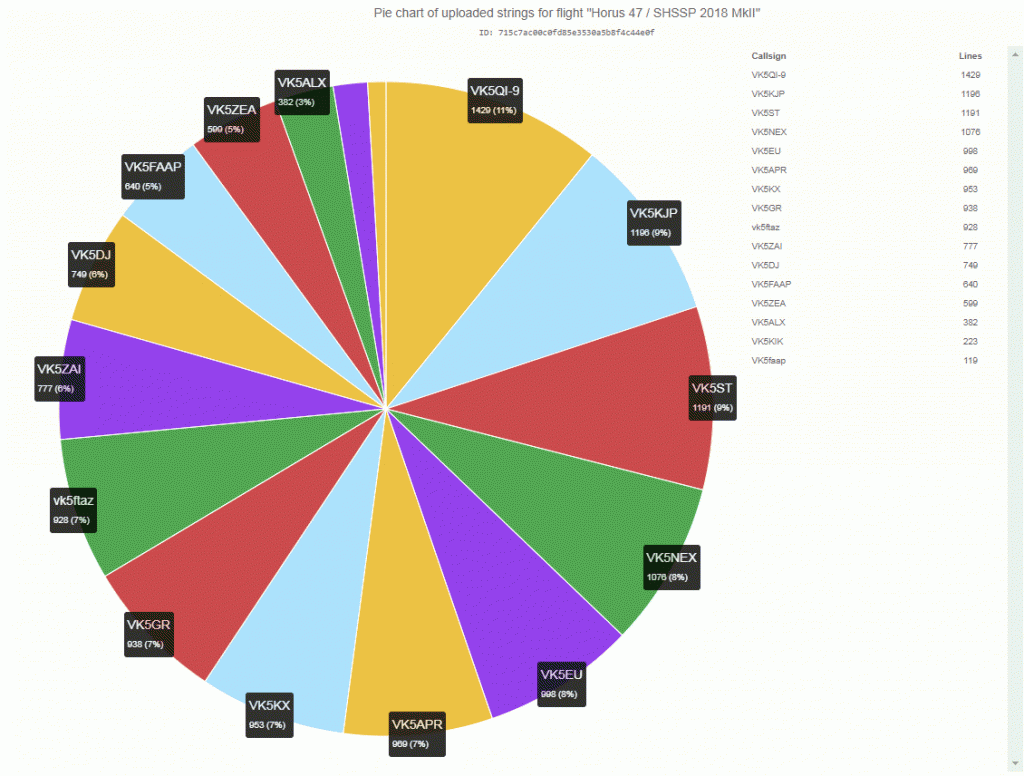
Thanks goes to the following who contributed: VK5QI, VK5KJP, VK5ST, VK5NEX, VK5EU, VK5APR, VK5KX, VK5GR, VK5FTAZ, VK5ZAI, VK5DJ, VK5FAAP, VK5ZEA, VK5ALX, VK5KIK

A few stations also contributed to receiving the Wenet digital imaging downlinks. These stations were:

SHSSP1 Payload

  • VK5APR: 145509 packets (35.52 MB)
  • VK5WTF: 91884 packets (22.43 MB)
  • VK5EU: 146129 packets (35.68 MB)
  • VK5DSP (UniSA Team): 133871 packets (32.68 MB)
  • VK5KX: 99419 packets (24.27 MB)

VK5ARG Payload

  • VK5QI: 198691 packets (48.51 MB)
  • VK5KX: 185197 packets (45.21 MB)

Conclusion

So that marks the end of the story for the Southern Hemisphere Space Studies balloon launch program for 2018. We hope everyone had a great time and again thank everyone who contributed or participated in making the flights possible!

73 till next time de VK5ARG

Acknowledgements: Thanks to VK5QI, VK5QN, VK5GR, VK5WTF, VK5KX, VK5IX, VK5AHV and SHSSP for all the material in this report.