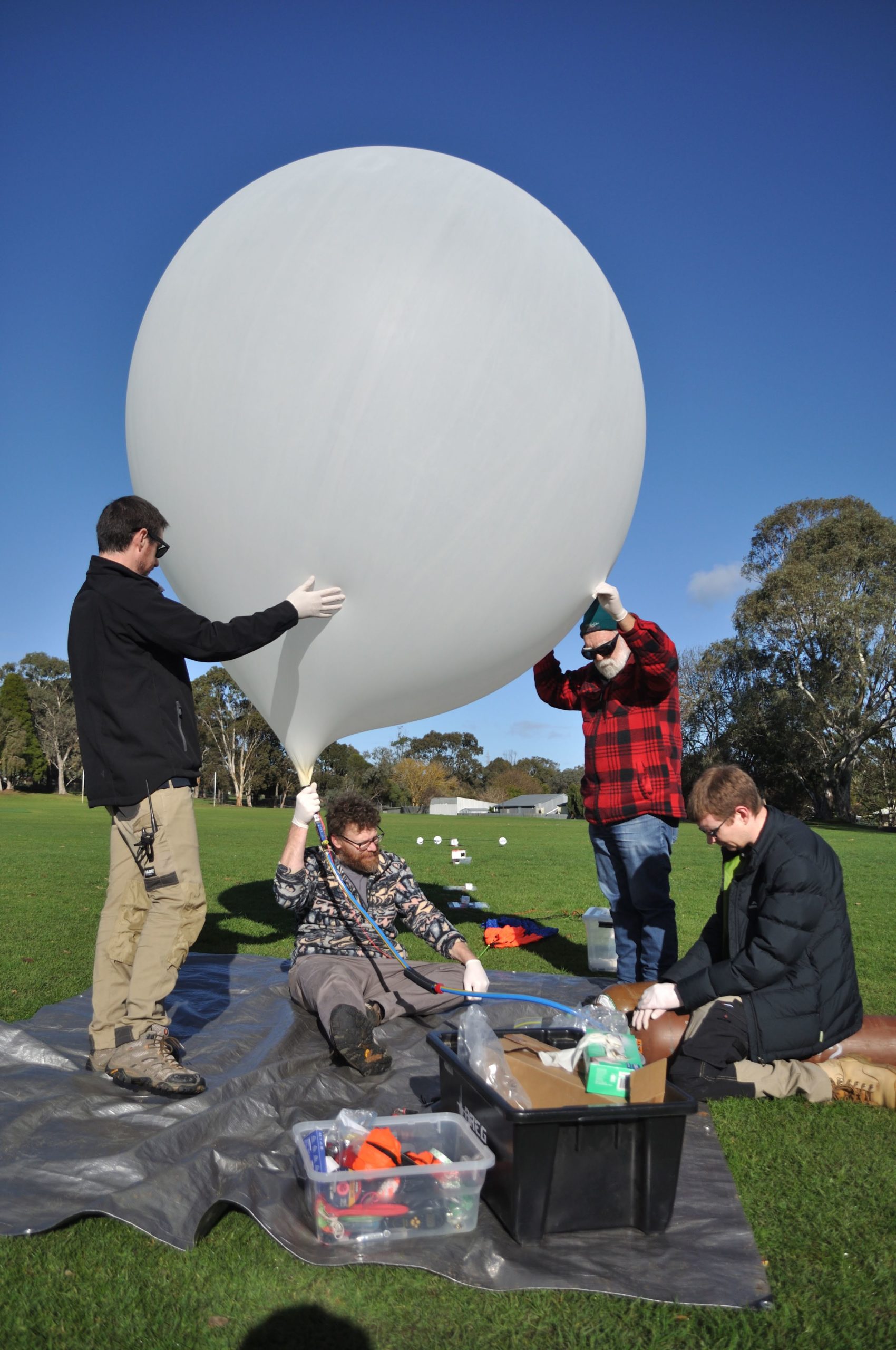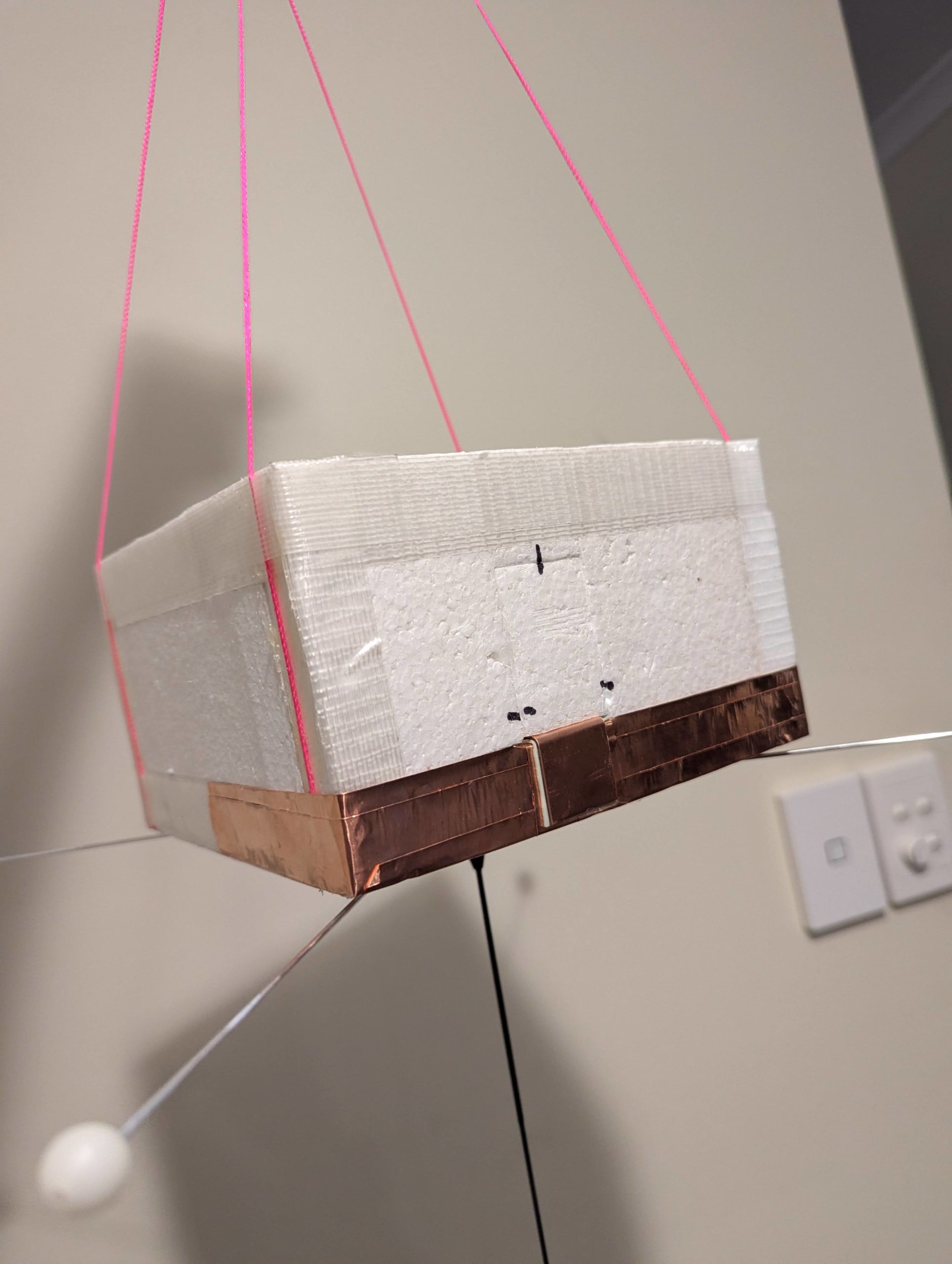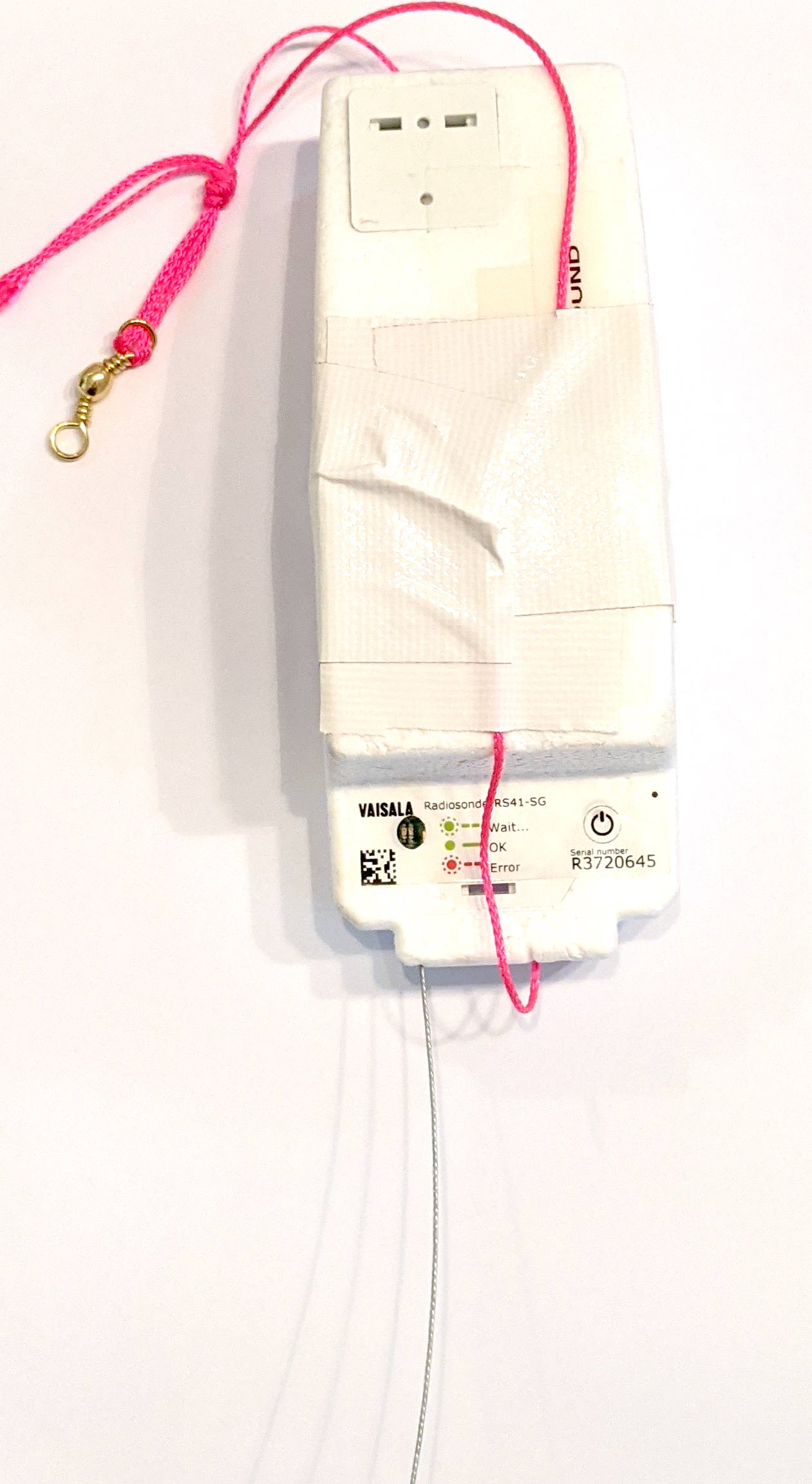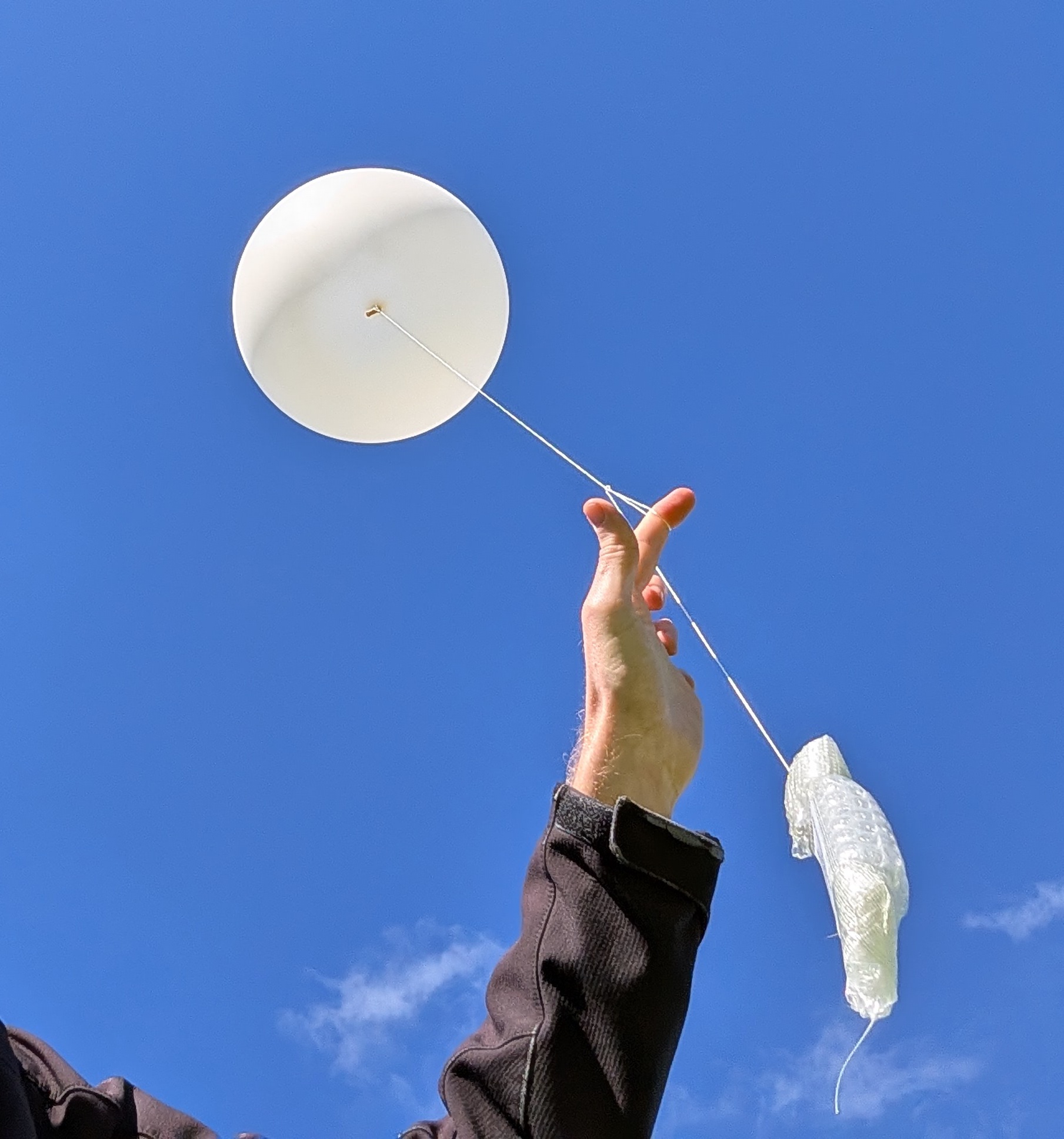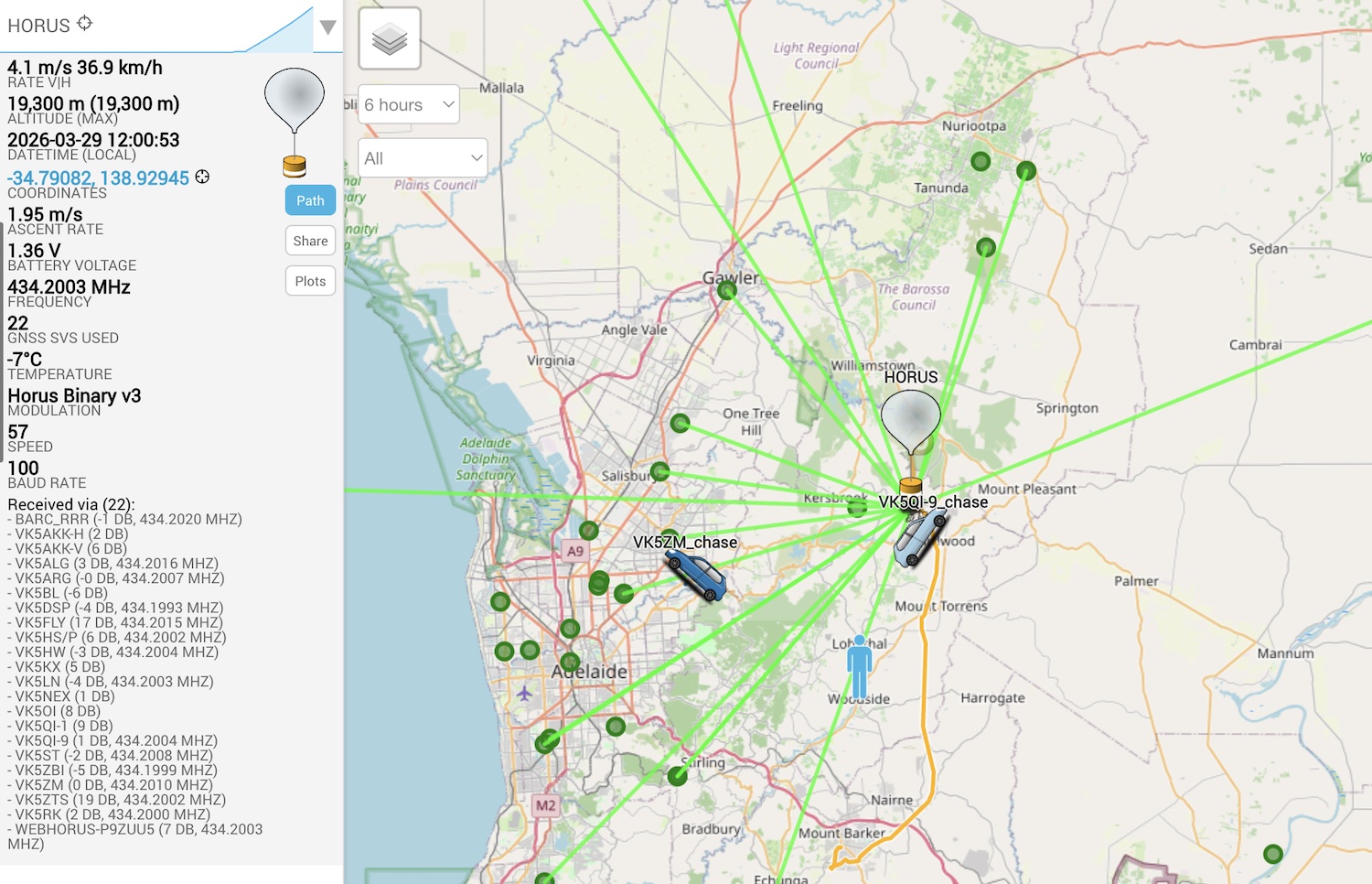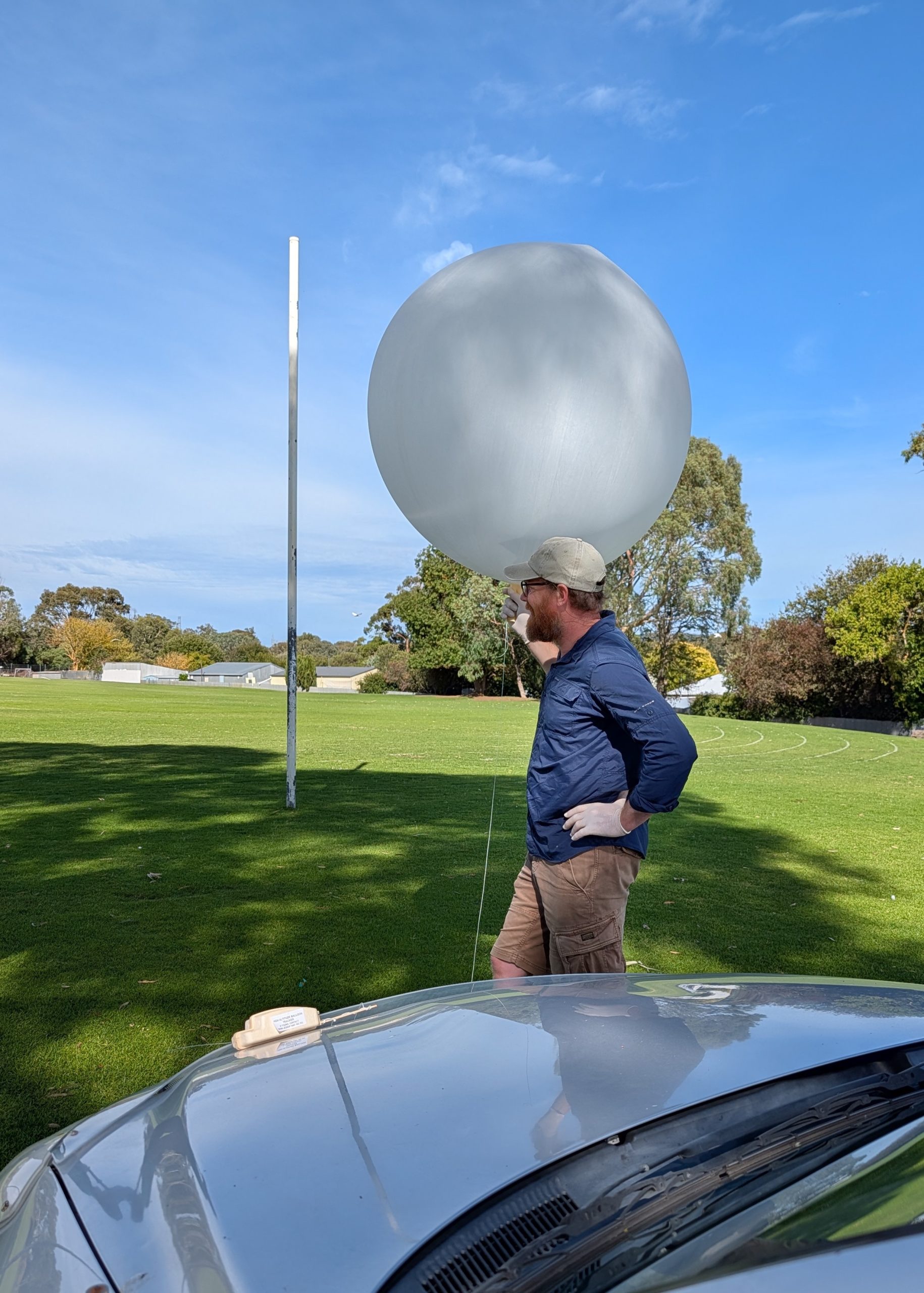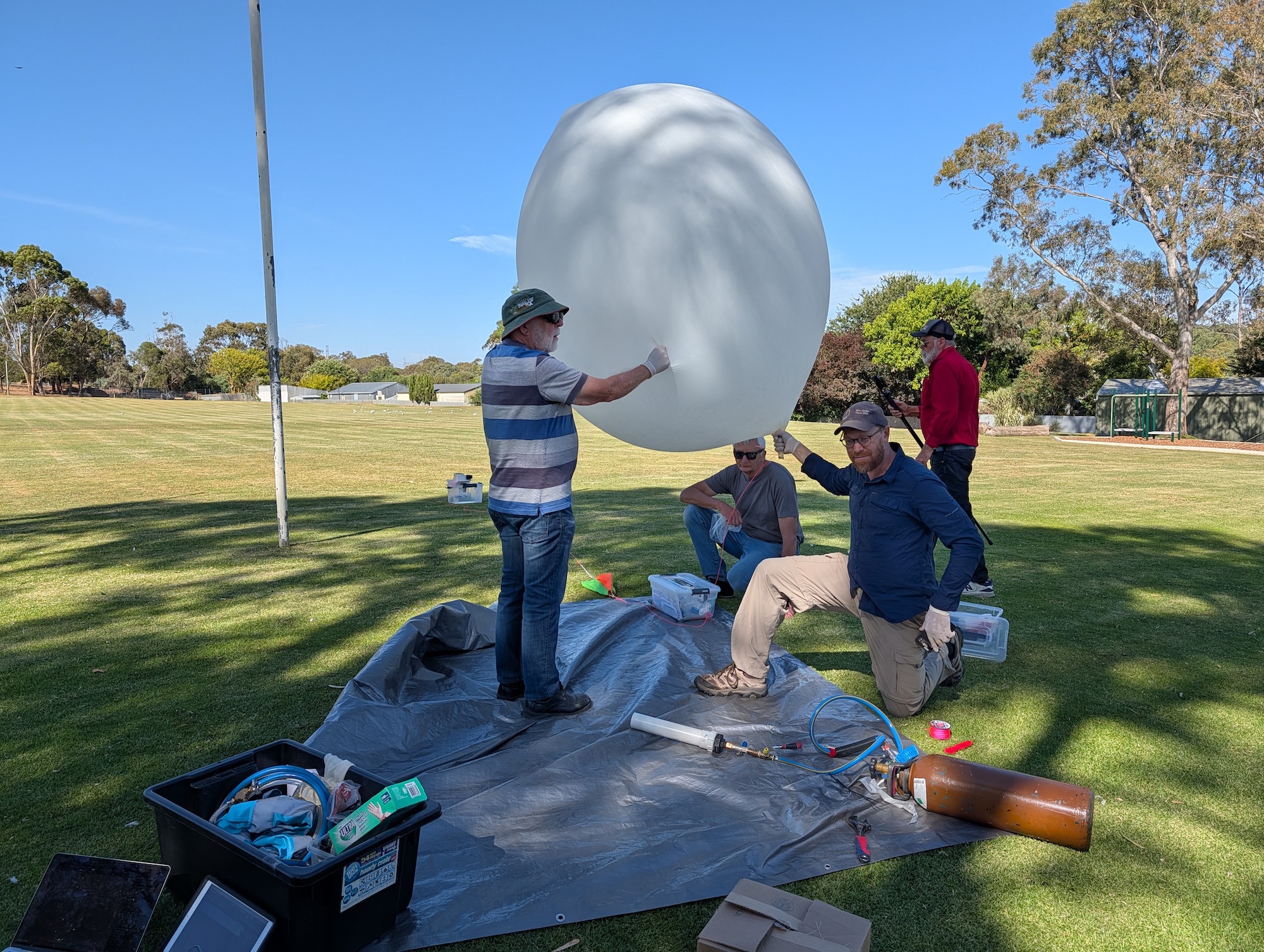
Project Horus will be performing their next high-altitude balloon launches on Sunday the 15th and 29th of March – aiming for a 10:30AM launch time on both Sundays.
These launches will be flying our new ‘Horus Binary v3’ tracking payloads, and are intended to give receiving stations more opportunities to get setup to decode this new mode before we switch to it on future launches!
These will be ‘fire-and-forget’ launches – no chase, no recovery – there is no need to set up portable receiver stations – see what you can receive from home!
To be able to receive the Horus Binary v3 telemetry you will need to install to the latest versions of our decoding software – more details below!
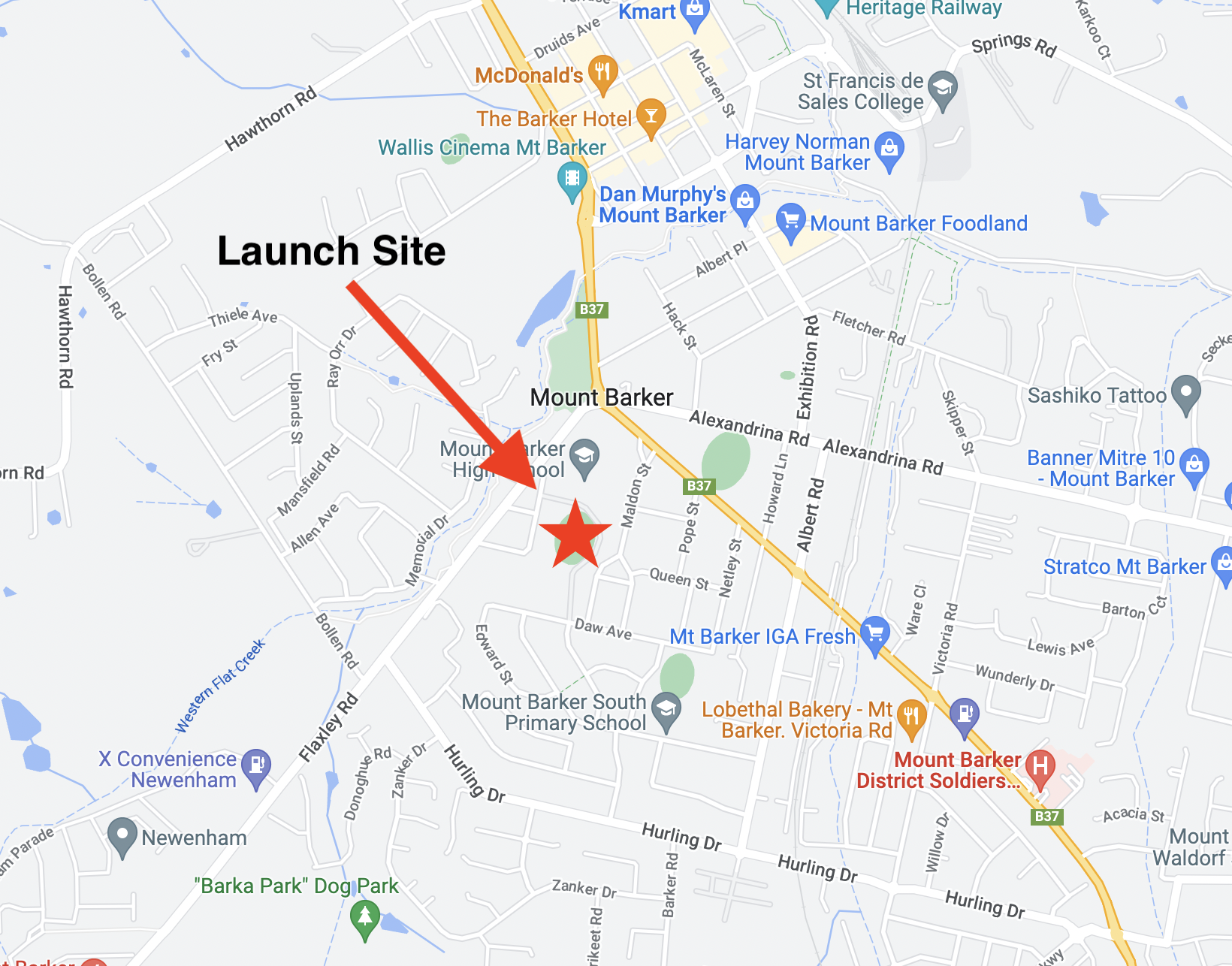
Both launches are currently planned to be performed from the Mt Barker High School Oval, which is accessible from Stephenson Street, Mt Barker.
Mt Barker Launch Site
The launch time is expected to be 10:30AM, with launch crews arriving on-site around 10:00 AM. Please note that we are not intending to chase or recover these payloads!
The primary tracking telemetry will be transmitted on 434.200 MHz using the new Horus Binary v3 4FSK data mode.
The v3 update adds much more flexibility in the telemetry format, giving payload developers the ability to add extra sensors and send much more data than was previously possible.
To receive telemetry, you’ll need either a SSB-capable 70cm receiver (think IC-7100/705/9700, FT-817, etc), or a SDR (e.g. RTLSDR or AirSpy), and some kind of 70cm antenna. Horus Binary is very robust, so it doesn’t take much antenna to receive this telemetry – a small vertical will work just fine!
Our decoding software is available for a range of platforms:
Windows / Mac – Horus-GUI – If you’re running Windows or a newer Mac, you can use our ‘Horus-GUI’ telemetry decoder software! Make sure you are on v0.6.0 or newer to decode the Horus Binary v3 telemetry. We have a detailed guide on setting this up, which is available by clicking here!
Windows / Mac / Linux / Android / iPhone – WebHorus – On almost any platform (including many mobile phones!) you can also decode the Horus Binary telemetry in a web browser using either audio input, or a RTLSDR (Android / Chrome only) by clicking this link!
Raspberry Pi / Linux – If you have a spare RTLSDR and a Raspberry Pi (or other linux machine), you can set up a dedicated Horus Binary receiving station by following this guide.
Amateurs in the Adelaide and Central SA region are encouraged to get involved with the flight through receiving and uploading flight telemetry from our 70cm band tracking beacons. Every piece of telemetry data is valuable to the flight tracking and recovery teams so if you can help join the distributed receiver network to collect that data you will be making an important contribution to the project!
Project Horus’s 69’th flight was held on the 18th of January 2026, launching from our usual launch site, the Mt Barker High School oval. This flight was a test of a few new and experimental payloads, including our first flight of the new ‘Horus Binary v3’ tracking telemetry mode.
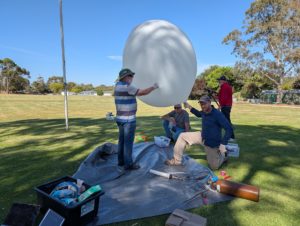
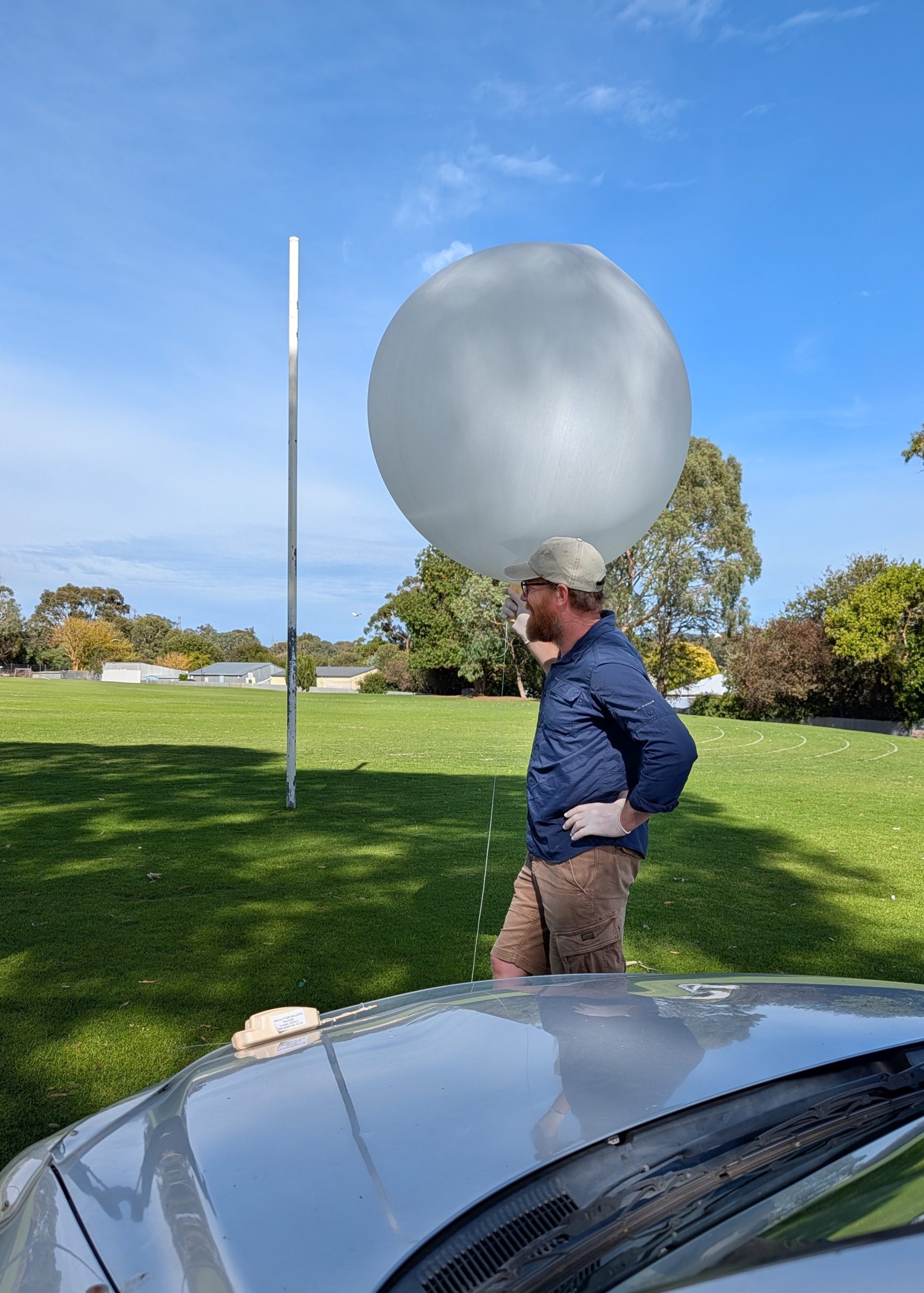
The launch was an easy one, with only light winds at the launch site. It was great to see a few new faces along to see what a high-altitude balloon launch is all about!
The predicted flight path allowed for a fairly relaxed chase, so the chase teams headed off to Tailem Bend for some lunch while waiting for the balloon rise closer to its expected burst altitude. Chasing the flight were Mark VK5QI. Will VK5AHV, Autumn VK5CLD, and Peter VK5APR. We also had Peter VK5KX and Matt VK5ZM set up near Palmer tracking the flight.
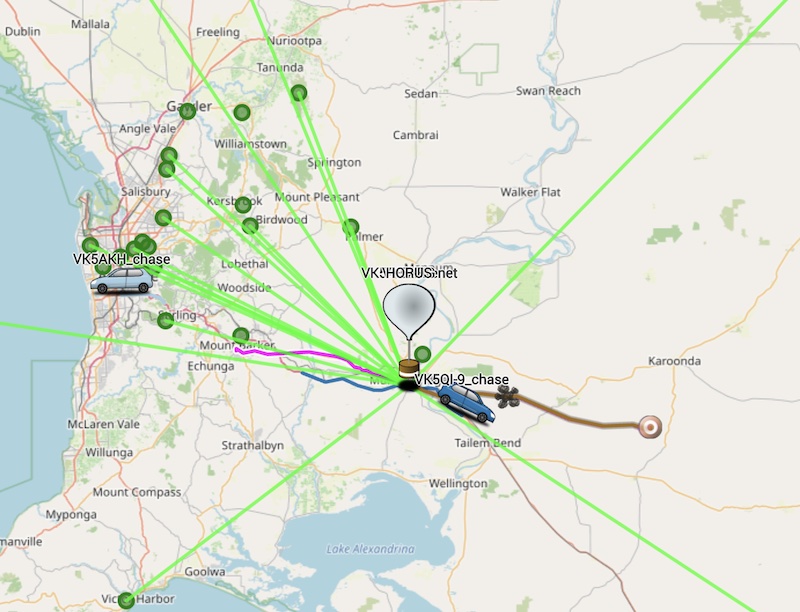
The balloon ended up bursting at 33.831km altitude, a good 3 km higher than expected! The payloads descended to a landing approximately 20km north-east of Tailem Bend, just off the Karoonda highway. A quick chat to the landowner, and the chase teams were able to drive right up to the landing spot! A big thanks to Wayne Gregory for being so helpful!
Payloads, recovered!
Horus 69 Flight Statistics
Launch Date:
2026-01-17T23:26:31Z
Landing Date:
2026-01-18T02:04:16Z
Launch Site:
-35.07579, 138.85710
Landing Site:
-35.13652, 139.62709
Distance Travelled:
70 km
Maximum Altitude:
33831 m
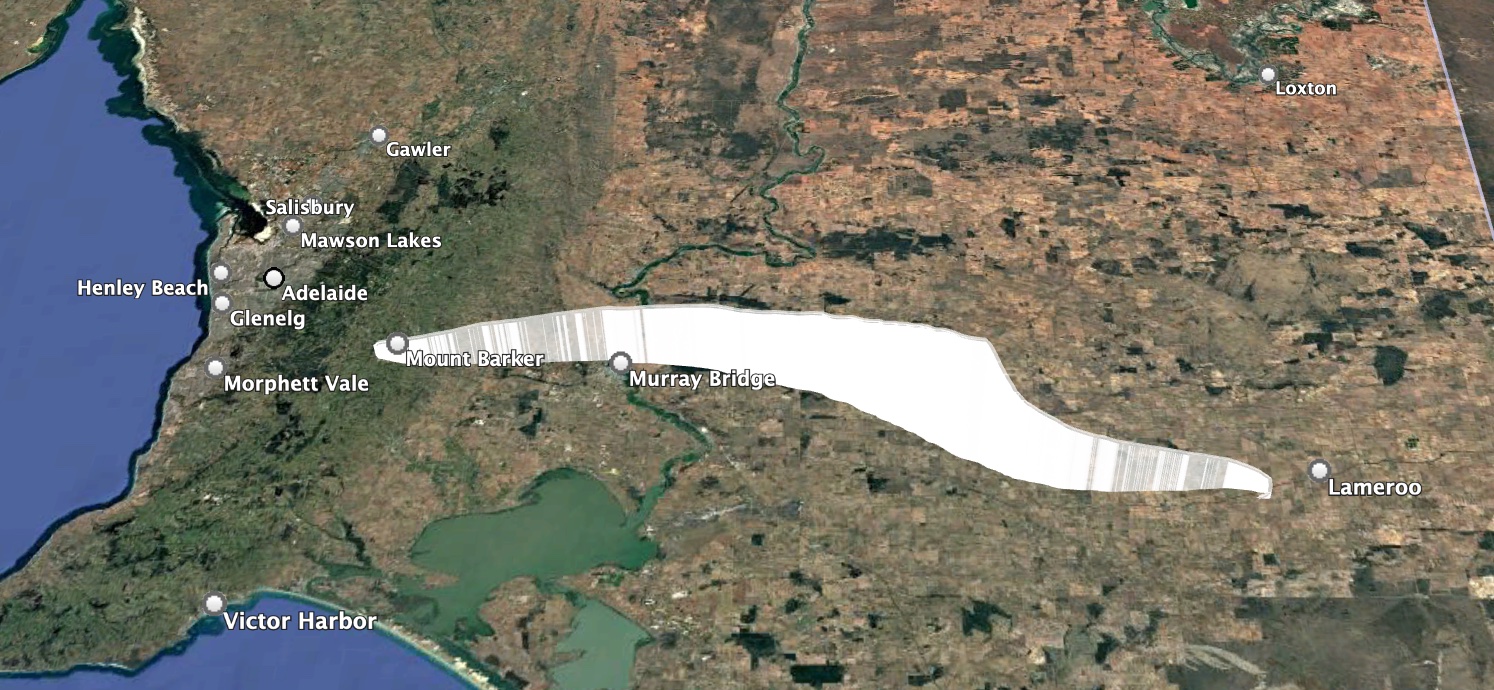
Horus 69 Flight Path
Horus v3 Payload – HORUS-V3
This was the first Australian flight of the Horus Binary v3 telemetry mode, the latest version of the Horus Binary high-altitude balloon flight tracking system.
The following stations received the Horus v3 telemetry on this flight: BARC_4, VK3APJ, VK5ARG, VK5GA, VK5GA-2, VK5GY, VK5KX-9, VK5KX-i5, VK5QI-1, VK5QI-9, VK5SFA/R, VK5ST-5, VK5ZM
Thanks to everyone that updated their decoding software and had a go at decoding this new format! Based on the success of this flight (and many other flights overseas), Horus v3 will become the primary tracking mode used on future Project Horus flights.
Horus v2 Payload – HORUS-V2
While we will be switching to Horus v3 in the future, this flight still used a Horus v2 payload as the primary tracking payload, and we thank everyone that helped out with tracking on this flight:
The imagery payload on this flight was another experiment with the PiCam v3 autofocus camera, using information gained from flights in the United States that were successful in taking good quality (and importantly, in focus!) imagery. Thanks to the following stations that received imagery from this payload:
Sadly, the dynamics of the payloads on this flight (swinging + spinning) meant that the autofocus algorithm just couldn’t keep up, again resulting in blurry imagery. This is likely the final nail in the coffin for this camera unless we can work out a way of stabilising the payload without adding lots of extra mass. Work has now started on updating the ‘PiCam HQ’ payload (which last flew on Horus 60) up to the Wenet v2 standard, and this will likely fly on the next full launch.
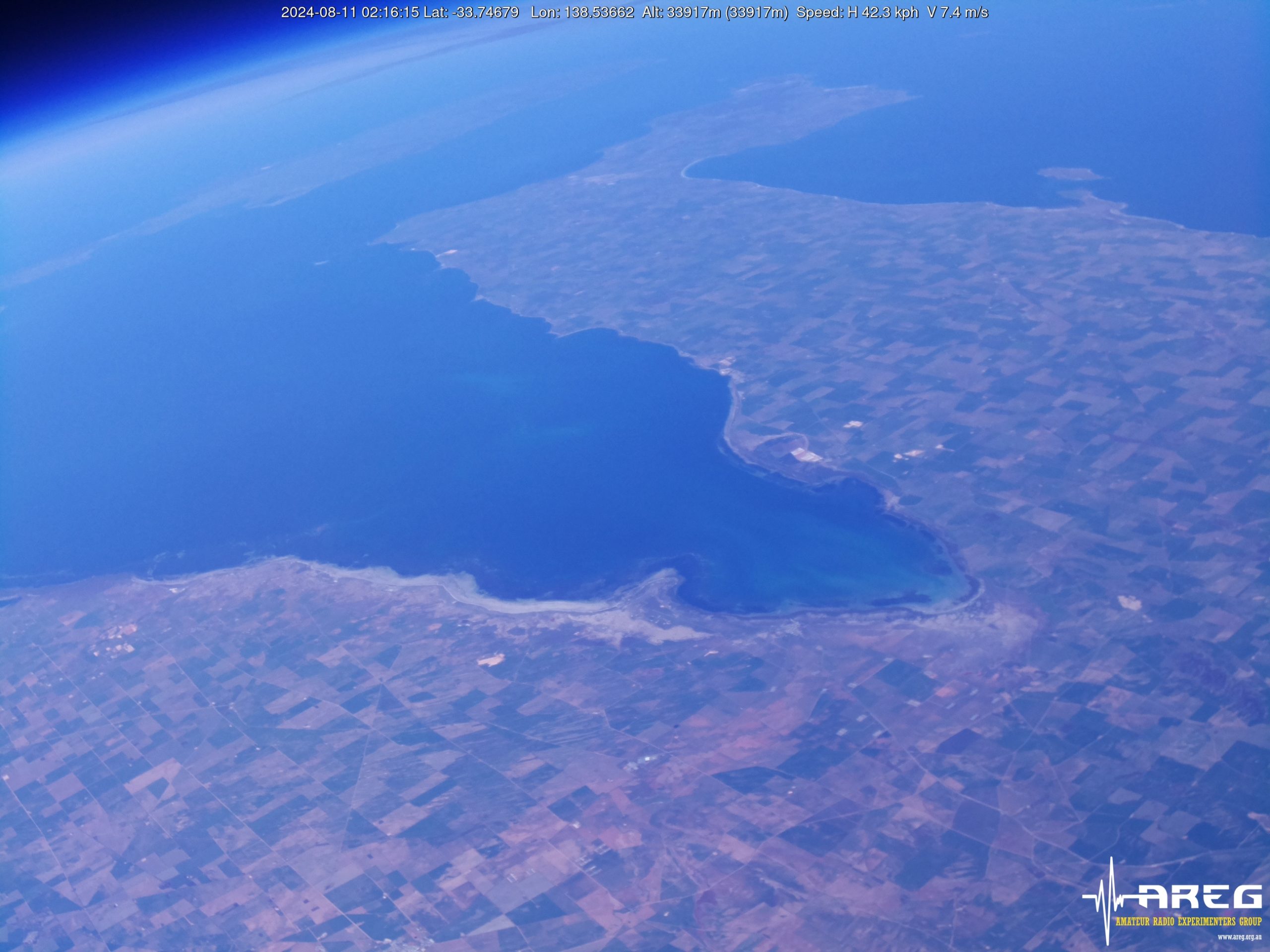
A selection of photos from the payload are shown below:
Next Launch
Our next ‘full size’ launch will likely not be until the weather cools down again in March, and hopefully we’ll be able to finally get the Cross-band repeater in the air. Before then there may be some small launches with just Horus Binary v3 payloads, to assist receiving stations in getting their software updated and tested.
Again, thanks to everyone that participated in the launch, and we hope to see you on the map on our next flight!
The next Project Horus launch is planned to occur on Sunday the 18th of January. This will be a flight to test out a few new payload ideas, including:
A re-flight of the PiCam v3 Wenet imagery payload, now with a camera shroud to hopefully assist autofocus.
The first test of a tracking payload running a new Horus Binary v3 mode.
A Meshtastic beacon from the SA Meshtastic Users Group (which includes quite a few AREG club members!). Unfortunately this will not be flying this launch. Expect this on our next launch!
This launch is currently planned to be performed from the Mt Barker High School Oval, which is accessible from Stephenson Street, Mt Barker.
Mt Barker Launch Site
The launch time is expected to be our usual 10AM, with launch crews arriving on-site around 9-9:30 AM.
Details of the frequencies in use on this flight are:
Primary Horus Binary Telemetry on 434.200 MHz
Experimental Horus v3 Binary Telemetry on 434.210 MHz
Wenet v2 Imagery on 443.5 MHz.
Meshtastic Payload on the Adelaide standard frequency of 918.875 MHz, ShortFast mode, Slot 16. Information on the Adelaide Meshtastic network is available here.
On this flight we encourage new listeners to try out our new web-browser-based decoding software for Horus Binary and Wenet – find out more about this further below!
The primary tracking telemetry will be transmitted on 434.200 MHz using the Horus Binary 4FSK data mode. Amateurs in the Adelaide and Central SA region are also encouraged to get involved with the flight through receiving and uploading flight telemetry from our 70cm band tracking beacons. Every piece of telemetry data is valuable to the flight tracking and recovery teams so if you can help join the distributed receiver network to collect that data you will be making an important contribution to the project!
Note that you will need to use a USB ‘dial’ frequency of 434.199 MHz for the 4FSK signal to be centred in your receiver passband and hence be decodable.
Horus Binary telemetry can now also be received using your web browser, using either a SSB receiver or even a RTLSDR!
Click this link to start up a browser-based receiver:
This launch will include our first time flying our new Horus Binary v3 mode! This is an upgrade to the Horus Binary telemetry system giving users more flexibility and allowing easier addition of custom fields.
This will be transmitting on 434.210 MHz. The modulation is the same as Horus v2 (100 baud 4FSK), so it’ll sound the same, but unless you’re running our beta decoding software it will not decode correctly!
There are a few options if you want to try receiving the Horus v3 telemetry on this flight, they are:
You can find out more information about Horus v3, and how to get the beta-version software by clicking here!
Wenet Imagery – 443.500 MHz – USING NEW v2 MODE!
Imagery on this flight will be transmitted via the Wenet downlink system, which uses 96 kbit/s Frequency-Shift-Keying to send HD snapshots. Reception of the Wenet imagery requires a RTLSDR, and a 70cm antenna with some gain (a 5-element Yagi is usually enough).
We’ll once again be trying out the PiCam 3 camera (which we have had focus issues with on previous flights), this time with some new software changes, and a new shroud around the camera to reduce the effect of wind on the autofocus mechanism.
We will be using the new ‘Wenet v2’ mode, as used successfully on recent Horus launches. There is information on updating existing Wenet receive setups available here.
Wenet can now be received on almost any modern computer, and even some newer android devices, using the new WebWenet software! This operates entirely within a web browser. Information on how to get setup to use this is available here: https://www.youtube.com/watch?v=Euo4BGB6wUU
Click this link to start up a browser-based receiver:
We encourage new listeners to try out the WebWenet software for decoding signals on this flight – however you can also still receive the signal using the Linux-based decoder, with details on this available here:
Through 2025 AREG and Project Horus have been participating in the LaunchBox program, a reimagining of a STEM program that AREG was a part of back in the 2010s, where we flew student-built payloads on high altitude balloon launches. Fleet Space has re-started the program and expanded it Australia-wide, with hundreds of year 7-8 students participating in the 2025 program!
As part of the program Project Horus has now performed 2x high altitude balloon launches, one as part of the ‘Summit to the Stratosphere’ event on November the 2nd, and another on the 14th of December.
Horus 67 – 2nd November 2025 – “Summit to the Stratosphere” Event
As the planned culmination of the 2025 LaunchBox program, Fleet Space held an all-day STEM event at the Mt Barker Summit Sport & Recreation Park. This was mainly targeted at the students participating in the program, but was also open to the public. During the program the student teams were competing for one of two payload slots on a high-altitude balloon launch to be performed on the day. There were a range of displays, including the CSIRO ‘Mission Control’ truck (who let us show the SondeHub Tracker and imagery on their huge video wall), robotics displays, and a lot more! Over 700 people (students and public) attended the event over the course of the day.
AREG ran a ground station and display stand at the event, which was a great opportunity to promote amateur radio to the public. Thanks to everyone that helped out on the stand throughout the day, and in particular Peter VK5KX for bringing all of his receiver equipment!
The weather was pretty bleak all morning, with high winds and showers causing the launch team to have to quickly bring the payloads undercover a few times during launch preparations. Gusty winds around the launch site’s grandstand were monitored using ‘sounding’ party balloons, which showed strong wind shear not far above the ground – the balloons flew sideways! This resulted in the decision to not launch the student payloads, instead launching the tracking and camera payloads, along with a lightweight Robinson Aerospace RASCube-LB PCB stack, essentially the same payloads that were flown on Horus 66. The camera payload had the LaunchBox mascot, ‘Scout’, sitting in front of the camera – unfortunately Scout wasn’t secured that well and broke off at launch.
Many hands made easy work of the balloon fill, even as it started to rain again, and a lull in the wind was taken advantage of to get everything in the air. Unfortunately we were all a bit busy at the time and don’t have any video footage or imagery of the launch! The payloads quickly ascended into a thick cloud layer, and the chase teams headed off to the south-east to get in place for recovery.
Imagery was receiver right through the flight thanks to multiple ground stations being deployed. The ground-station at the launch site was unfortunately affected by RF interference from the CSIRO video wall – thankfully Autumn VK5CLD’s receiver was able to get most of the missing packets! The thick cloud layer did make for a lot of grey images on ascent, leading us to wonder if the camera was still functional, but eventually the flight made its way out the top and gave us the nice black-sky images we were hoping for.
At just over 18.2km altitude the balloon burst, much lower than we had expected. The payloads tangled up after burst, resulting in a higher than expected descent rate, and even some damage to one of the payloads boxes.
Michaela VK3FUR and Geordie VK3CLR were able to recover the payloads shortly after landing, discovering that almost 2/3 of the balloon was tangled up with the parachute, explaining the high descent rates.
Horus 67 (LaunchBox) Flight Statistics
Launch Date:
2025-11-01T23:32:21Z
Landing Date:
2025-11-02T00:50:57Z
Launch Site:
-35.07782, 138.89282
Landing Site:
-35.61543, 139.75464
Distance Travelled:
98 km
Maximum Altitude:
18202 m
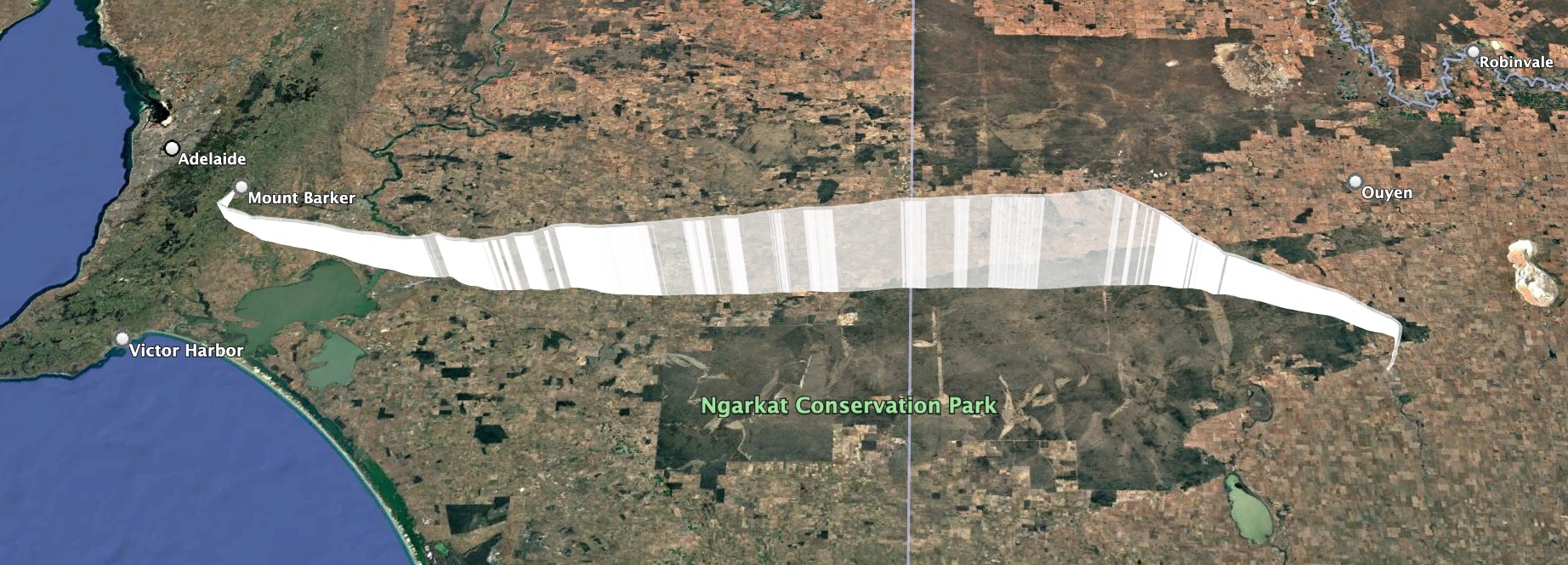
Horus 67 Flight Path
Preparing for and performing this launch was a huge effort, made much easier by the many volunteers that helped out on the day. In particular I’d like to call out Michaela VK3FUR, Geordie VK3CLR, and Harper VK1TTY, who travelled all the way from Victoria to help out with the event!
Telemetry Reception Stats
The primary tracking payload (HORUS-V2) was received by the following callsigns:
A dashboard showing Wenet reception statistics is available here.
Horus 68 – 14th December 2025 – Student Payload Launch
Horus 68 was the follow-up to November’s launch, with the aim of finally launching the two winning LaunchBox payloads. This was a much quieter launch compared to the last, with a small team performing the launch from the Mt Barker High School oval, with the student teams watching the SondeHub tracker and live imagery online.
Graeme VK5RE captured the launch well:
With the payloads on their way, the launch team quickly packed up and departed for the predicted landing area near Nildottie. Peter VK5KX and Matt VK5ZM were setup on a lookout overlooking Palmer, running the primary ground station for this flight. Peter also had a 915 MHz Yagi on his tracking mount, with Ed from Robinson Aerospace receiving telemetry from the RASCube-LB payloads.
Despite some signal fading due to the payloads swinging around, we had excellent imagery reception throughout the flight:
Balloon burst occurred as expected, just above 31km altitude, and the payloads descended to a landing a few km to the east of Nildottie. After obtaining access permission from the landowner, the chase teams were able to drive in and recover the payloads which were all in good condition.
The primary tracking payload (HORUS-V2) was received by the following stations: BARC-RRR,VK3BKQ,VK3IDK,VK5AI,VK5AKK,VK5AKK-1,VK5ALG,VK5ALG-9,VK5ARG,VK5BL,VK5CV,VK5FD,VK5GY,VK5HW,VK5KX-9,VK5KX-i5,VK5LN,VK5NE,VK5NEX,VK5OCD,VK5QI-9,VK5RM,VK5SJ,VK5ST-4,VK5WE,VK5ZAP,VK5ZM,VK5ZMD,VK5ZRL,VK5RK,VK5IS,VK5ZMD
The backup tracking payload (VK5ARG) was received by: BARC-RRR,VK5ALG,VK5ALG-9,VK5ARG,VK5KX-9,VK5QI-9,VK5ST-4,VK5ZM,VK5ZRL/2
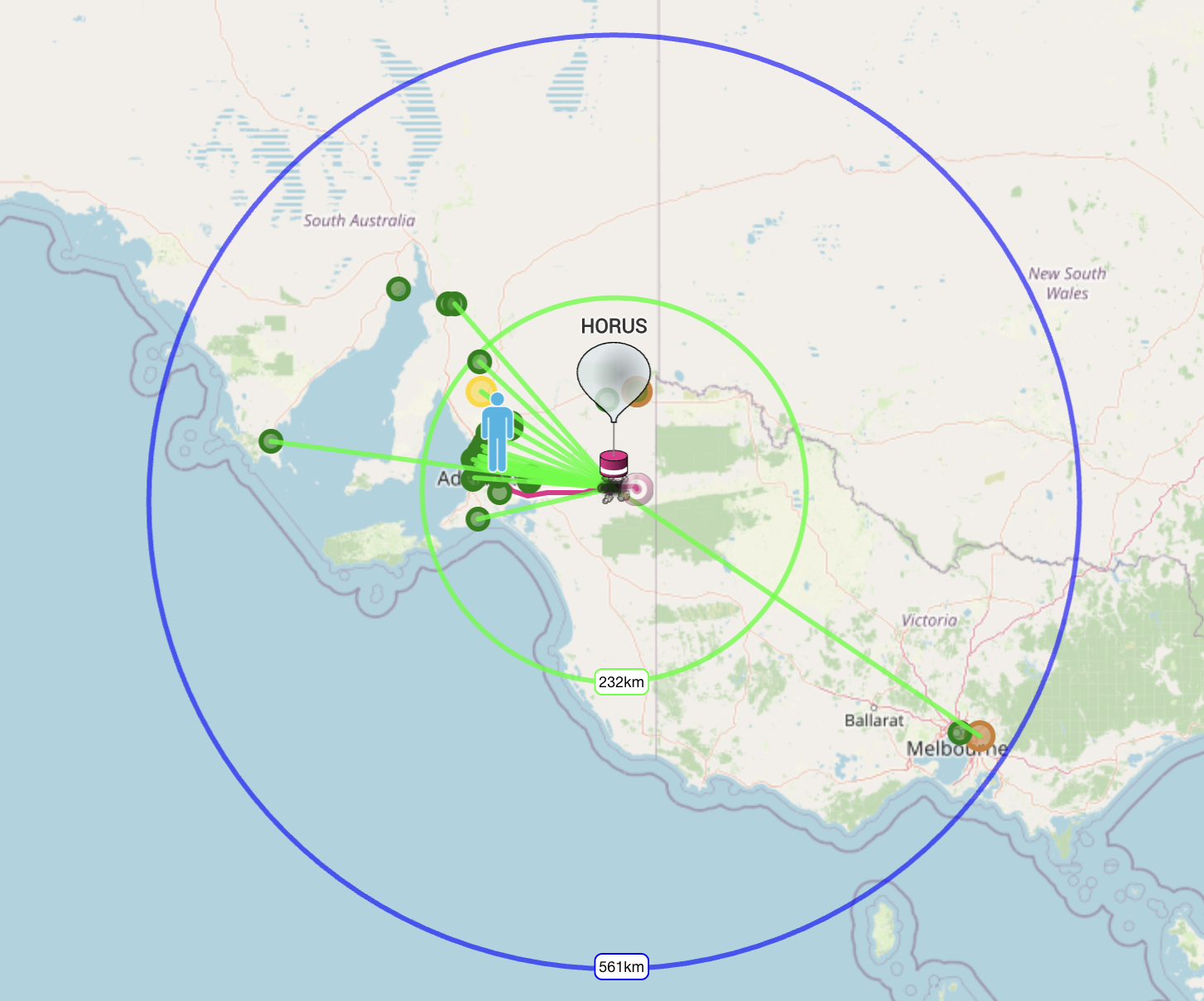
The furthest receiver was VK3BKQ, located near Melbourne at ~602 km range!
The Wenet imagery payload was received by:
VK5ZM: 44491 packets (10.86 MB)
VK5KX-9: 249921 packets (61.02 MB)
VK5QI-9: 194109 packets (47.39 MB)
VK5ALG-9: 41995 packets (10.25 MB)
VK5IS: 506 packets (0.12 MB)
Dashboards showing detailed telemetry for each payload are available at the following links:
Thanks to Fleet Space for running the LaunchBox program – we’re proud to be involved in this once again and to be able to share the fun of high altitude balloon launches and amateur radio with a wider audience! The LaunchBox program will be back next year, and you can expect at least 2 balloon launches as part of this.
We next expect to launch sometime in Early/Mid January 2026, making use of some leftover helium. This will likely comprise of 1 or 2 flights with Horus Binary tracking payloads onboard, and possibly a Meshtastic payload from the SA Meshtastic Users Group.
In 2026 we’re hoping to get back to launching some of our larger payloads, including the cross-band repeater and possibly even our DVB-S video payload – stay tuned!
The next Project Horus launch will be on Sunday the 14th of December, as part of Fleet Space’s LaunchBox STEM program.
LaunchBox is a reimagining of a STEM program that AREG was a part of back in the 2010s, where we flew student-built payloads on high altitude balloon launches. Fleet Space has re-started the program and expanded it Australia-wide, with hundreds of year 7-8 students involved. The ‘Summit to the Stratosphere’ event held on the 2nd of November had over 700 attendees, but due to weather issues we were not able to launch the student developed payloads, hence this second launch!
Apologies – the writeup for the November 2nd Launch is still in progress…
Above the clouds on the November 2025 LaunchBox flight!
This launch is currently planned to be performed from the Mt Barker High School Oval, which is accessible from Stephenson Street, Mt Barker.
Mt Barker Launch Site
The launch time is expected to be our usual 10AM, with launch crews arriving on-site around 9-9:30 AM.
Details of the frequencies in use on this flight are:
Primary Horus Binary telemetry on 434.200 MHz
Backup Horus Binary telemetry on 434.210 MHz
Wenet v2 Imagery on 443.5 MHz.
On this flight we encourage new listeners to try out our new web-browser-based decoding software for Horus Binary and Wenet – find out more about this further below!
The primary tracking telemetry will be transmitted on 434.200 MHz using the Horus Binary 4FSK data mode. Amateurs in the Adelaide and Central SA region are also encouraged to get involved with the flight through receiving and uploading flight telemetry from our 70cm band tracking beacons. Every piece of telemetry data is valuable to the flight tracking and recovery teams so if you can help join the distributed receiver network to collect that data you will be making an important contribution to the project!
Note that you will need to use a USB ‘dial’ frequency of 434.199 MHz for the 4FSK signal to be centred in your receiver passband and hence be decodable.
Horus Binary telemetry can now also be received using your web browser, using either a SSB receiver or even a RTLSDR!
Click this link to start up a browser-based receiver:
A backup tracking payload may be transmitting on 434.210 MHz using the Horus Binary 4FSK data mode, and can be received in the same way as the primary tracking payload, with information above. For this payload you will need to use a USB ‘dial’ frequency of 434.209 MHz. Note that this payload may not fly if we need to cut weight!
Click this link to start up a browser-based receiver:
Imagery on this flight will be transmitted via the Wenet downlink system, which uses 96 kbit/s Frequency-Shift-Keying to send HD snapshots. Reception of the Wenet imagery requires a RTLSDR, and a 70cm antenna with some gain (a 5-element Yagi is usually enough).
We will be using the new ‘Wenet v2’ mode, as used successfully on Horus 64B and Horus 66. There is information on updating existing Wenet receive setups available here.
Wenet can now be received on almost any modern computer, and even some newer android devices, using the new WebWenet software! This operates entirely within a web browser. Information on how to get setup to use this is available here: https://www.youtube.com/watch?v=Euo4BGB6wUU
Click this link to start up a browser-based receiver:
We encourage new listeners to try out the WebWenet software for decoding signals on this flight – however you can also still receive the signal using the Linux-based decoder, with details on this available here:
UPDATE: Unfortunately we had a launch failure due to high wind gusts at the launch site. No payloads will be flown today. We’ll re-group and look at flying the repeaters again later in the year.
We’re giving it another go! AREG’s High-Altitude Ballooning sub-group, Project Horus, is planning their next launch for Sunday the 14th of September, with a planned launch time of 10 AM ACST. If we have to scrub due to poor weather, the backup launch date will be the 21st of September.
This will be a re-flight of the Horus 63 payloads, which will include our cross-band repeater payload and Wenet imagery payload. This time we hope to achieve a burst altitude of >35km, which will enable repeater coverage between Adelaide and Melbourne! We are looking for stations in Victoria and South-West NSW to listen out for balloon telemetry, and give us a call on the repeater!
The launch site for this flight will be the Mt Barker Summit Sport & Recreation Park oval, located just to the east of Mt Barker, and accessible off Springs Road and Heysen Boulevard. We will be setting up near the main oval Grandstand area. There is ample parking all around the oval.
Wenet Imagery on 443.5 MHz. (Now receivable using a web browser! See below!)
Primary Horus Binary telemetry on 434.200 MHz
Backup Horus Binary payload, on 434.210 MHz
On this flight we encourage new listeners to try out our new web-browser-based decoding software for Horus Binary and Wenet – find out more about this further below!
This will be a re-flight of our cross band voice repeater, which performed very well on Horus 63. This is based around a Yaesu FT-530 handheld transceiver. The balloon repeater should be heard on:
INPUT: 145.075MHzwith 91.5Hz CTCSS
OUTPUT: 438.975MHz – 0.5W into 1/2-wave omni
Please note that this repeater is experimental, and may have performance issues or even fail completely during the flight!
To transmit to the balloon at the maximum range of 800km (once the balloon reaches 100,000ft ++) you should only need approximately 10-20W and an 2-4dB gain antenna.
Receiving the balloon at 400km range in a handheld environment should be achievable, but to hear the repeater at the maximum range of 800km you should expect to need a 10dB gain Yagi for a 0.4uV capable receiver and 2dB feeder loss
This setup is much the same as the LEO satellites but without the doppler shift.
PLEASE MAKE SURE YOU CAN HEAR IT BEFORE YOU TRANSMIT!
This repeater will be operated as a controlled net, with the net control callsign VK5ARG – please listen out for net control before calling!
The primary tracking telemetry will be transmitted on 434.200 MHz using the Horus Binary 4FSK data mode. Amateurs in the Adelaide and Central SA region are also encouraged to get involved with the flight through receiving and uploading flight telemetry from our 70cm band tracking beacons. Every piece of telemetry data is valuable to the flight tracking and recovery teams so if you can help join the distributed receiver network to collect that data you will be making an important contribution to the project!
Note that you will need to use a USB ‘dial’ frequency of 434.199 MHz for the 4FSK signal to be centred in your receiver passband and hence be decodable.
Horus Binary telemetry can now also be received using your web browser, using either a SSB receiver or even a RTLSDR!
Click this link to start up a browser-based receiver:
A backup tracking payload will be transmitting on 434.210 MHz using the Horus Binary 4FSK data mode, and can be received in the same way as the primary tracking payload, with information above. For this payload you will need to use a USB ‘dial’ frequency of 434.209 MHz.
Click this link to start up a browser-based receiver:
Imagery on this flight will be transmitted via the Wenet downlink system, which uses 96 kbit/s Frequency-Shift-Keying to send HD snapshots. Reception of the Wenet imagery requires a RTLSDR, and a 70cm antenna with some gain (a 5-element Yagi is usually enough).
We will be using the new ‘Wenet v2’ mode, as trialed on Horus 64B. There is information on updating existing Wenet receive setups available here.
Wenet can now be received on almost any modern computer, and even some newer android devices, using the new WebWenet software! This operates entirely within a web browser. Information on how to get setup to use this is available here: https://www.youtube.com/watch?v=Euo4BGB6wUU
Click this link to start up a browser-based receiver:
This payload will be reverting to a PiCam v2, so we don’t hit the de-focusing issues encountered with the PiCam v3.
Wenet imagery from Horus 62
We encourage new listeners to try out the WebWenet software for decoding signals on this flight – however you can also still receive the signal using the Linux-based decoder, with details on this available here:
Update: Thanks to everyone that helped out with this launch! A full writeup will be published in the coming weeks.
AREG’s High-Altitude Ballooning sub-group, Project Horus, is planning their next launch for Sunday the 13th of July, with a planned launch time of 10 AM ACST.
This launch is currently planned to be performed from the Mt Barker High School Oval with the launch team arriving on site from around 9:30 AM. Note that access to the oval is via Stephenson street, and parking near the oval is extremely limited. We are expecting significant wind gusts at the launch site – be prepared!
Details of the frequencies in use on this flight are:
Wenet Imagery on 443.5 MHz. (Now receivable using a web browser! See below!)
Primary Horus Binary telemetry on 434.200 MHz – callsign ‘ITSWINDY’
On this flight we encourage new listeners to try out our new web-browser-based decoding software for Horus Binary and Wenet – find out more about this further below!
The primary tracking telemetry will be transmitted on 434.200 MHz using the Horus Binary 4FSK data mode. Amateurs in the Adelaide and Central SA region are also encouraged to get involved with the flight through receiving and uploading flight telemetry from our 70cm band tracking beacons. Every piece of telemetry data is valuable to the flight tracking and recovery teams so if you can help join the distributed receiver network to collect that data you will be making an important contribution to the project!
Note that you will need to use a USB ‘dial’ frequency of 434.199 MHz for the 4FSK signal to be centred in your receiver passband and hence be decodable.
Horus Binary telemetry can now also be received using your web browser, using either a SSB receiver or even a RTLSDR!
Click this link to start up a browser-based receiver:
Imagery on this flight will be transmitted via the Wenet downlink system, which uses 115 kbit/s Frequency-Shift-Keying to send HD snapshots. Reception of the Wenet imagery requires a RTLSDR, and a 70cm antenna with some gain (a 5-element Yagi is usually enough).
Wenet can now be received on almost any modern computer, and even some newer android devices, using the new WebWenet software! This operates entirely within a web browser. Information on how to get setup to use this is available here: https://www.youtube.com/watch?v=Euo4BGB6wUU
Click this link to start up a browser-based receiver:
This payload will be alternating between standard Wenet transmissions and an experimental new version of Wenet which runs at a slightly lower baud rate and a narrower bandwidth. The transmitted mode will change between images, so if you aren’t decoding anything immediately, be patient and wait for the next image!
You can try out receiving the new version of the Wenet signal using WebWenet at this link:
We encourage new listeners to try out the WebWenet software for decoding signals on this flight – however you can also still receive the signal using the Linux-based decoder, with details on this available here:
Project Horus’s 63rd launch was run on the 1st of December 2024. This was the first flight of our new 2m/70cm cross-band repeater payload, and also flew an experimental imagery payload. The flight reached an altitude of 31359m before landing in a paddock to the east of Walker Flat. 68 different stations were heard on the cross-band repeater throughout the flight – a great result, and one that we hope to best on a future launch!
Launch, Chase & Recovery
Launch was a fairly relaxed affair, with a fairly small launch crew and fairly good weather at the launch site. A large flock of corellas did cause us a bit of concern, but thankfully they stayed clear of the balloon.
A time-lapse of preparations and launch is shown here:
After launch, the chase teams headed off towards the landing area, via a quick stop at Bowhill for coffee. This launch had Mark VK5QI and Will VK5AHV; Autumn VK5CLD; and Peter VK5APR chasing from the launch site.
The balloon reached a peak altitude of 31359 m above Younghusband, before bursting and descending for a landing to the east of Walker Flat.
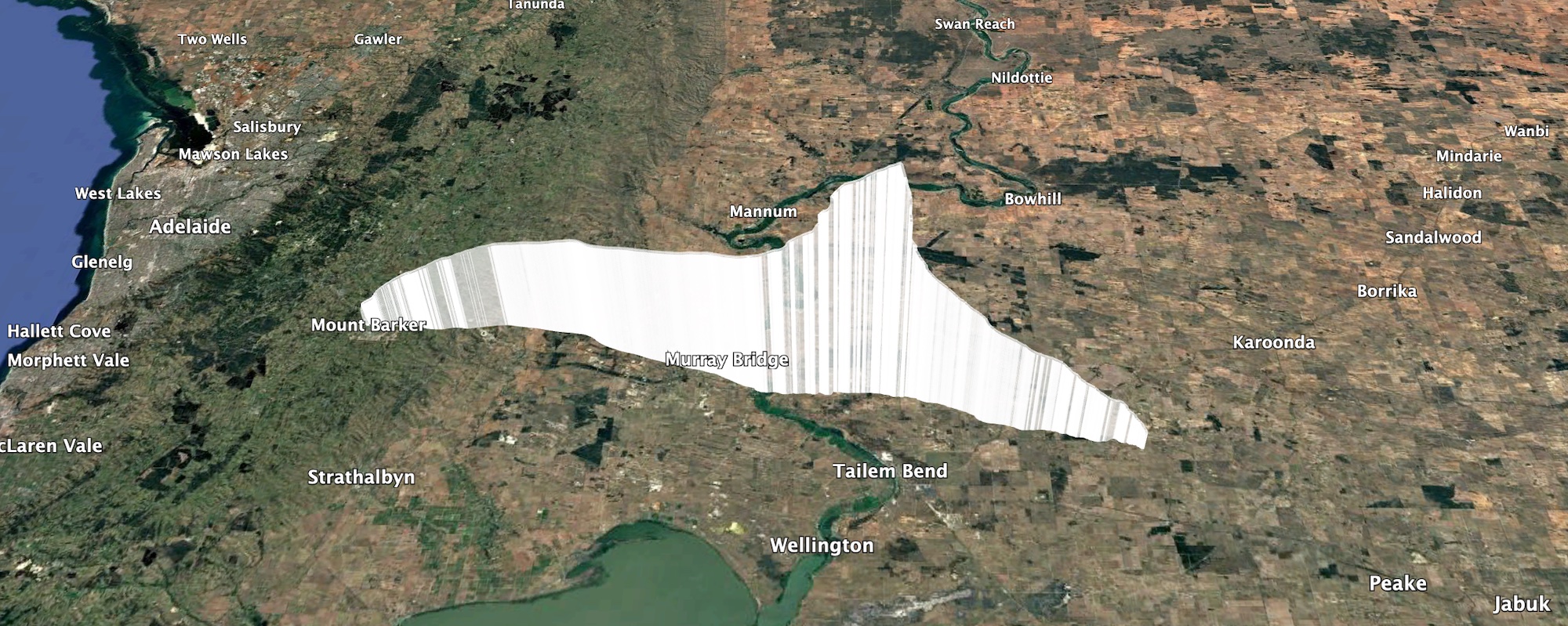
Horus 63 Flight Profile
As the chase teams from Mt Barker arrived near the landing area, they met up with Darin VK5IX and family (Glenys, Greg and Cameron), who were also out chasing. Everyone pulled over on the side of the road and were able to just catch a glimpse of the payloads landing on a paddock about 500m from the road.
Horus 63 payloads, as found – note the cross-band repeater antenna pointing up!
The repeater was found to still be operational after landing, and the team were able to use this while coordinating the recovery. After obtaining permission from the landowners, the paddock was entered carefully (very sandy!) and the payloads recovered – with the obligatory Wenet payload team photo!
Cross-band Repeater Payload
The cross-band repeater performed flawlessly on its first outing, with contacts quickly filling up the log books of VK5ARG net control, run by Grant VK5GR. A big thanks to Grant for managing the repeater so the chase teams could focus on recovery!
The following stations were recorded in the log during the flight (displayed in alphabetical order):
Based on the log, we believe the furthest contacts were to Michael (VK5LN) in Pt Lincoln, and Tim (VK3TNU) in Horsham, Victoria – both around 325 km! Unfortunately the flight didn’t quite get high enough for reliable contacts in to Melbourne.
Theo VK5IR live-streamed the repeater contacts on Facebook throughout the flight – a recording of this is available on Youtube here:
One of the concerns with this payload was how hot (or cold!) it would get throughout the flight. Peter VK5KX provided a temperature logger which was installed into the payload box. This showed that the payload’s temperature stayed in a fairly reasonable range, dropping down to -10˚C during the ascent, and rising up to 30˚C after landing.
We’re still finalising our QSL card design for this flight – these will most likely get sent by the WIA QSL bureau to save on costs. If you’re not a members of the WIA and would like to be sent a card directly, please contact Mark at vk5qi@rfhead.net.
This repeater (after a few repairs) will certainly make an appearance on future launches, with the next aim to get it up to >35km to allow more contacts into VK3. We may also look into increasing the transmit power from 0.5W to 1.5W.
Primary Tracking Station – VK5KX & VK5ZM
Up on Angas Valley Road, overlooking the Murray-lands area, Peter VK5KX and Matt VK5ZM had set up a portable ‘super station’, which provided reliable reception of the imagery and telemetry throughout the flight. Peter’s station used a Wimo 70cm X-Quad beam on a Az/El rotator, while Matt’s used a vinnant.sk 70cm turnstile. Peter was able to receive almost all of the imagery transmitted during the flight! Grant VK5GR was also setup nearby running net control for the repeater – thanks guys!
Thanks to Glenys Roberts for the photos from the receiver site.
Wenet Imagery Payload
This flight aimed to evaluate the PiCam v3 camera (previously tried on Horus 59) in auto-focus mode, with lots of software improvements and additions from the previous flights. Many more telemetry datapoints were transmitted in realtime during the flight, including RPi CPU and Radio temperature, and even the live lens position as the PiCam v3 attempted to autofocus.
Sadly we still had autofocus issues resulting in many blurry images, however the additional telemetry transmitted to the ground during this flight provided a lot of data to help improve performance on future launches. The full telemetry from this payload is available on a Grafana dashboard here.
A big thanks to the stations that set up to receive Wenet imagery and telemetry on this flight:
We’d also like to thank the Raspberry Pi foundation developers for providing lots of advice on how to best optimise the autofocusing system, and we plan to continue working with them to push the limits on what a PiCam v3 can do!
Horus Binary Telemetry Payloads
Our trusty Horus Binary telemetry payloads worked fine throughout the flight, providing our primary flight tracking ability. Thanks to the following stations that helped track these payloads:
Liam’s TheThingsNetwork payload flew again, with a total of 98 gateways receiving telemetry. The furthest receiver was located near Finley, NSW, at a distance of 557km.
A map showing the receiver locations is below, with more detail available on the flight dashboard.
Conclusion
Thanks to everyone that participated in this flight, through helping at the launch, tracking, chasing, or calling into the repeater!
We hope to do a re-fly of this launch in the new year (towards the end of summer), aiming to get the repeater payload up high enough to give coverage further into VK2 and VK3 – stay tuned!