 Good luck to all of the AREG members venturing to the South East Radio Group convention this weekend to go fox hunting! The rest of the club wishes you well and looks forward to hearing of your exploits in the future!
Good luck to all of the AREG members venturing to the South East Radio Group convention this weekend to go fox hunting! The rest of the club wishes you well and looks forward to hearing of your exploits in the future!
AREG is always looking for avenues to encourage amateurs out into the field to operate their stations. One of the unique ways to do this is to go and operate from a conservation park. Several awards systems have been established to promote this type of portable operation. These have been very effective in stimulating activity on the HF bands domestically particularly during daylight hours on 20 and 40m.
There are various forms of these awards including Summits On The Air, World Wide Flora and Fauna and other National Parks awards both in Australia and abroad. Paul VK5PAS has been a major champion of this type of operation and in particular is the founder of the VK5 National & Conservation Parks Award.
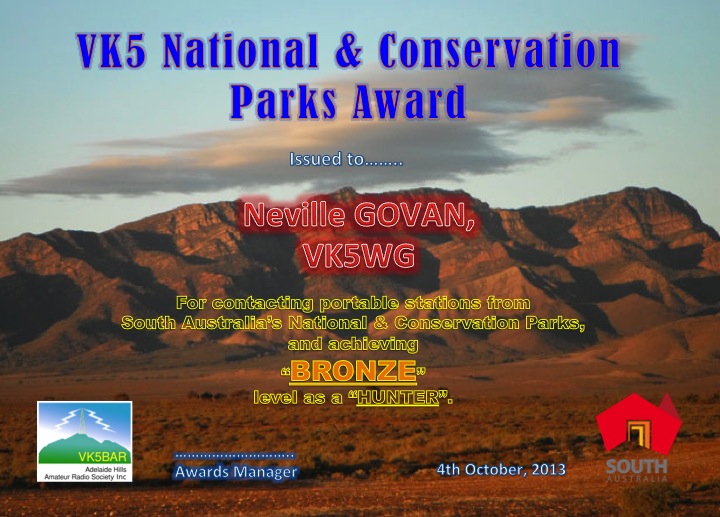
Sample VK5 Parks Award Certificate
At AREG’s next meeting on Friday June 17th, Paul VK5PAS will give a presentation on the Parks ‘N’ Peaks movement and the VK5 award in particular.
Everyone is most welcome to attend. The meeting will be held at:
Reedbeds Community Hall
Phelps Crt, Fulham
The doors will open at 7.45pm and the presentation will get underway at 8.00pm sharp.
After the meeting a short debrief will be given on the outcomes from the River Paddling Marathon that many AREG members are involved with this weekend.
Log Book Of The World
In addition to Parks n Peaks, Paul is now able to assist with the certification process for LogBook of the World. We hope to hear more about how to become registered for LOTW from Paul during the meeting as well.
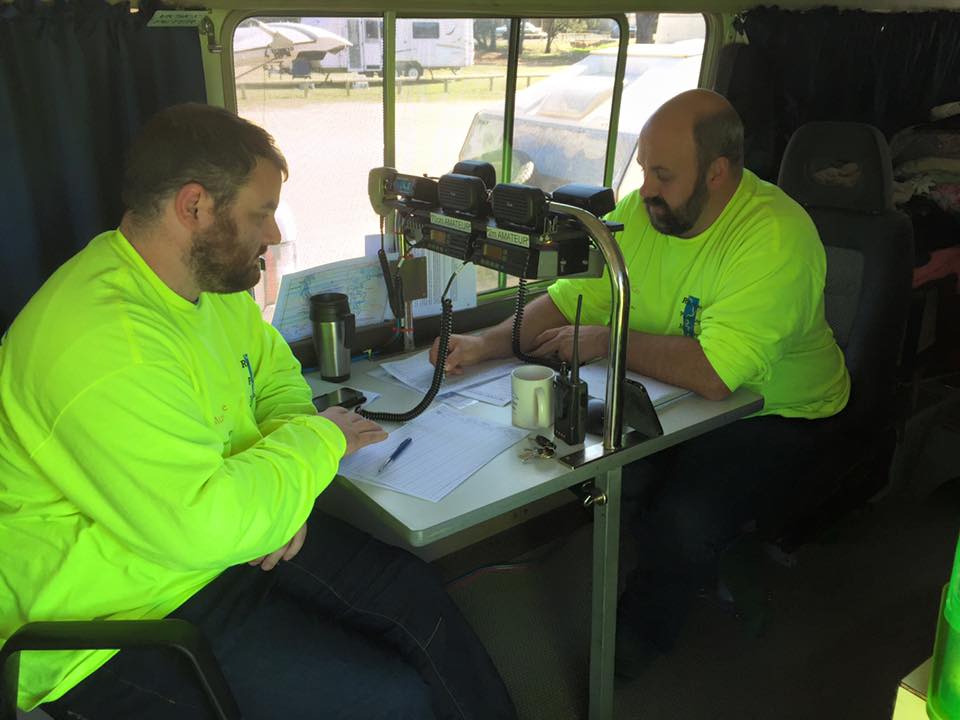
Matt VK5ZM running the 162MHz commercial net
The River Paddling Marathon 200 is about to be held again in 2016 over the June long weekend. The Amateur Radio Experimenters Group in conjunction with the Riverland Radio Club is pleased to again be offering communications support to the Marathon Canoe Club of South Australia. Preparations are almost complete and it is now time to have the final operator briefing.
This year the briefing will be held on Thursday evening, June 2nd, at the Reedbeds Community Hall in Fulham (Adelaide). The start time will be 8.00pm (due to prior hall bookings). All operators are asked to attend if at all possible.
There are changes to some of the procedures for this year’s event that you need to learn about. We will also be distributing your checkpoint information and logging packs and will discuss the communications protocols for this year (including the trial 6m packet AX.25 score collection system).
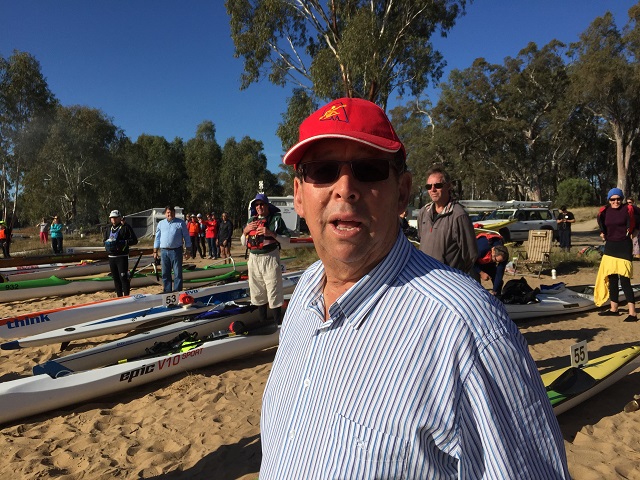
Martin Finn – Race Director
We will have representatives from the Marathon Canoe Club present and time permitting there will also be a controlled net communications exercise held across the hall (bring a handheld).
If you have any questions, please contact either Grant Willis VK5GR (logistics) or Matthew Cook VK5ZM (Safety Officer).
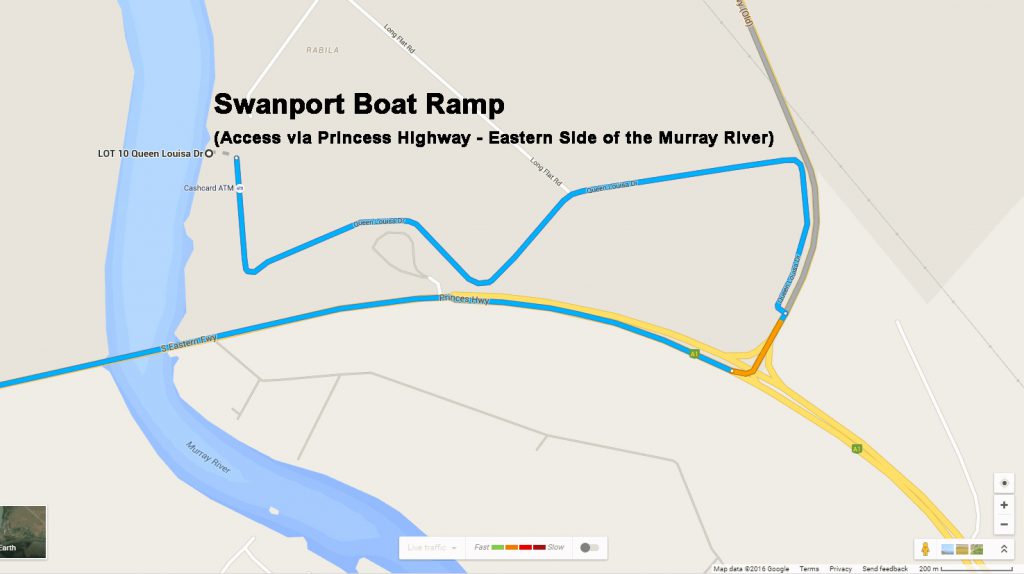
The Radio operator training day for the River Paddling Marathon 200 event which AREG supports in June, will be held on the eastern banks of the Murray River, just north of the Swanport Bridge by the boat ramp on Saturday April 30th 2016! This training will coincide with the running the Marathon Canoe Club’s Back-To-Back event held along this part of the river each year.
The operator training day will pitch checkpoint team against checkpoint team to see who can spot the most valid number of canoes.
Operators will need to get to the river by 12.00pm. The first paddlers are due around 1.00pm . (It is typically only an hour’s drive up the freeway).
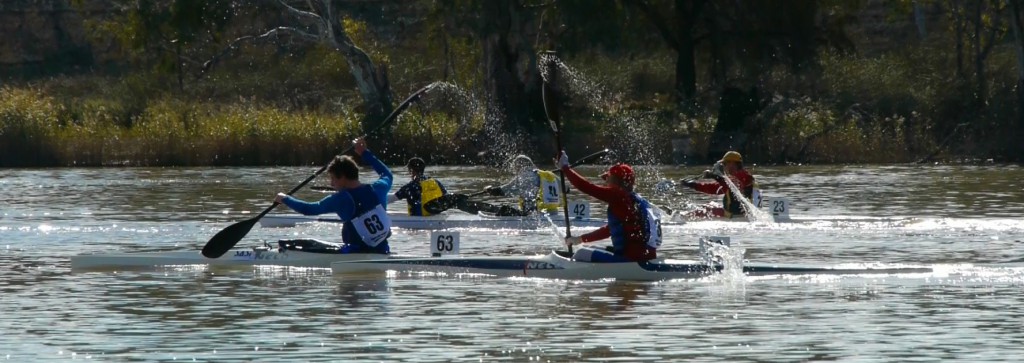
Everyone will be broken into teams of two. You will need to bring “optical magnification” apparatus, pens and something hard to write on (folding table and chairs recommended). You will be presented with paddlers from the Marathon Canoe Club’s Back to Back paddling event and will be asked to track paddlers, numbers, descriptions and will be graded in friendly competition with your fellow spotters spread out over the boat ramp park.
Bring a picnic lunch and enjoy a day by the river watching (intently) the world float by! It is recommended that participants bring binoculars, chairs, snacks and insect repellent. There is not much shade, so umbrellas, hats or marquees will make the day more pleasant.
For those who don’t want to spotting canoe’s but want to come for the social day, there is room to also set up HF portable by the river!
At the end of the event, we will adjourn back to the Swanport Sailing Club for a BYO BBQ dinner and a chat/de-brief with the Marathon Canoe Club. It is just a short drive back over the Swanport bridge.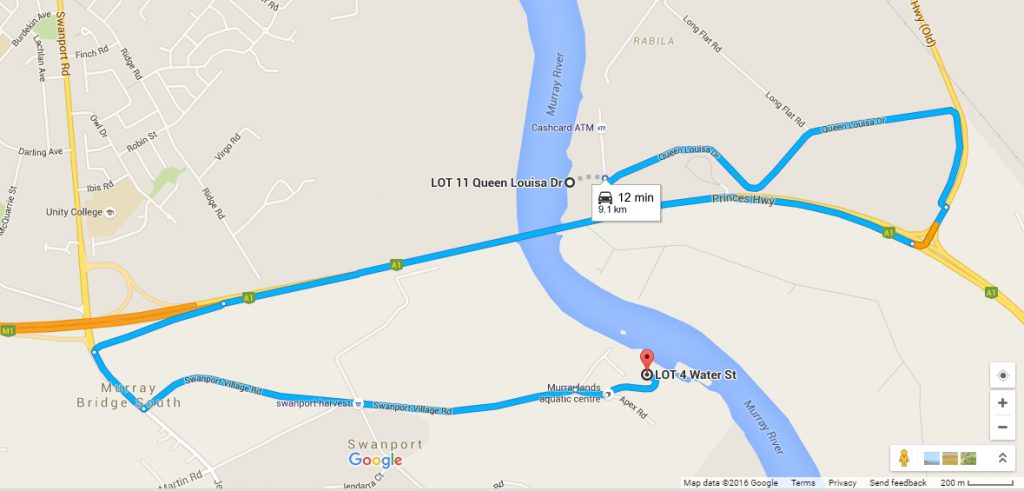
Please note: No dogs allowed at Swanport Sailing Club, so please leave the hounds at home!
If you are participating in the RPM200 in June, we would very much encourage you to come along on the 30th of April as well! Accurate canoe spotting is an important aspect of providing the safety net at the RPM200 so this training/practice is vital to improve the way AREG supports the main event in June. Hope to see you all there!
RYRYRYRYRYRYRYRYRYRYRYRYRYRYRYRY
CQ SPDX TEST DE VK5ARG VK5ARG KK
The AREG team tried something new on Sunday April 24th 2016, operating portable from the Morialta Conservation Park just east of Adelaide 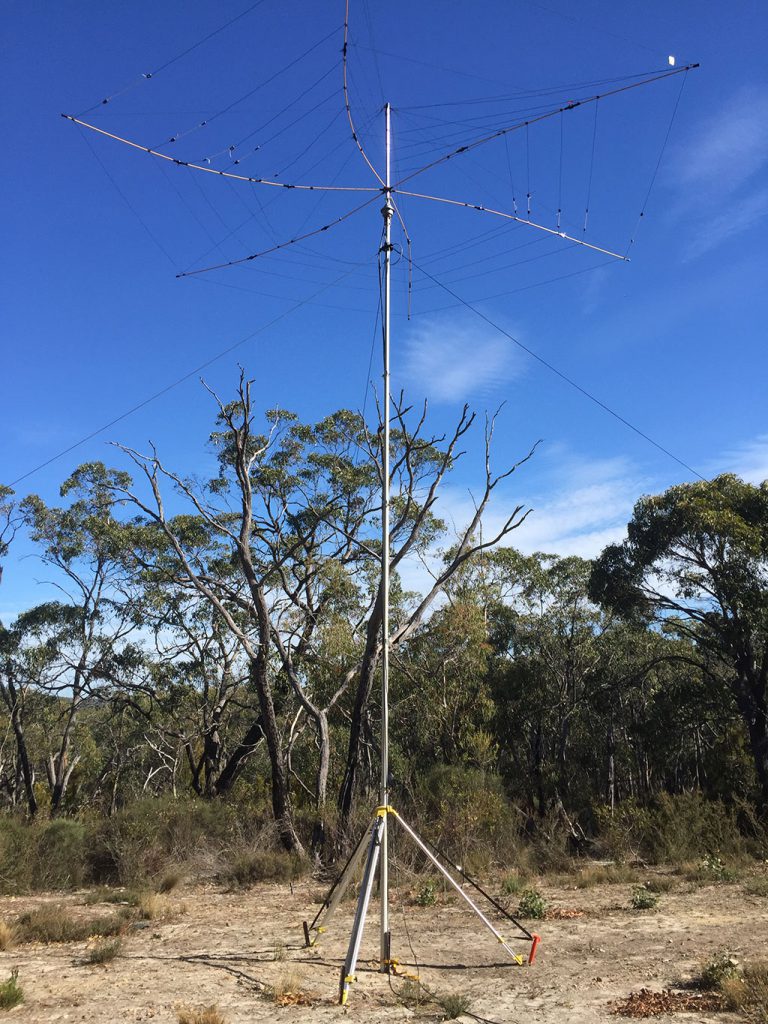 in the Polish Radiovideography Club’s SPDX RTTY contest . A lot of fun was had by those members who operated and visited us during the activation. 29 valid contacts were made including 5 out of 17 Polish provinces. Andy VK5AKH provided the bulk of the station equipment and was assisted by Grant VK5GR, Dennis VK5FDEN, Gary VK5FGRY and Mark VK5QI in setting up the station in the early afternoon.
By the time we were ready to go, long path Europe was already open, and the first station we called answered on the first try. We were running an IC7600 at about 90W FSK power with the HexBeam and the Fl-Digi software for RTTY. We also experimented with the GRITTY software which has some advanced decoding capabilities.
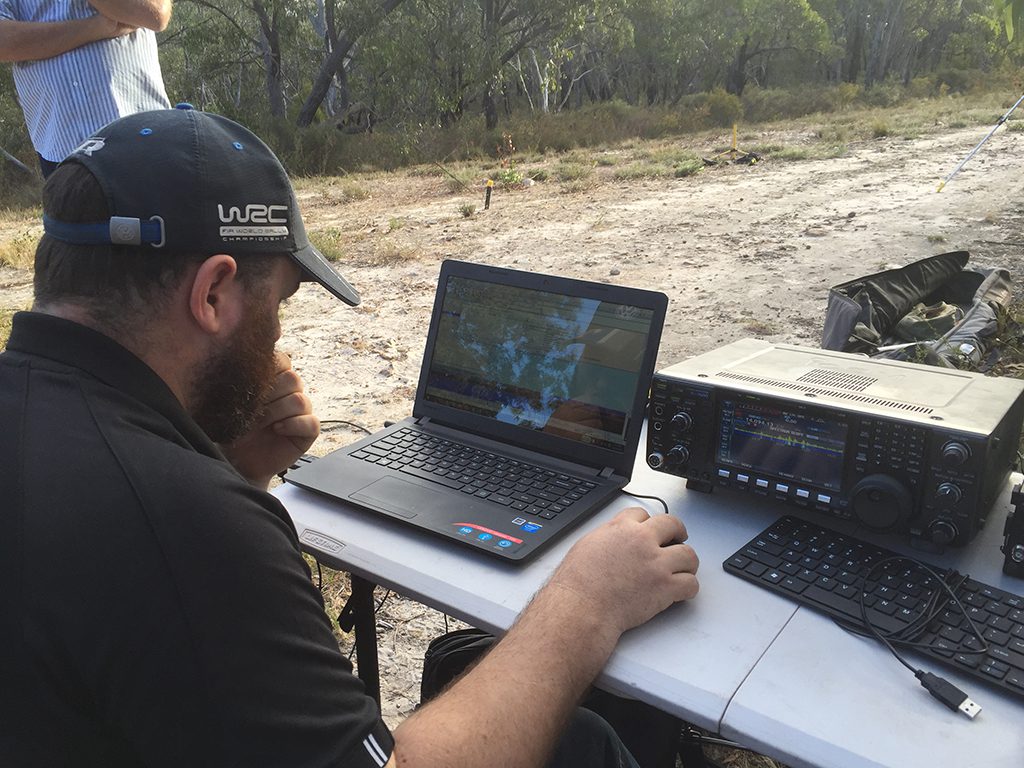
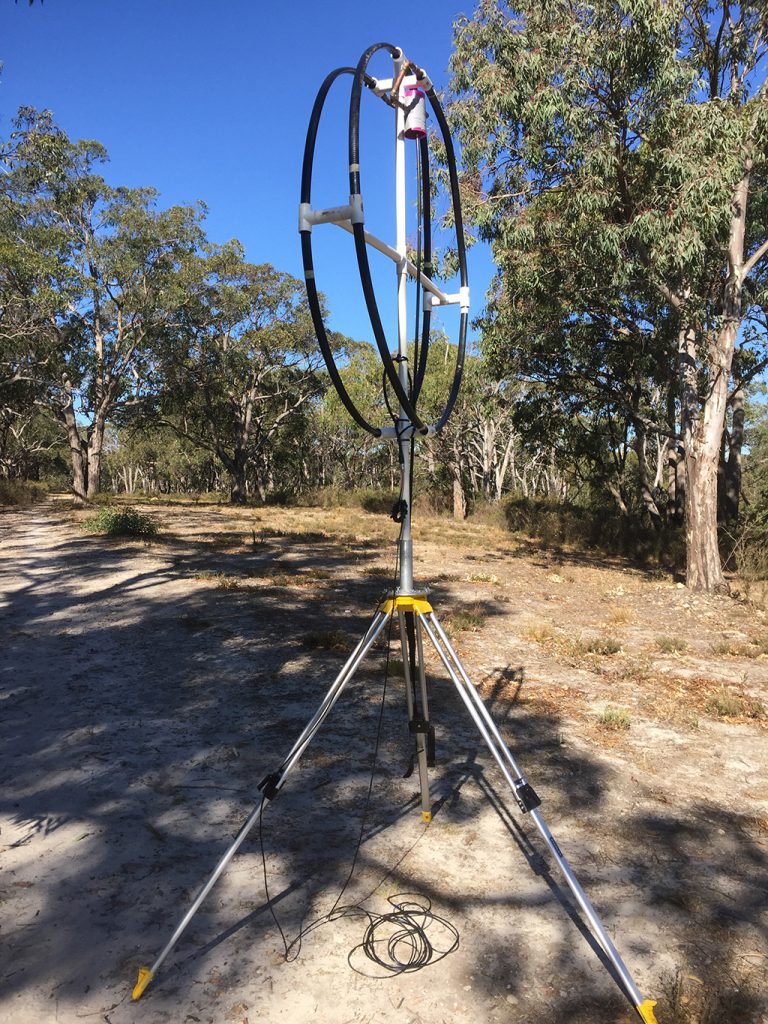 Steve VK5SFA also brought along his new 40m magnetic loop antenna for us to experiment with. We were very impressed with it’s noise performance and efficiency for such a small antenna. While we were working 20m RTTY long path EU, Matt VK5ZM, Gary VK5FGRY and Mark VK5QI experimented with the loop. Contacts on it were had across SE Australia, including 10W to 10W to Chris VK5CP who was portable in Parachilna in the Flinders Ranges.
(Stay tuned – a talk is planned at the next AREG meeting on these very unique antennas).
As the RTTY contest progressed, the team attempted 15m as well with limited success before returning to 20m to close out the EU LP opening.
We were then treated to the “AREG Catering Service” in the form of Sharon VK5FSAW who brought up baked potatoes and condiments, which were very welcome considering it was getting quite cold as the sun went down.
Finally we dropped down to 40m and put the loop to use on RTTY. We picked up a contact with the USA – after spending a while learning how to tune it! (It is only ~3-4kHz wide).
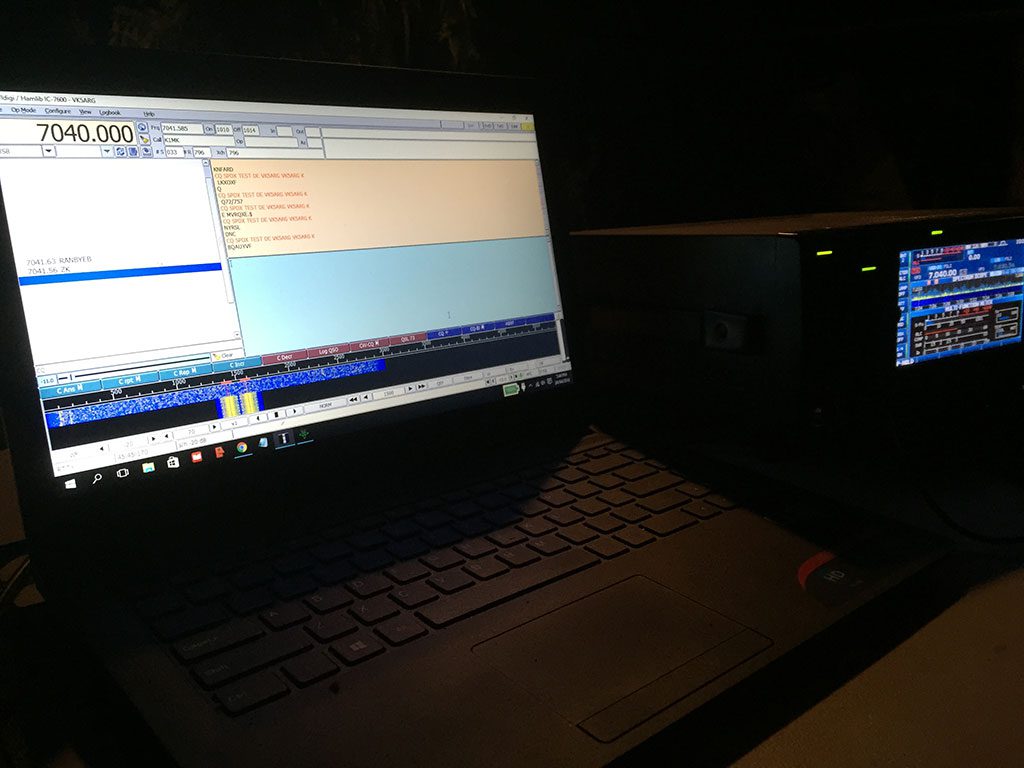
While we were not competitive we had a lot of fun working RTTY stations in Europe, and we are sure we helped a few polish stations with a continental multiplier. The stations we worked were:
[table “” not found /]This has certainly whetted our appetite to try another attempt at RTTY later in the year (perhaps the CQ WW or CQ WPX RTTY contests).
A big thank you to everyone who participated and in particular to Andy VK5AKH who brought his portable HF station.
 Several keen members have asked to activate the club callsign, VK5ARG in this weekend’s Polish RTTY DX Contest. Andy VK5AKH and Grant VK5GR will be setting up portable from the Morialta conservation park, at the end of Moores Rd.
 The plan is to arrive around 1pm and have the station operating before the EU Long Path opening around 3pm on Sunday April 24th. The contest finishes at 9.30pm ACST Sunday night.
This is Andy and Grant’s first attempt at a RTTY contest so mayhem and pandemonium will most likely eschew, but we will have a lot of fun trying! If you would like to come and pay us a visit, give us a call on 439.900 (VK5RSB).
You can find us here: [wpgmza id=”8″]
 A number of AREG members have headed to the 2nd QTH of Chris VK5CP to activate the club callsign VK5ARG in the CQ WPX SSB Contest this weekend!
The WPX Contest is based on an award offered by CQ Magazine for working all prefixes. Held on the last weekend of March (SSB) and May (CW), the contest draws thousands of entries from around the world.
For details of the contest, the rules, background and other information, go to the CQWPX Website.
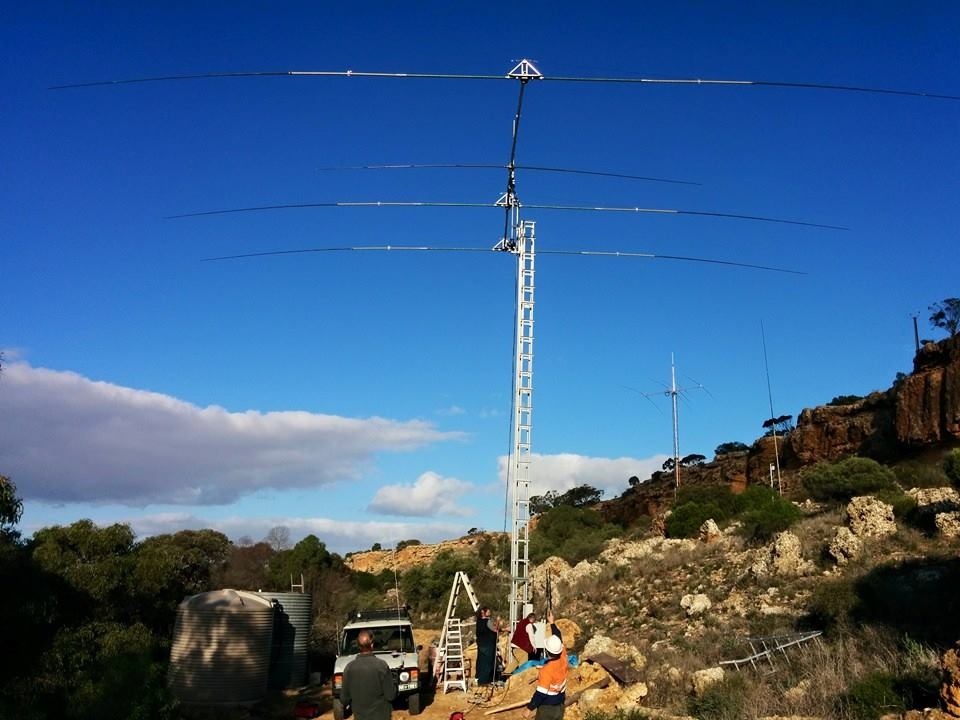
The MonstIR Yagi
Now that the contest has concluded, VK5ARG can report that they have worked 957 contacts for a total of 1,660,662 points. By band the results are:
[table “” not found /]The following members were involved in the event:
[table “” not found /]All up a worthy effort from VK5ARG. Best of luck in the rankings guys, but most of all we hope you had a lot of fun!
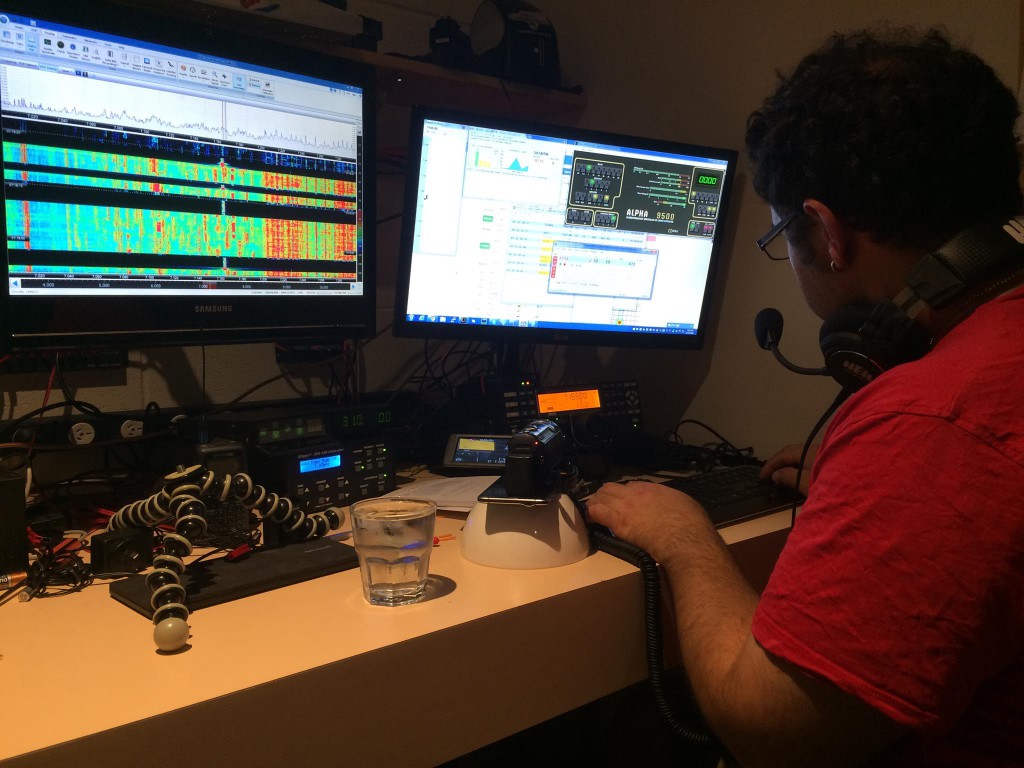
Theo VK5MTM: Operating the AREG Club Callsign like a boss in the WPX


AREG members fielded 5 stations in the contest this year. This was a change of direction for the club’s participation which had revolved around building a single mega-station the past couple of years. The plan was to put more stations on air, thus providing more contact opportunities! VK5AKH, VK5MTM, VK5KX, VK5CP and VK5GR took up the challenge, and a challenge it turned out to be.
While the “atmospheric” weather was ideal in South Australia, the ionospheric weather was anything but. As the event unfolded, HF conditions deteriorated and contacts became challenging with a solar Coronal Mass Ejection around 0900UTC making things difficult.
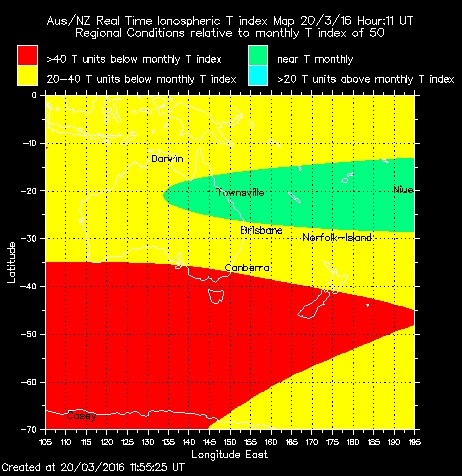
T-Index Map courtesy Bureau of Meteorology Space Weather Services Showing conditions during the JMMFD 2016
None the less, contacts were still there to be had, just not on the higher bands.
The following are some of the notes from the various member stations that were active over the weekend! General comments are that it has been loads of fun.
From Andy: Thanks to all stations that were on the other end of my 320QSOs across 40,20 &15m while portable for the JMMFD. It was the first time in 6 months+ I have had some quality HF time since moving from a house with a tribander and antenna farm into a inner city townhouse with no ham radio. Was a great feeling to be back on the bands and a reminder that having to go portable to play HF is not a bad thing. 73 catch you in the next contest”
Theo entered the 6 hour section today running on battery power from Morialta conservation park. One of his comments about his station was that “I got 5 hours, 20 minutes from my little LifePo battery today (with lots of TXing and calling CQ contest) running at 50 watts all day until my battery alarm went spastic as soon as it hit 11.7 volts, then I called it quits, packed up and went home. The 857D performed incredibly well. Even in crowded condx, the bandpass filter once narrowed down a bit surprised me how effective it was.”
Theo made 92 QSO’s. His observations were that the bands were very quiet in his opinion compared to other years and conditions were not fantastic but none the less he had a great day and really enjoyed it.
Theo has also made a video of his activity!
Grant went portable under (almost) his own steam for the first time in a HF contest this year, operating from Tickera on the eastern shore of Spencer Gulf. Here is Grant’s report:
“Activity was also a bit slow, but I was also still evaluating my Buxcomm TF2D broadband antenna, trying to decide if it is the right antenna for the job or not. On 40m it appeared to work well, but not so good on the other bands (although the disturbed ionosphere may have impacted that impression this weekend). On 80m, however, it was clear that while on receive it seemed pretty good, transmit is definitely compromised.
Fortunately I had borrowed some wire and a balun from Chris VK5SA very late Friday night. So, in the face of virtually no contacts being made on 80m, I pulled down the TF2D and constructed a resonant 80m dipole at 9pm on Saturday mid contest. The decision was, either do this or go to bed because no one could hear me!
The gamble paid off handsomely! 80m sprung to life with all VK call areas except VK8/9/0 being worked. For almost 4 hours there was a continuous stream of stations, to the point that 80m was on the verge of having a higher contact tally than all of the other bands combined for a while! In the early morning (5.30am), 40m elements were added which helped the transmit performance on that band as well. All up, I managed 217 contacts over the 24hrs.
I also wish to say a big thank-you to Peter VK5KX who loaned me a generator so that I could enter the portable section of the contest, and to Andy VK5AKH who loaned me the portable tower – without which I would have been just throwing things in trees and hoping for the best!
Peter VK5KX also hit the field and relayed the following photos of his location on the ranges east of Balaklava.

From Peter: “We were intending to operate from ‘The Rocks’ just south of Balaklava, we got there and where I had intended to operate from had a nice new gate installed across the access track and it was locked, the other place has been blocked by big boulders, so The Rocks was a bust.
Drove into Balaklava and had a hamburger for lunch (huge), left there heading for the hills in the direction of Auburn, went thru a town called Halbury then saw a likely looking track on the right heading to the crest of a hill, went up this goat track for a few kms and settled on a place in the middle of nowhere (S34º 08.27′, E138º 34.06’).
Set the operating point in the bus up, then out to the antenna, erected the 8m pole with a 23m delta loop tuned thru an SGC-230, this would give me multi-band operation, alas something was not quite right with this arrangement (hadn’t been tested at home) so down with the delta and up with an inverted V for 40m, this worked well.
I only did the 6 hours, all on 40m apart from one 15m contact with VK4QD, all up I did 78 contacts of which 77 counted for the contest, we stayed the night and negotiated the further goat tracks in a pear shaped voyage back to Balaklava then onto Mallala race circuit for a look-see at some V8’s circulating.”
Chris also participated for a while from his shack at Younghusband in the Murray Mallee. From Chris: “I got about 65 QSO on 40m in an hour – MonstIR was working well and noise floor was low (much to QI’s surprise)”
All up a great deal of fun was had by everyone involved. I’m sure plans are already being drawn up to have another go next year! See you then!