Next AREG Meeting: March 23rd – Introducing FT8 Mode

The next meeting of the Amateur Radio Experimenters Group will be held  1 week later than usual this month, on Friday March 23rd. The date has been delayed as the SA State Election is being held on the 17th and the hall is being setup as a polling booth the night before (our usual meeting night).

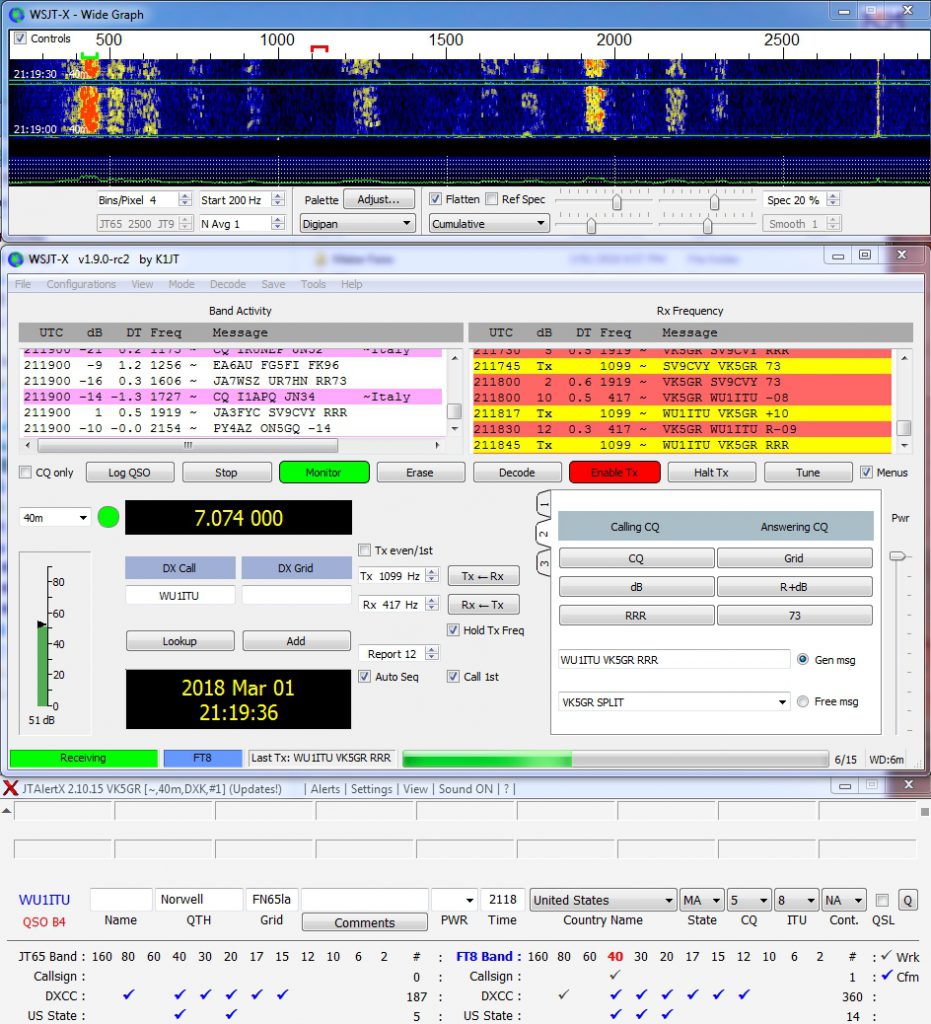
The presentation for the evening will be “Introducing FT8 Mode, what is all the hype about?” by Grant VK5GR.

Grant has closely followed the development of FT8 since it’s inception and was an early user of it in DXpedition environments during his activation of Niue last year.

Areas to be covered will include:

  • a brief description of the FT8 protocol
  • the basic hardware and software requirements to get on air
  • how to get that little bit more out of FT8 – add on packages like JTAlert
  • a look at FT8 operating practices
  • how to chase rare DX using FT8 – a practical tips guide
  • a discussion about the new Expedition mode that has been developed

Currently a live demonstration is also being planned. Grant will be available for questions after the presentation during supper.


The meeting  will be held at the Fulham Community Centre (previously known as the ReedBeds) with parking accessed from Phelps Court, Fulham. The venue will be open from 7.45pm with the meeting starting at 8.00pm. Following the technical presentation there will also be the usual club business meeting.

Visitors are always welcome! So come along and meet the Amateur Radio Experimenters Group!

[wpgmza id=”5″]

AREG IRLP Node 6214 Off Air

The following news comes from Ben VK5BB, the custodian of the 6214 IRLP node that is connected to the VK5RSB 70cm repeater


Due to a failure of IRLP node 6214’s computer hardware,
it is off line until further notice!

History:

I took on the management of the IRLP node 6214 sometime around 2012. Prior to this it was managed by Adrian VK5ZSN. Under his management it was all OK until the HDD died.

I volunteered to take on the project and rebuilt the computer using an IDE to SATA adapter and a solid state HDD. A bit of jiggling but it worked and to date has been very reliable with minimum of hands on support to keep it on air. 

Current Status:

I am not sure what is going on but it appears that the computer that manages the IRLP node 6214 is having severe problems. It seems that the computer is unstable and keeps shutting itself down and rebooting. The machine running the system is now over 10 years old, which is a contributing factor.


Right now, the ultimate fate of the IRLP node is undecided. The club members have been asked if they wish to see the service continued. That discussion is ongoing. If the service is to continue, it could be some time before it is restored as new hardware will likely need to be obtained.

If you would like to see it rebuilt and placed back on the air, why not consider becoming a member of AREG and showing your support for the project? Details of how to join are available on our membership page .

VK5RWN D-Star repeater site antenna tower replacement.

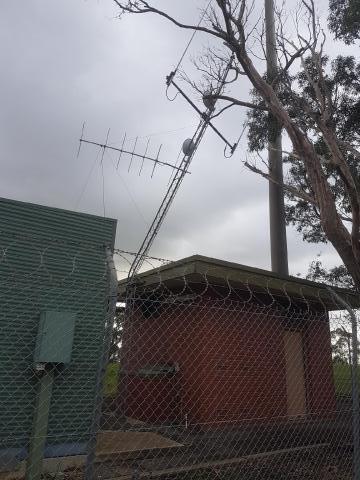
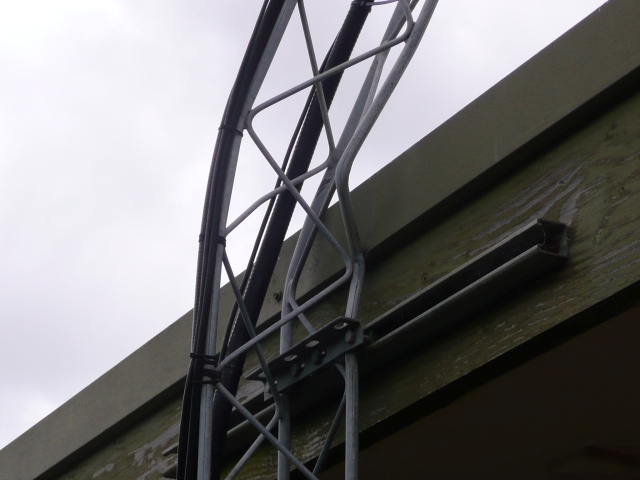
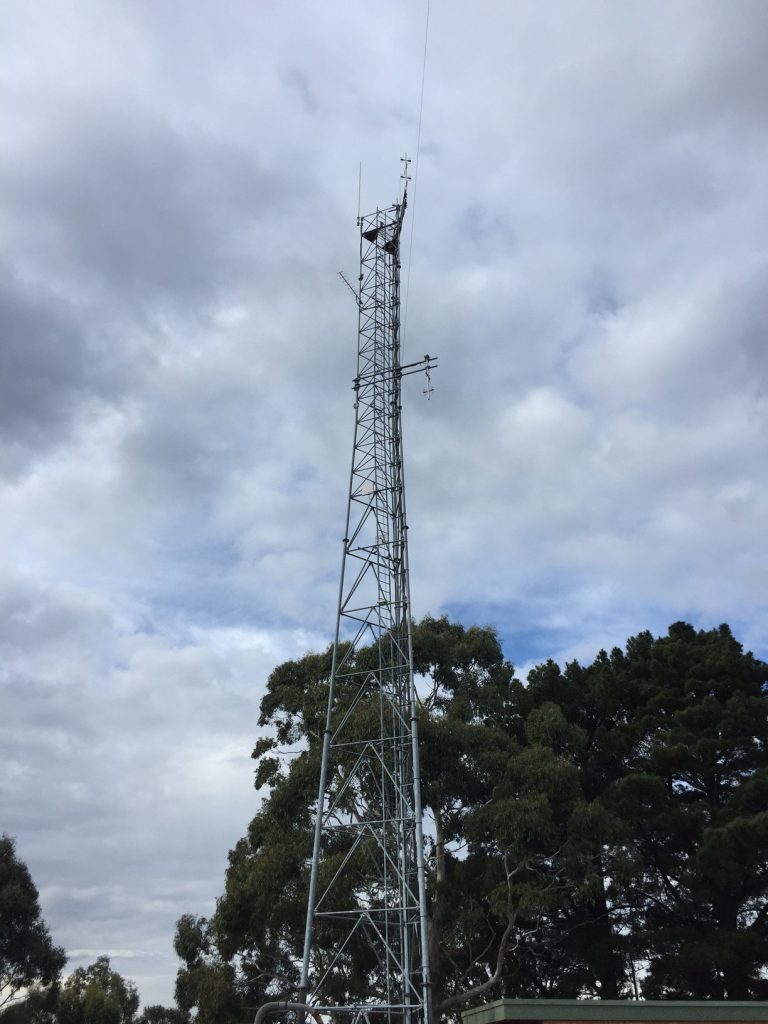
Back in mid August 2017, the tower supporting the antennas for the VK5RWN D-Star repeater system was damaged during the big blow that accompanied the storms. The tower, which was a section of a Hills Telemast bolted at the roof line of the communications hut, has been in service for about 27 years and was in good order. It appears that the wind loading had been exceeded during the August storms and the tower was bent just above the roof line of the building and the top section with the antennas was approximately 30 degrees off the vertical.
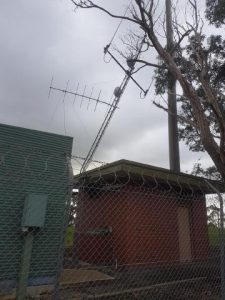
Well, no option, it had to be replaced!

The working bee at the VK5RWN site was scheduled for Tuesday 19 December 2017.

Ben VK5BB was at the site around 0845 hrs local time and the other members of the work crew arrived shortly afterwards.
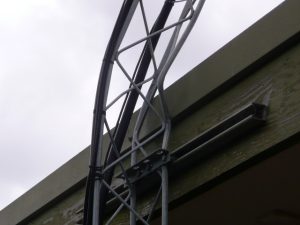
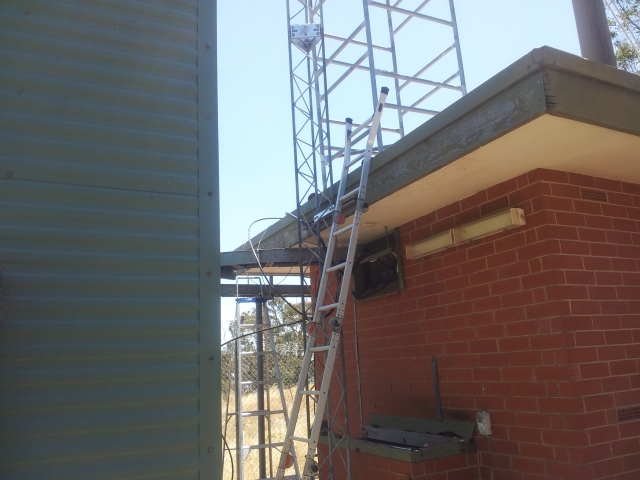
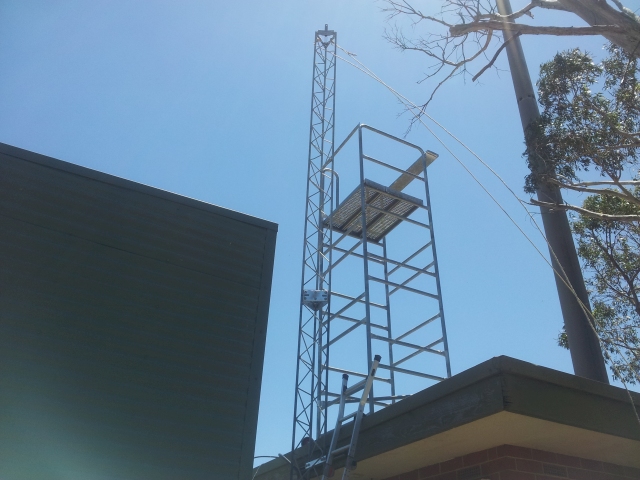
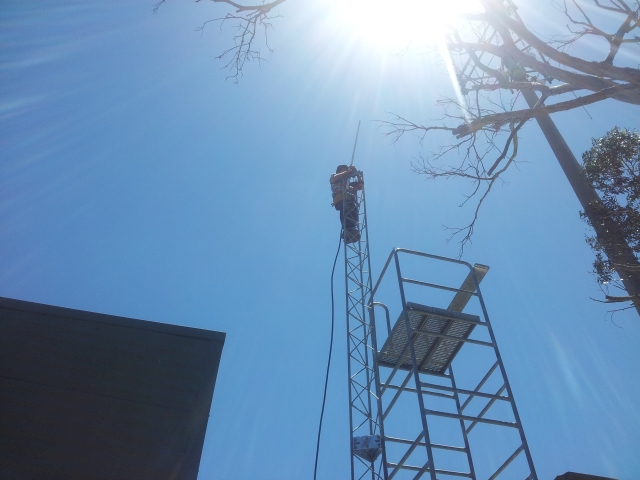
Apart from initial preparations, and the OH&S site survey, the first job of the day was to erect the scaffolding, on the roof of the building! Gave us very easy access to all antennas for disassembly. The scaffolding was also used for the reassembly, thereby minimising the need to actually climb the tower, though Colin VK5ACE later did, to re-mount the 2m antenna at the top.

From there the antenna equipment was easily removed and the bent tower was cut off just above the bend in the tower (just above the roof line) and the tower easily removed. The coaxes were laid out to one side so as not to be damaged and ready for re-installation.
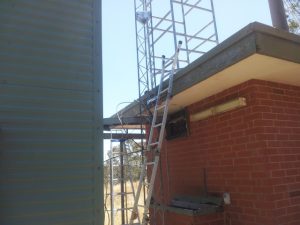
Whilst the old tower was being removed, other members bolted the new tower sections together ready for erecting. The new tower is two sections of Hills 330mm Butt Section mast, with additional plates fitted at the join of the two sections to provide some additional strength at the join.
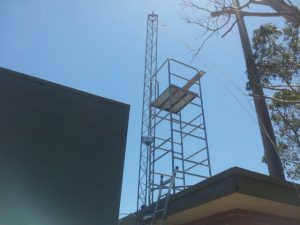
The top end of the new tower was lifted (man-handled with ropes) above the adjacent hut and then the base lifted into position near where it was to be mounted. Using the ropes, the tower was then pulled upright, across the gap between the two buildings to its mounting position, loosely bolted in place whilst we marked out where the base bolts were to go, drilled and fitted the Dyna bolts and the tower was firmly bolted in place. Actually went in place quite well with a minimum of jiggling etc!

Lunch time! (about 1300 hrs local)

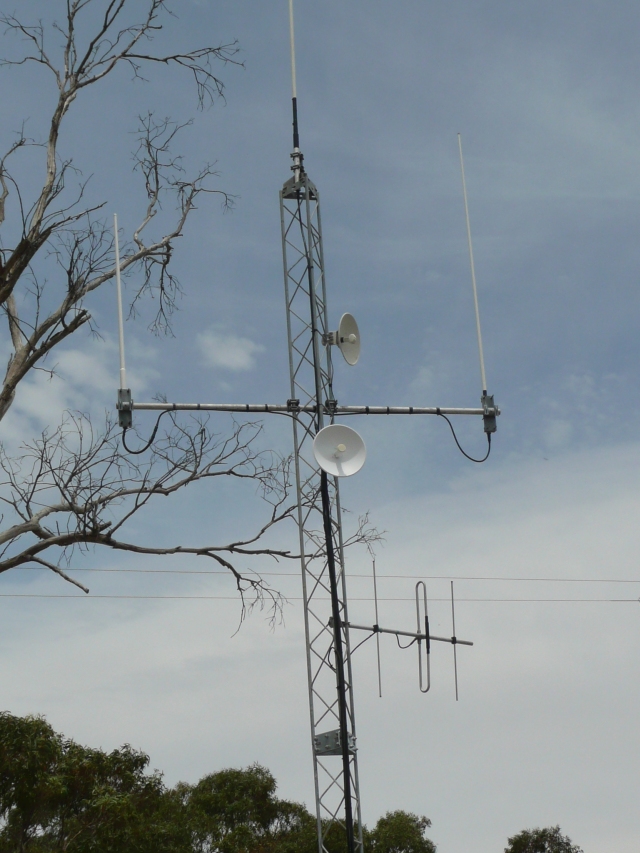
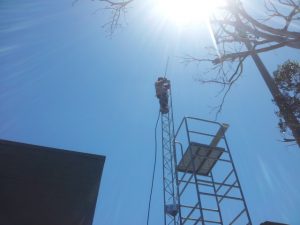
After lunch, the antenna cross arm and antennas were refitted, thanks to Colin VK5ACE, the main climber/rigger for the day. As the Wi-Fi dishes were refitted, the day started to get a bit blowy but the dishes were pointed approximately in the right directions. The 2m 7 element Yagi for the Broadcast Source transmitter was re-installed as a 3 element Yagi and pointed at Crafers. All coaxes were resealed, dressed and cable tied to the tower.
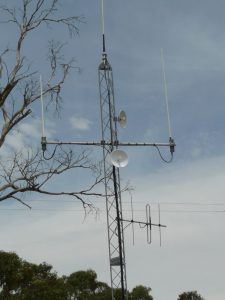
All antennas are back in their old positions, determined by the lengths of the various coax feeds. The tower, now 9m high, carries a 2m, a 70cm and a 23cm vertical “white stick” collinears, two 200mm Wi-Fi dishes and a 3 element 2m vertical Yagi.

Job done!
All equipment was turned on again and the various systems tested, we even had the Internet back on at the site, so we did get the dish right, either that or it has strong side lobes. (The Internet connection was previously still working even though the dish was pointed at the sky? A relay from the ISS??)

Clean up, and we were gone by 1700 hrs local.

The D-Star operations were checked at the site and later again from Ben’s QTH and all was good, including remote access to both the D-Star and the Broadcast computers.

Crew on site;

  • Trevor, VK5ATQ, roustabout and also supplied the scaffolding, (NERC member)
  • Rod, VK5ZRK, roustabout, (NERC member)
  • David, VK5MDF, roustabout, (NERC member)
  • Colin, VK5ACE, rigger, (AREG member)
  • Jeff, VK5IU, “supervisor” and roustabout, (AREG member)
  • Ben, VK5BB, project manager, 2nd climber/rigger, (AREG member)

Many thanks to the crew who helped during the day and especially Olga VK5FOLG, as she supplied a fresh cut lunch for all and delivered on site about 10 minutes before the lunch break.

Reports from the D-STAR users have reported a significant improvement of signal strengths at Balaclava and Mt Barker on 2m and from Hallet Cove on 70cm, so all appears to be good again.

Next task for the VK5RWN D-STAR system is the upgrade of the computer to a new 64bit system running CentOS 7 64 bit and the new G3 gateway software. This is scheduled for early in 2018.

VK5RWN DSTAR Repeater Damaged – Repairs Pending

In the wild weather over the past few weeks the VK5RWN repeater system has sustained some structural damage.  The original tower section is currently bent at a rather alarming angle and will require replacement.

In the past few days we have had our repair crew up there to shore up the tower section and make temporary repairs until a more permanent solution can be found.

There is still internet connectivity to the site and the D-Star repeater is still operational for the time being.   Users may find that the coverage of the repeater is somewhat disturbed however.

In the coming weeks the antenna system will need to be upgraded, so there will most likely be a prolonged period where the system will be off air while repairs are being made.

AREG Members On Air: 2017 Remembrance Day Contest

WIA RD Trophy

The weekend of August 12-13th once again saw the running of the Wireless Institute of Australia’s annual Remembrance Day Contest. While AREG did not mount a club station, the club did encourage as many members as possible to get out there on the air! The members didn’t disappoint with 7 members active over the weekend.

Three members put together a team entry, known as “AREG: Team One”. The teams category is an additional endorsement available for the contest where pre-nominated teams scores are aggregated. Pitched at clubs and groups, it is a great way to foster comraderie among members. The other members each put in individual efforts.


AREG: Team One – Grant VK5GR, Mark VK5QI and Marcus VK3TST (aka VK5WTF)

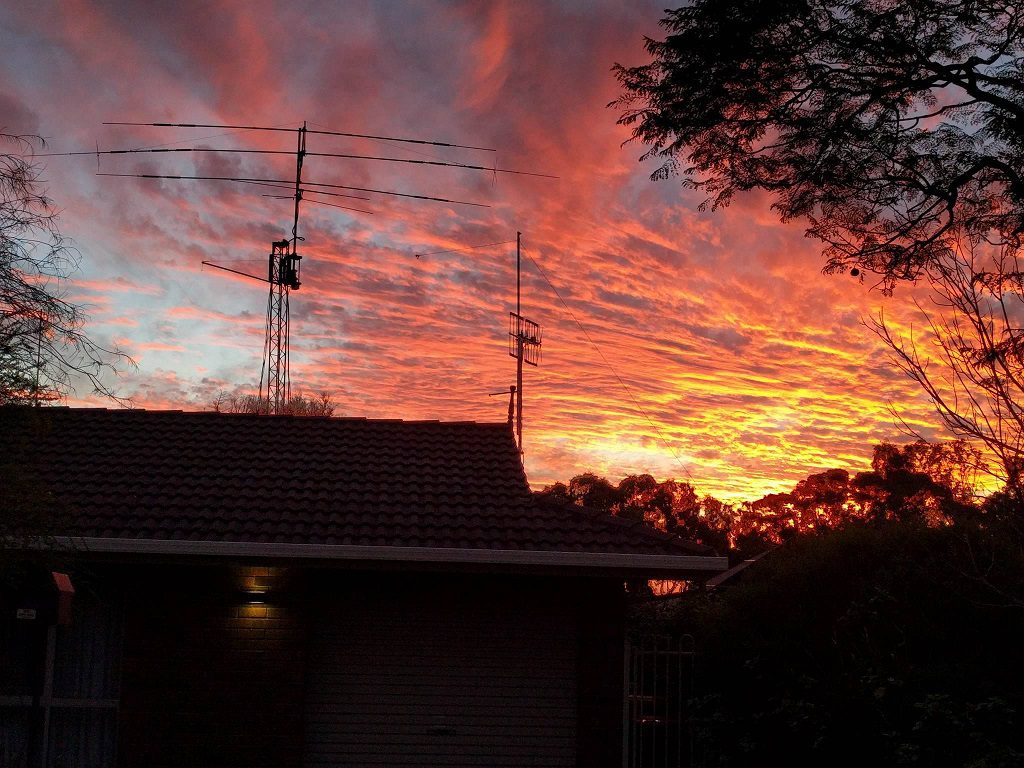
Sunset over VK5QI’s QTH

Grant, Mark and Marcus joined together to run a team entry this year. Mark VK5QI ran from home, and managed with the help of a borrowed tuner to operate on 160 and 80m as well during the contest. Meanwhile Marcus and Grant elected to run portable operations.

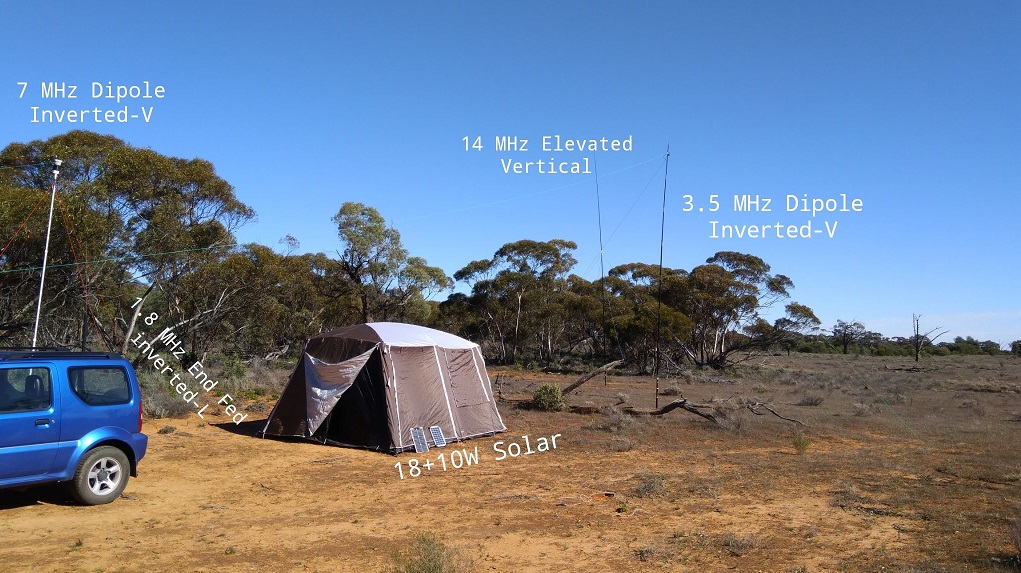
Marcus this year again used an SO2R setup (Single Operator 2 radios) from a location inside the Murray Sunset National Park (hence he used VK3TST).

Meanwhile Grant VK5GR went north west and operated from Tickera on the eastern shores of Spencer Gulf. No SO2R but three different antennas were tried,including a 160m dipole, a G5RV for 80-10m and a elevated feed folded monopole which could be tuned from 40m to 6m. The purpose for the antenna mix was to gauge the effectiveness of the vertical, which is the antenna Grant will be taking to Niue in the South Pacific in September (where he will operate as E6AG – see e6ag.net for details).


Theo VK5MTM Portable

Also out in the field was Theo VK5MTM who operated for a few hours from the back of his car! Now there is dedication for you!


Home Stations

Operating from home, we also had Chris VK5SA who said “62 unique contacts in around 4 hours of operation, in around 6 blocks. Mainly 40m, with some huge signals on 20 from VK6 and VK4”.

Peter VK5KX also put in an effort and was worked several times by Grant VK5GR and others from the club.

Also on air was Chris VK5CP who operated his remote station from the comfort of his lounge room {smile}. Way to go Chris!

Conclusion

All up a lot of fun was had by all, playing what amounts of electronic pokemon where you are competing against the other operators and the ionosphere. Rumour has it a number of points records have fallen this year according to Alan VK4SN, the contest manager, so it will be interesting to see if any of the AREG team place anywhere in the rankings this year.

Thanks to everyone who participated around Australia for making this year’s RD Contest yet another great event.

Annual General Meeting – Friday August 18th @ 7.45pm

The next meeting of the Amateur Radio Experimenters Group will be held on Friday August 18th, at the Reedbeds Community Hall, Fulham.

The doors will open at 7.45pm for an 8.00pm start.

To start the proceedings, the committee will recap the year’s events before moving into the reports and then the business of the meeting. All positions will be declared vacant and nominations will be sought.

The outgoing committee wishes to thank in particular Scott VK5TST and Ben VK5BB who have both indicated that they wish to step down in 2017/18. We look forward to new enthusiastic members joining the committee and continuing to drive the club forward as we enter the club’s 20th year!

A general meeting will follow the AGM, with a general coffee and cake discussion to be held afterwards. if you have a project you have been working on why not bring it along and show it off during the coffee discussions.

[wpgmza id=”5″]

VK5RSB Maintenance Day – Battery Backup & 6m Antenna

Since the statewide power blackout last year, AREG has been assembling replacement parts for the battery backup system on our VK5RSB repeater system. Now that this last weekends excitement is over, I am now able to compile and present a detailed report on the working bee at the VK5RSB repeater site at Summertown.

Working bee members,

  • Ben VK5BB
  • Colin VK5ACE
  • Paul VK5BX
  • Adrian VK5ZBR
  • Rod VK5UDX (both Rod and Adrian were on an official task at the site in their employment but were able to spend time assisting at the site)
  • David VK5MDF (invited visitor from NERC)

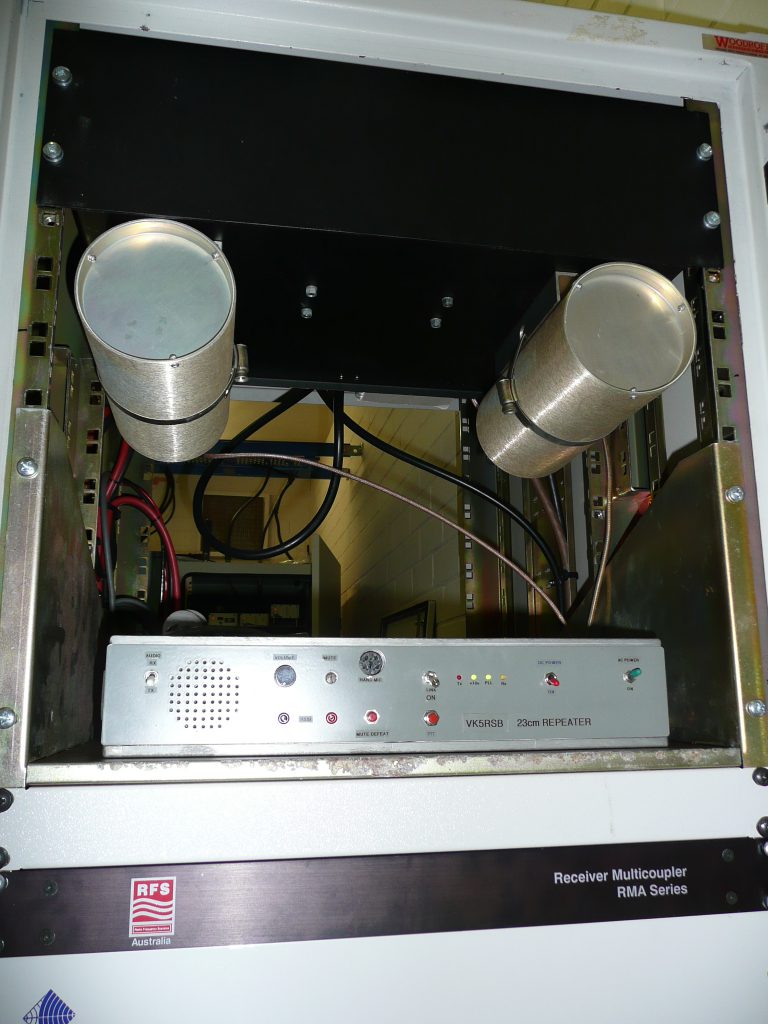
The aim of the working bee was to replace the cavities on the 23cm repeater, reinstate the battery backup system for the 70cm repeater (disconnected several years ago when the repeater was replaced with one requiring 24v input) and install (finally) the permanent replacement 6m repeater antenna (delayed multiple times in the past due to weather).

Work completed successfully included

23cm Repeater:

  • 23cm duplexer fine tuned (thanks to Paul VK5BX and his Specan/tracking generator)
  • the old 23cm removed and the new one fitted, tested into the antenna and live on air, all good

70cm Repeater

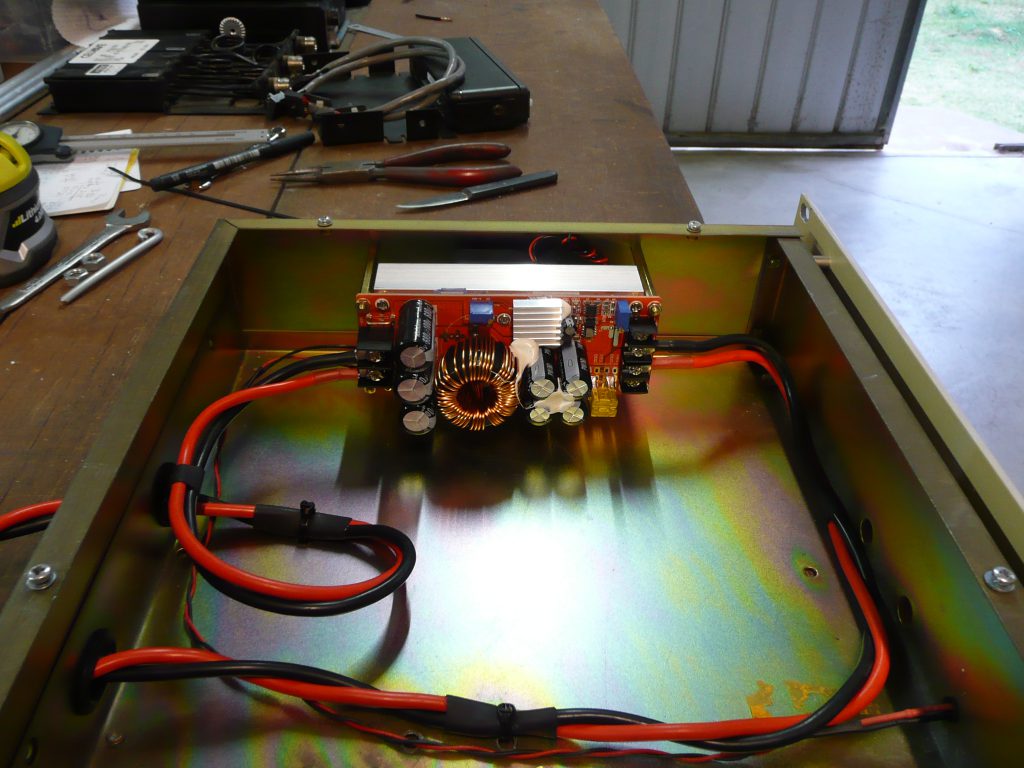
  • the 12 volt to 28 volt inverter installed into rack and wired in,
  • RF power out of 70cm when on battery backup has been set to 30 watts (normally 75 watts whilst mains power is active)
  • repeater tested on battery backup, draws just on 8 amps and puts a “beep” every 60 seconds to identify unit running on battery backup.
  • whilst on site, Paul took the opportunity to “Sweep” the VK5RSB 70cm antenna, return loss was good BUT it was identified that there IS a problem, a ringing or ripple on the return loss sweep, possibly due to a faulty connection in the line. We believe that the problem is most likely the coax connector on the top end of the LDF 450 coax, as this was not serviced or replaced when we changed and fitted the new antenna a couple of years back.This means another working bee, when the weather for working at the top of the tower is conducive.

6m Repeater

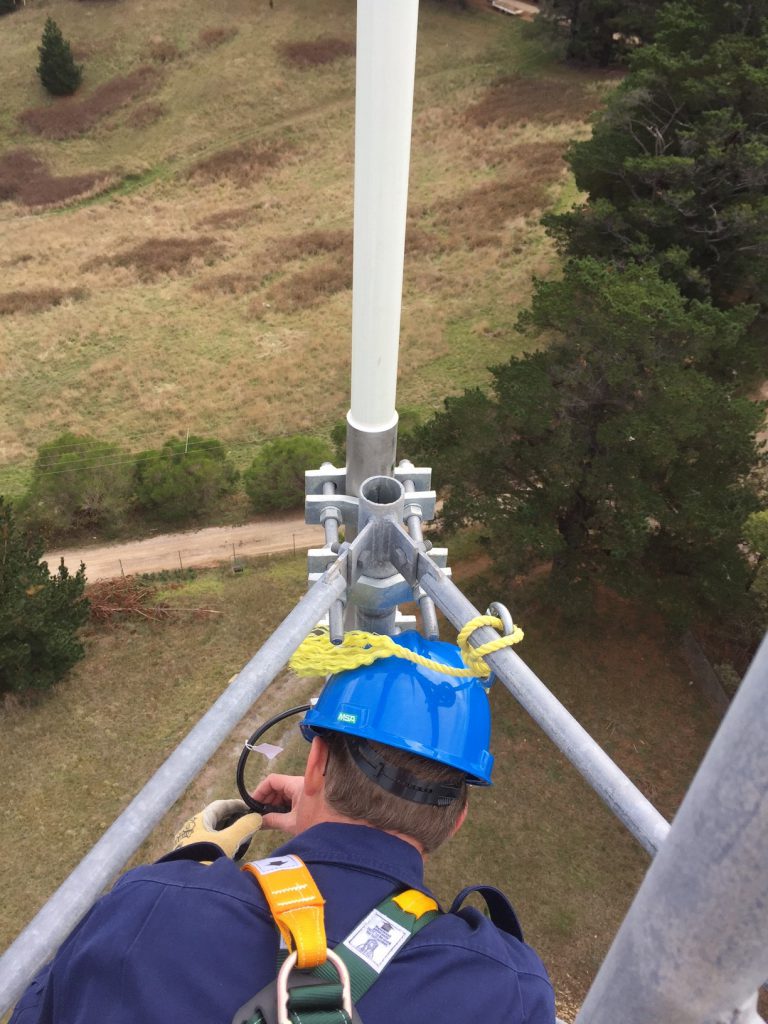
  • during the above work activities, Adrian and Rod were able to swap out the old 6m repeater antenna and install the new antenna. Once the new antenna was connected, a return loss sweep was done and all looked very good.
  • with the the 6m repeater reconnected to the antenna, it was still “going nuts” keying up very regularly on “spurious” Checks of the spectrum could not identify any specific signals the could be causing this other than the high noise floor. So Adrian wound the mute setting a bit higher and this fixed the regular intermittent keying of the repeater. (subsequent observations and reports are that the 6m repeater seems to be working very well and is generally quite when not being worked)

A big thank you to everyone who contributed to the work at VK5RSB. I am sure it will improve service for all amateurs in the greater Adelaide Metropolitan area.

AREG Develops new DX Pileup Defeating Technology

Introducing the DX Buster(tm)!


SORRY! ALL SOLD OUT on APRIL 1st 2017 – Stay tuned next year for more Amateur Radio products from the mad scientists division of the Amateur Radio Experimenters Group!


After months of rigorous testing, the Amateur Radio Experimenters Group Inc is pleased to announce the beta version of our new DX Buster(tm)! is nearly ready for initial release. What is it you might ask? Well, it is designed to help you to break through pile ups during DX Contests and DXPeditions, ensuring your signal is the one heard clear and true, first time, every-time!

There will be no more disappointment that the DX got away when you are using a DXBuster!(tm), even if you are only a small 100W pistol or 400W VK “high power” station located more than double the distance from that rare DX station compared to the majority (as is often the case when comparing VK to Europe, North America and Japan where they run 1kW or more). Now, with DX Buster!(tm) on your team, you can rest assured your signal will always be clearly heard among the pileups at the DX stations end, guaranteeing you will get that rare one in your log, even with modest power.

How does it work?

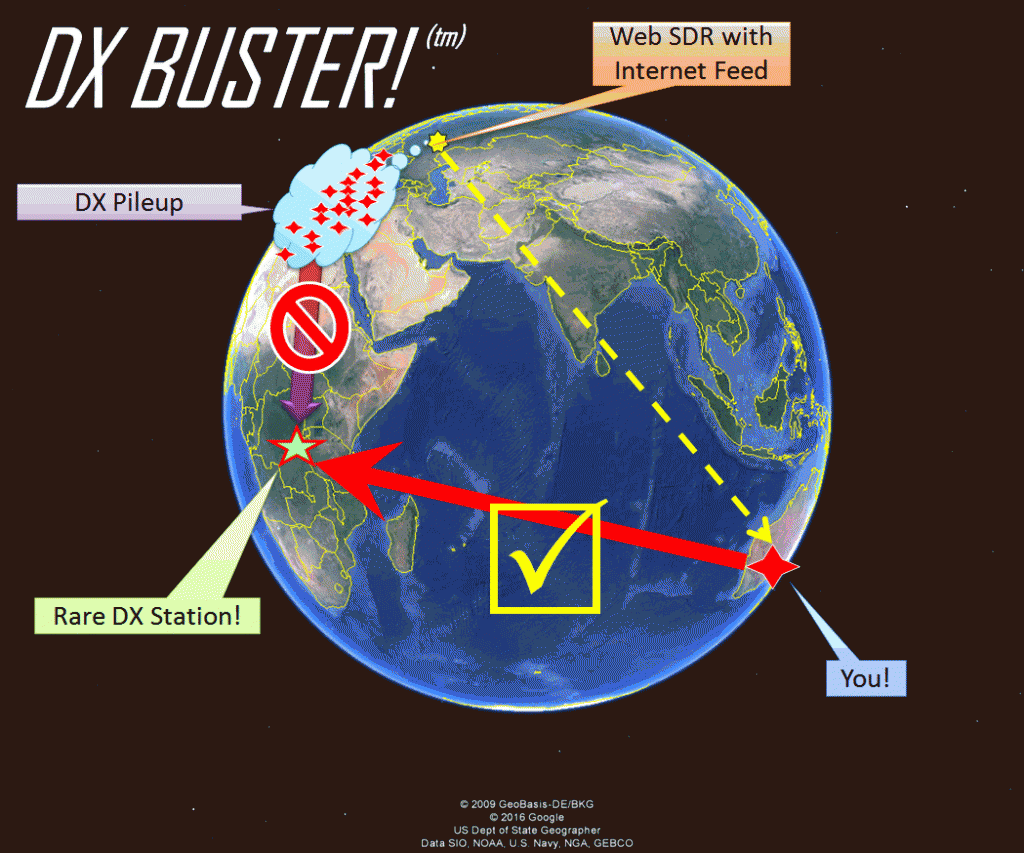
DX Buster!(tm) is a DSP device you insert into your microphone audio stream, and then also connect to the Internet. It works by mixing your transmitted audio with an anti-phase, time correlated / corrected version of the signals that the DX station is listening to, based on what is being received via any WebSDR located close to the major source of the DX calling pile-up stations.

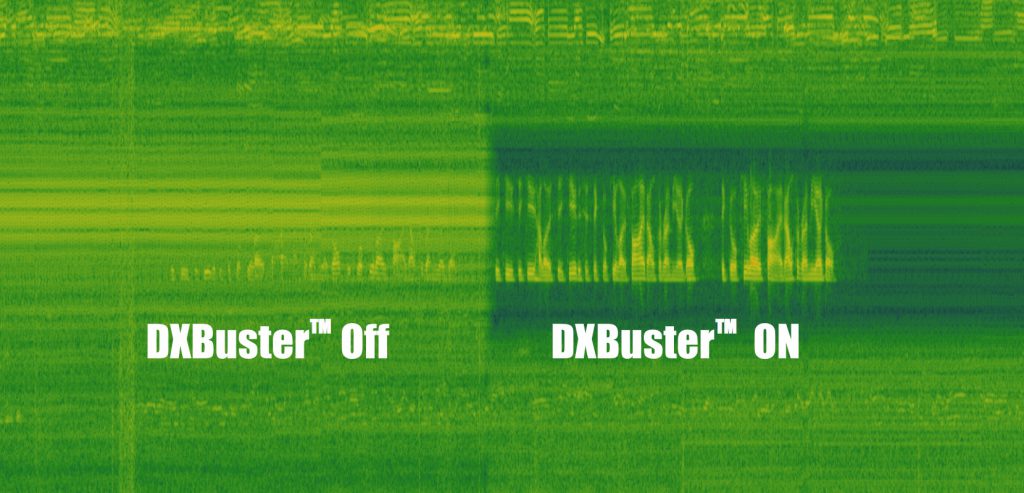
Using patented Flux capacitor technology, and augmented by feeds from the Reverse Beacon and PSK Reporter systems tuned to the WSJT JT65 networks as well as space weather predictions from the NOAA and Australian Bureau of Meteorology, the propagation channel between your station and the rare DX is computed. Then, the anti-phase signals matching the majority of the pile up stations within 4kHz of your signal are delay matched to your station and then injected into your audio. The rest follows the laws of physics! When the out of phase signals are combined at the DX stations receiver with the other pile up traffic, that traffic is attenuated, while your own audio laid over the top passes through unaffected. The end result is a minimum 10-30dB improvement in your apparent signal to noise ratio as measured at the DX station.

Don’t quite believe it? Take a look at the following waterfall charts and sample audio streams to be convinced!

How can I get one?

Currently only a prototype of the unit is available, as a number of technical details are still being refined to make it adaptable to as many transceivers as possible. As soon as these are resolved, we will open our books for orders!

Keep watching the AREG website for further details!